
BNSF Restores WA Lines After Flooding, Delivers 80M Packages
BNSF swiftly restored service after an atmospheric river caused flooding, delivering 80M holiday packages, highlighting climate resilience importance.
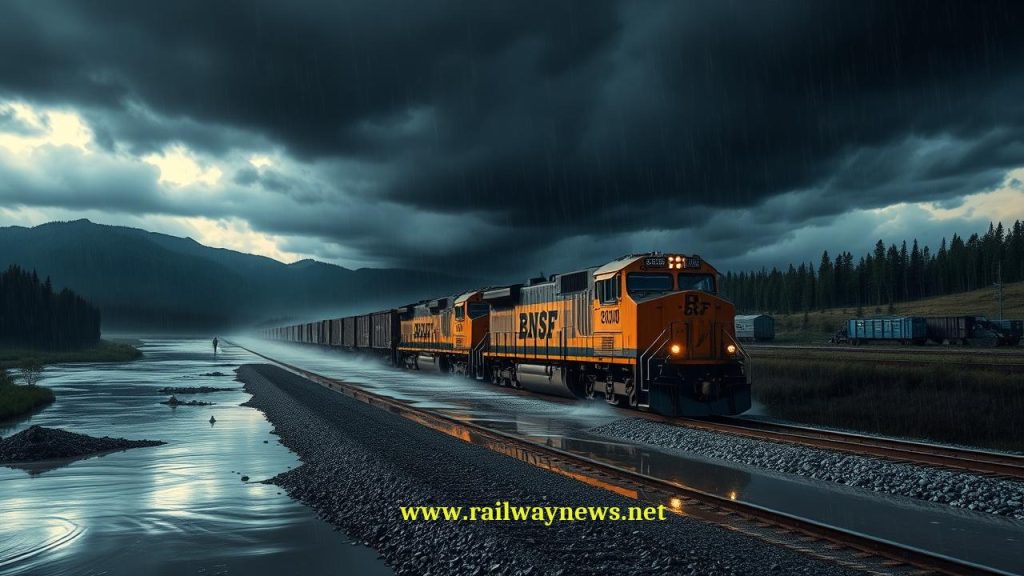
BNSF has successfully restored service on four critical subdivisions in Washington state after a severe “atmospheric river” event caused extensive flooding and track washouts in December 2025. The rapid engineering response, completed by December 19, ensured the successful delivery of over 80 million holiday packages, highlighting the increasing challenge of extreme weather on core rail infrastructure.
| Category | Details |
|---|---|
| Affected Operator | BNSF Railway |
| Location | Four subdivisions in Washington State, USA |
| Cause of Disruption | Extreme Flooding from an Atmospheric River Event |
| Key Weather Statistic | Over 17 inches of rainfall recorded |
| Service Restoration Date | December 19, 2025 |
BNSF Railway announced the full restoration of four subdivisions in Washington that were severely damaged by widespread flooding in mid-December 2025. The Class I railroad’s engineering and signal crews worked around the clock to repair extensive damage after torrential rains led to overflowing rivers. The flooding caused significant washouts of track sections and ballast shoulders, with some areas seeing hundreds of feet of infrastructure destroyed. In addition to the flooding, strong winds accompanying the storm caused regional power outages, forcing BNSF signal teams to deploy generators to maintain signal operations until utility power was restored.
The severe weather has been attributed by NASA to a major atmospheric river event that began impacting the Pacific Northwest around December 8, 2025. According to data from NASA’s Goddard Earth Observing System (GEOS), this phenomenon transported a massive plume of moisture from the Pacific Ocean, resulting in extreme precipitation across Washington, Oregon, and British Columbia. The Cascade Range experienced the brunt of the event, with over 17 inches of rainfall recorded, leading to the conditions that crippled the rail network.
The timing of the disruption posed a significant threat to the North American supply chain during its busiest period. However, the rapid mobilization of BNSF’s engineering crews enabled a full service restoration by December 19. This swift recovery was critical in allowing the railroad to clear backlogs and successfully handle the peak holiday surge, ultimately delivering more than 80 million packages ahead of the festive season. The incident serves as a case study in both the vulnerability of rail lines to climate events and the operational resilience required to mitigate their impact.
Key Takeaways
- Rapid Restoration: BNSF crews restored four heavily damaged subdivisions by Dec. 19, demonstrating significant engineering and logistical response capabilities.
- Extreme Weather Event: The disruption was not random but caused by a documented atmospheric river, a climate-related phenomenon posing a growing threat to infrastructure.
- Supply Chain Criticality: The timely repairs were essential to preventing a major holiday logistics breakdown, ensuring the delivery of over 80 million packages.
Editor’s Analysis
The successful and rapid restoration of BNSF’s Washington subdivisions is a commendable operational feat. However, the event itself is a stark warning for the global rail industry. The confirmation by NASA that an atmospheric river was the cause moves this from a “freak flood” to a predictable, albeit severe, climate pattern. This incident underscores the urgent need for Class I railroads to invest heavily in climate adaptation and infrastructure hardening. This includes reinforcing embankments, upgrading culverts, and developing redundant power systems for signaling. For the wider market, it signals a growing risk factor that must be priced into logistics planning and infrastructure investment strategies, as the cost of reaction will soon be far outweighed by the cost of proactive resilience.
Frequently Asked Questions
- What caused the BNSF rail disruptions in Washington in December 2025?
- The disruptions were caused by severe flooding resulting from an atmospheric river event that brought over 17 inches of rain to the Cascade Range and Puget Sound region, washing out track and ballast.
- How quickly did BNSF restore the damaged lines?
- BNSF engineering crews completed the full restoration of all four affected subdivisions by December 19, 2025, ensuring a swift return to normal operations.
- What was the impact of the restoration on the supply chain?
- The rapid restoration was critical, allowing BNSF to successfully deliver more than 80 million packages ahead of the holidays and preventing major disruptions during the peak commercial season.

Railway infrastructure, rolling stock and transport technologies specialist focused on global rail industry developments, high-speed rail systems, signaling technologies and freight transportation. Covering railway investments, public transport modernization, rail operations and international mobility projects across Europe, Asia and North America.
RELATED POSTS

October 1, 2026 7:09 am
United States regulators confirmed a September 30 deadline for the...

October 8, 2026 1:15 pm
Alstom secured a €1bn contract to build 13 automated trains,...

October 4, 2026 5:14 pm
Alstom secured a CA$4.7 billion order from VIA Rail Canada...

October 1, 2026 12:13 am
Illinois approved $1.5 billion annually for the Northern Illinois Transit...

October 6, 2026 2:14 am
Union Pacific launched export rail shipments with Ferromex to deliver...

October 1, 2026 6:10 am
Amtrak approved a System Expansion Committee on July 30 to...