
Barcelona Airport Rail: Advancing Spain’s Rail Infrastructure
Barcelona Airport rail access project, 80% complete, nears completion. Improved connectivity, faster travel to city center, and sustainable transport are key.
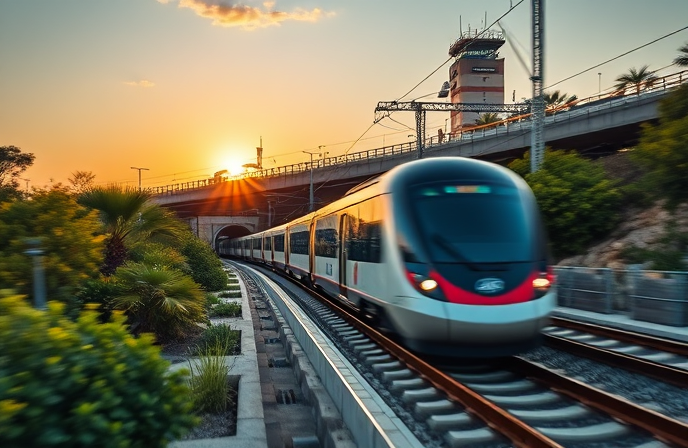
Barcelona Airport Rail Access Project Nears Completion
The expansion and modernization of rail infrastructure continue apace in Spain, with a major project nearing its final stages at Josep Tarradellas Barcelona-El Prat Airport. Adif, Spain’s infrastructure manager, announced on June 24, 2025, that the second phase of the new rail access to Terminal 1 (T1) is 80% complete. This ambitious undertaking, costing over €64.1 million (approximately $73.8 million), is part of the larger Transformem Rodalies plan and promises to dramatically improve connectivity for passengers. This article will delve into the specifics of the project, examining its technical aspects, benefits, and the impact it will have on the Barcelona metropolitan area’s public transport network. The core focus is the new rail link’s advanced design and integration with the existing rail network, its anticipated operational capabilities, and funding secured via European Union’s NextGenerationEU initiative.
Project Scope and Technical Specifications
The new rail access to Barcelona-El Prat Airport’s Terminal 1 represents a pivotal component of a broader infrastructural overhaul. The project, which extends from the existing Barcelona-Vilanova rail line, comprises a dual-track route of 5.2 kilometers. A significant portion of this route, 4.3 kilometers, is being constructed through a tunnel. This tunnel was primarily excavated using a tunnel boring machine (TBM) during the initial phase of the project. This method underscores Adif’s commitment to employing advanced engineering techniques to minimize disruption and maximize construction efficiency. The new infrastructure encompasses various elements, including outdoor track sections, electrification systems, and underground stations. Recent contracts, valued at over €4.4 million, were awarded to facilitate crucial electrical connections, signaling the final stages of infrastructure activation. These contracts are pivotal in ensuring seamless integration with the existing railway network.
Enhanced Connectivity and Passenger Benefits
A primary objective of this project is to significantly improve public transport mobility within the Barcelona metropolitan area. Once operational, the rail link will directly connect the airport’s two terminals with central Barcelona. Passengers will be able to travel to Sants Station, a major railway hub, in an estimated 19 minutes. This considerably reduces travel times compared to existing options and provides a more efficient alternative for both tourists and local commuters. Adif anticipates that the new infrastructure will serve between seven and nine million passengers annually, demonstrating its critical role in the region’s transportation ecosystem. The project’s emphasis on providing a fast, reliable connection to the city center aligns with the overall goal of promoting sustainable and efficient transportation methods, thereby lessening reliance on private vehicles.
Funding and Sustainable Development Goals
The project’s financial backing is derived from the Recovery, Transformation and Resilience Plan, which is supported by the European Union through the NextGenerationEU initiative. This funding underscores the EU’s commitment to investing in sustainable infrastructure projects that contribute to economic growth and improve citizens’ quality of life. The rail access project directly supports Sustainable Development Goal 9 (SDG 9), which focuses on developing reliable, sustainable, and resilient infrastructure. The implementation of this project contributes to improving the transportation network with a focus on reducing carbon emissions and promoting more efficient and sustainable methods of transportation.
Related Developments and Future Outlook
In addition to the airport rail access, Adif continues to implement initiatives that improve rail accessibility. A recent collaboration with Renfe (Spain’s national rail operator) and Ineco (a transport engineering consultancy) has seen the introduction of an accessible help point at Málaga’s María Zambrano station. This initiative is part of the MOTIONAL project by the European Rail Joint Undertaking, which focuses on enhancing accessibility in rail transport through technological innovation. The ongoing progress and commitment to improvement signal a positive outlook for rail transport in Spain. This project, along with others like it, exemplifies the transformative impact of strategic investment, technical excellence, and collaborative partnerships in modernizing and improving rail infrastructure.
Conclusion
The Barcelona Airport rail access project represents a significant milestone in the ongoing modernization of Spain’s railway infrastructure. With 80% of the second phase completed, and on track to be finalized by the end of the year, the project promises to substantially enhance connectivity for millions of passengers, reducing travel times and promoting sustainable transport. The successful execution of this project underscores Adif’s expertise in complex infrastructure projects and its commitment to the transformative vision laid out by the Transformem Rodalies plan. This ambitious undertaking will have a long-term impact on the Barcelona metropolitan area’s transportation network. The reliance on European Union funding, via NextGenerationEU, highlights the strategic importance of infrastructure in driving economic growth and promoting sustainability. The project’s completion will usher in a new era of enhanced connectivity, supporting local economic growth and contributing to a more efficient, sustainable, and accessible public transport system.

Railway infrastructure, rolling stock and transport technologies specialist focused on global rail industry developments, high-speed rail systems, signaling technologies and freight transportation. Covering railway investments, public transport modernization, rail operations and international mobility projects across Europe, Asia and North America.
RELATED POSTS

October 1, 2026 7:09 am
United States regulators confirmed a September 30 deadline for the...

October 8, 2026 1:15 pm
Alstom secured a €1bn contract to build 13 automated trains,...

October 4, 2026 5:14 pm
Alstom secured a CA$4.7 billion order from VIA Rail Canada...

October 1, 2026 12:13 am
Illinois approved $1.5 billion annually for the Northern Illinois Transit...

October 6, 2026 2:14 am
Union Pacific launched export rail shipments with Ferromex to deliver...

October 1, 2026 6:10 am
Amtrak approved a System Expansion Committee on July 30 to...