
BNSF Railway Q2: Insights on Rail Performance and Future Strategy
BNSF Railway’s Q2 2024 revenue stalled at $5.7B, flat vs. 2023. Market conditions and operational efficiency are key concerns for the rail industry.
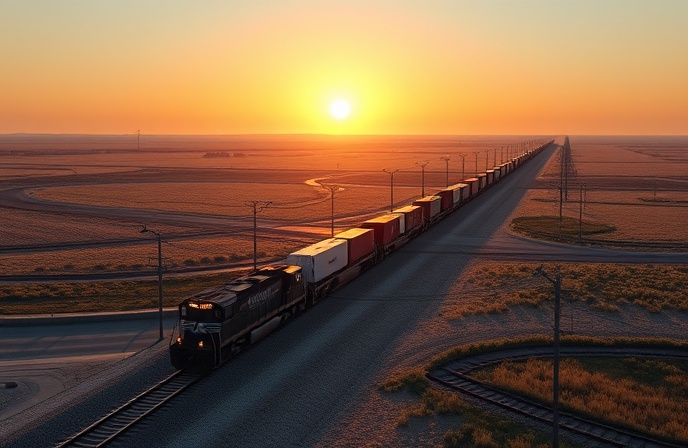
BNSF Railway’s Second Quarter Revenue Stagnates
BNSF Railway, a leading freight railroad operator, announced its second-quarter 2024 financial results. The report, released recently, revealed a revenue of $5.7 billion, which remained flat compared to the same period in 2023. This stagnation, occurring within a dynamic freight landscape, raises questions about market conditions and strategic initiatives. Who is BNSF Railway? What happened? When did this occur? Where are BNSF’s major operations located? Why is this important to the rail industry? How did it affect the overall performance? This article explores BNSF’s Q2 performance, exploring the drivers behind the flat revenue and the potential implications for the company and the wider rail industry. The flat revenue, while not indicating decline, requires a deeper examination of contributing factors, market pressures, and future strategies for growth.
Market Dynamics and Demand
The flat revenue figure necessitates analysis of the prevailing market forces. Fluctuations in demand for key commodities, such as agricultural products, energy, and consumer goods, often significantly impact railroad performance. Changes in global trade patterns and supply chain disruptions can also create headwinds. BNSF, as a major hauler of diverse commodities, is particularly susceptible to shifts in these areas. Understanding the specific commodity mix and any volume changes within that mix during the quarter is critical. Did decreased demand in certain sectors offset gains elsewhere? Additionally, competition from other modes of transport, like trucking, plays a crucial role. BNSF’s ability to maintain competitiveness through efficient operations, pricing strategies, and service quality is vital in a challenging market environment.
Operational Efficiency and Cost Management
Even with steady revenue, careful control of operational expenses is crucial for profitability. Railroads are capital-intensive businesses. Factors such as fuel costs, labor rates, and maintenance expenses directly impact profit margins. BNSF likely implemented strategies to manage these costs, including fuel-efficient locomotives, optimized crew management, and preventative track maintenance. Analyzing the company’s operating ratio (OR), a key performance indicator (KPI) reflecting operating expenses as a percentage of revenue, can offer valuable insight. Did BNSF successfully contain costs during the quarter? Were there any significant investments that might impact short-term profitability but support long-term efficiency? Understanding the company’s approach to operational excellence provides critical context for the financial results.
Infrastructure and Capital Expenditure
The railroad industry is heavily dependent on robust infrastructure. BNSF, with its extensive network, continually invests in track, signals, and other critical components. This capital expenditure (CAPEX) is essential for maintaining network capacity, safety, and reliability. The financial report will provide insights into the level of CAPEX during the quarter and the projects undertaken. Were there any major track upgrades, signaling system enhancements, or yard expansions? How did these investments impact the company’s balance sheet? The nature and scale of infrastructure spending also reflect the company’s strategic priorities and long-term outlook for growth. Additionally, any disruptions or delays within the rail network would also be noteworthy.
Strategic Initiatives and Future Outlook
Looking beyond the financial figures, the company’s strategic initiatives provide clues about its future direction. Are there plans for new service offerings, technological innovations (e.g., automation, AI-powered analytics), or partnerships? BNSF’s strategy for navigating the competitive landscape is paramount. Key considerations involve investments into more fuel-efficient methods and further improvements to railway track. Understanding management’s commentary on these areas will illuminate its long-term vision and how it intends to address changing market dynamics. This could involve adopting precision scheduled railroading or exploring opportunities in intermodal transport. Any shift in corporate strategy will be important to the company’s performance.
Conclusion
BNSF Railway’s flat second-quarter revenue underscores the complex interplay of market forces, operational efficiency, and strategic choices. While the $5.7 billion figure doesn’t represent a decline, the lack of growth highlights the need for strategic diligence and proactive measures. The industry must closely monitor the factors behind this trend, paying attention to commodity demand, operational costs, and infrastructure investments. Any expansion of the supply chain and related market changes will be crucial to observe. The company’s ability to adapt to evolving conditions, through effective cost management, innovative service offerings, and strategic infrastructure investments, will determine its future success. The industry will likely be looking towards BNSF’s future strategies for potential growth, including a renewed focus on intermodal freight and the expansion of the company’s logistics services. The coming quarters will test BNSF’s ability to navigate a challenging environment and identify opportunities for sustained growth.
Company Summary
BNSF Railway Company, a subsidiary of Berkshire Hathaway, is one of North America’s largest freight railroad networks. Operating over approximately 32,500 route miles across 28 states and three Canadian provinces, BNSF transports a wide range of commodities, including agricultural products, consumer goods, coal, and industrial products. Its extensive network plays a crucial role in the nation’s economy and is a significant contributor to the rail transport industry. The company’s strategic investments in infrastructure and technology are essential for its long-term competitiveness and ability to meet the demands of its customers.

Railway infrastructure, rolling stock and transport technologies specialist focused on global rail industry developments, high-speed rail systems, signaling technologies and freight transportation. Covering railway investments, public transport modernization, rail operations and international mobility projects across Europe, Asia and North America.
RELATED POSTS

October 1, 2026 7:09 am
United States regulators confirmed a September 30 deadline for the...

October 4, 2026 5:14 pm
Alstom secured a CA$4.7 billion order from VIA Rail Canada...

October 6, 2026 2:14 am
Union Pacific launched export rail shipments with Ferromex to deliver...

October 1, 2026 12:13 am
Illinois approved $1.5 billion annually for the Northern Illinois Transit...

October 8, 2026 1:15 pm
Alstom secured a €1bn contract to build 13 automated trains,...

October 1, 2026 6:10 am
Amtrak approved a System Expansion Committee on July 30 to...