
Belgrade-Budapest HSR: Future Rail Trends
High-speed rail’s future is here. Master the challenges, seize the opportunities – discover how to shape tomorrow’s high-speed networks!
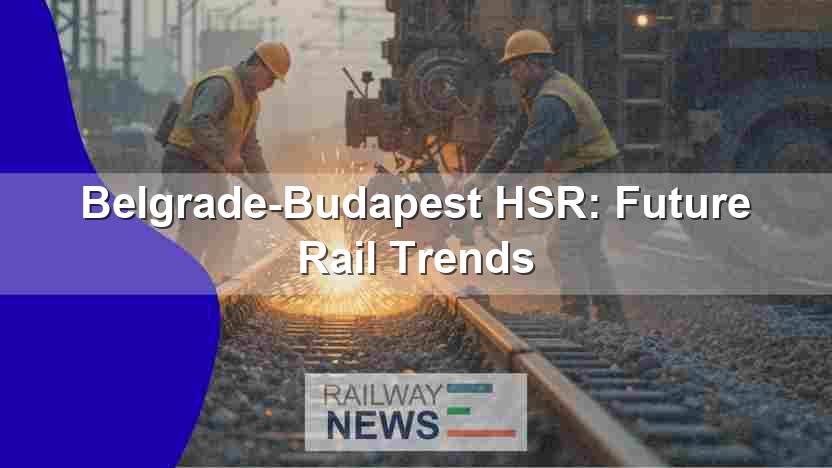
The global landscape of high-speed rail (HSR) is undergoing a period of significant transformation. This article explores the multifaceted challenges and opportunities presented by the expansion of HSR networks, focusing on key aspects of planning, financing, technological advancements, and the socio-economic impact of these ambitious infrastructure projects. We will explore the complexities involved in integrating HSR into existing rail systems, the critical role of effective project management, and the environmental considerations that must be addressed. Additionally, we will examine the potential for HSR to stimulate economic growth and regional development, while also considering the potential displacement of existing transportation modes and the need for robust regulatory frameworks. A case study focusing on a specific project will illustrate the practical application of these concepts. The analysis will consider both the technical hurdles and the political and economic factors that influence the success or failure of such projects. The aim is to provide a detailed overview of the critical factors that will shape the future of high-speed rail, concluding with a discussion on future prospects and necessary adaptations to ensure long-term sustainability and success.
Planning and Financing High-Speed Rail Projects
The planning phase of HSR projects requires meticulous attention to detail, encompassing detailed route selection, environmental impact assessments (EIAs), and stakeholder engagement. Choosing the optimal alignment requires balancing factors like minimizing construction costs, reducing travel time, and mitigating environmental disruption. Thorough EIAs are crucial to identify and address potential ecological impacts, ensuring compliance with environmental regulations. Engaging with local communities and addressing their concerns is paramount for securing social license and ensuring project acceptance. Financing HSR is often a complex undertaking, involving a mix of public and private investment. Securing funding requires robust financial modeling, demonstrating long-term viability and attracting investors. Public-private partnerships (PPPs) are frequently employed to leverage private sector expertise and capital, but these require careful negotiation to balance public interests with private sector profit motives.
Technological Advancements and Operational Efficiency
Technological advancements are driving significant improvements in HSR performance and efficiency. The development of high-performance trains with enhanced speed, comfort, and reliability is crucial. These improvements are often accompanied by developments in signaling and train control systems such as the European Train Control System (ETCS), allowing for increased capacity and operational safety. Advanced data analytics plays an important role in optimizing train scheduling, managing maintenance, and ensuring efficient resource allocation. Additionally, integration with other transportation modes, such as urban transit systems, is key to maximizing connectivity and creating a seamless travel experience. These technological advancements must be carefully integrated into existing infrastructure, necessitating robust systems integration and testing protocols.
Socio-Economic Impacts and Regional Development
HSR projects have the potential to generate substantial socio-economic benefits, including increased regional connectivity, improved accessibility to employment opportunities, and boosted tourism. Reduced travel times can significantly enhance regional integration, fostering economic linkages between previously isolated areas. Improved access to employment centers can lead to increased labor mobility and economic opportunities for residents in peripheral regions. The influx of tourists attracted by faster and more convenient travel can contribute significantly to regional economies. However, it’s crucial to acknowledge the potential negative impacts, such as land displacement and the potential for increased environmental pollution if not planned and implemented sustainably. Careful planning and mitigation strategies are essential to maximize the positive impacts while minimizing the negative ones.
Case Study: The Belgrade-Budapest High-Speed Rail
The Belgrade-Budapest high-speed rail project exemplifies many of the challenges and opportunities discussed earlier. This ambitious undertaking faces significant logistical and financial hurdles, requiring extensive international collaboration and coordination. The project’s success hinges on the effective management of complex engineering challenges, environmental considerations, and socio-political factors. The route selection, for example, requires careful balancing of economic viability with environmental protection. Securing funding from various sources, including the European Union (EU), requires meticulous planning and a transparent process. Successful completion of the Belgrade-Budapest high-speed rail will not only boost regional connectivity and economic development but also serve as a compelling case study for future high-speed rail initiatives across Europe and beyond.
You might be interested in:
Last May 2019, we published an article about Network Rail’s £800m investment in rail haulage. Click here to read – Network Rail’s £800m Rail Investment: Efficiency, Safety, & Partnerships
Conclusions
The development of high-speed rail networks presents both significant challenges and considerable opportunities. Successful implementation requires meticulous planning that encompasses detailed route selection, detailed environmental impact assessments, and extensive stakeholder engagement. Securing adequate financing, often through a combination of public and private investment, is crucial. Technological advancements, including high-performance trains and advanced signaling systems, are essential for enhancing operational efficiency and safety. While HSR projects offer the potential for significant socio-economic benefits, including improved regional connectivity, enhanced accessibility, and economic stimulation, careful consideration must be given to potential negative impacts. The Belgrade-Budapest high-speed rail project serves as a compelling example of the complexities and potential rewards associated with such large-scale infrastructure initiatives. The future of high-speed rail hinges on effective project management, robust financial planning, and a commitment to sustainable development practices. The successful integration of these aspects will play a pivotal role in shaping the future of transportation and influencing regional economic growth, and we can expect to see a continued expansion of high-speed rail networks globally, provided the necessary financial, political, and logistical hurdles are overcome.

Railway infrastructure, rolling stock and transport technologies specialist focused on global rail industry developments, high-speed rail systems, signaling technologies and freight transportation. Covering railway investments, public transport modernization, rail operations and international mobility projects across Europe, Asia and North America.
RELATED POSTS

October 4, 2026 5:14 pm
Alstom secured a CA$4.7 billion order from VIA Rail Canada...
October 9, 2026 3:11 pm
Wabtec secured a $700 million service deal in Guinea to...
October 1, 2026 3:12 am
Greenbrier confirmed Brian Comstock as new president and CEO effective...
October 1, 2026 8:12 am
Knorr-Bremse expanded its UK rail adhesion trial on Chiltern Railways...
October 9, 2026 6:15 am
Transflo launched a 40 railcar transload terminal in Petersburg, Virginia,...
October 8, 2026 8:15 pm
Siemens Mobility secured an order from NWL to supply 61...