
Battery Trains Revolution: Sustainable Rail in Modern Operations
Battery trains revolutionize rail, boosting sustainability and efficiency. Reduced emissions and lower operational costs are key benefits.
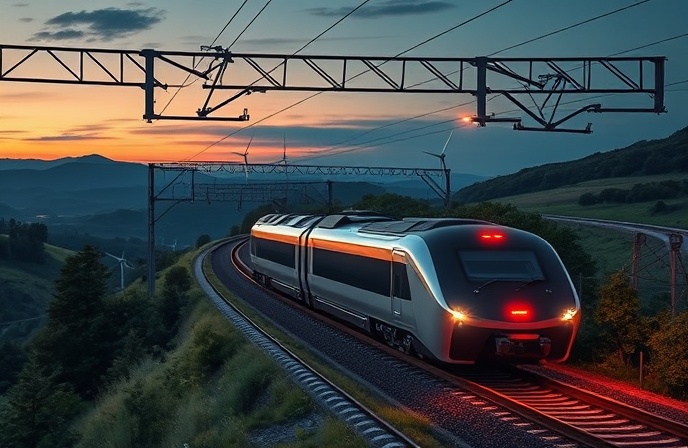
Revolutionizing Rail: The Rise of Battery Trains in Modern Railway Operations
The railway industry is undergoing a significant transformation, with sustainability and operational efficiency at the forefront. This shift is being driven by the increasing adoption of innovative technologies, including battery trains. Who is leading this change? What are the key advantages? When are we seeing the impact? Where are these developments most prominent? Why are these technologies being embraced? And how are these advances changing the landscape of rail transport? The increasing pressure to reduce carbon emissions and enhance the performance of regional and commuter services is fueling the integration of battery-electric multiple units (BEMUs). This article will explore the technical advancements, operational benefits, and future prospects of battery trains, providing railway professionals and industry stakeholders with a detailed overview of this evolving sector.
Powering the Future: The Technical Advancements in Battery Train Technology
The core of any battery train is its energy storage system (ESS). This typically involves high-capacity lithium-ion batteries, increasingly optimized for performance, lifespan, and safety. Advancements in battery chemistry are key to improving energy density, allowing trains to travel longer distances on a single charge. Charging infrastructure is crucial and encompasses several options, including: overhead line equipment (OLE) at stations for rapid charging during dwell times, and stationary charging stations that feed power from the grid. Additionally, regenerative braking systems, which recover energy during deceleration, significantly extend the range of the trains and boost energy efficiency. Considerations for energy management also include sophisticated on-board monitoring systems that optimize power consumption, predict battery performance, and manage the charging cycle to extend lifespan.
Operational Efficiencies: Benefits and Challenges of Battery Electric Multiple Units
One of the primary advantages of battery trains is their potential for reduced carbon emissions. By eliminating diesel-powered engines, they significantly lower greenhouse gas emissions, contributing to greener transport solutions. Further benefits include the elimination of engine exhaust and noise pollution at the local level. Operational cost savings are significant due to lower fuel expenses and reduced maintenance costs compared to diesel-powered trains. The initial investment in BEMUs and supporting infrastructure, however, remains a substantial challenge. Upfront capital expenditure (CAPEX) for battery trains, charging facilities, and potentially network upgrades can be considerable. Battery life and range are important aspects, and further advancements in battery technology are critical to improving the operational viability of BEMUs across longer routes and in harsher operating conditions. Maintenance of the ESS itself is a specialized area, requiring skilled technicians and dedicated maintenance facilities.
Navigating the Infrastructure Landscape: Integration and Compatibility Challenges
Successfully deploying battery trains involves a multifaceted approach, with significant infrastructure adaptations. Compatibility with existing railway systems and signaling is of utmost importance. The electrification of non-electrified lines is simplified using battery technology, as is its employment on branch lines and low-traffic routes, avoiding the need for the significant investment associated with installing and maintaining overhead lines. Standardization is critical; interoperability among different train manufacturers and charging systems will improve flexibility and reduce costs. Network operators need to plan for and manage charging infrastructure in a strategic manner. This includes selecting charging locations that minimize disruption to timetables and maximize operational efficiency. Finally, safety considerations, including fire safety and the safe handling of high-voltage equipment, require rigorous adherence to industry best practices and safety standards.
Future Prospects: The Evolution and Expansion of Battery Train Technology
The future of rail transport is undeniably linked to the continued development and deployment of battery trains. We can anticipate seeing increasing range and energy density, extending the capabilities of BEMUs and enabling them to operate on longer routes. Innovations in charging technologies are also expected, including faster charging times, wireless charging, and more sophisticated energy management systems. The widespread use of digitalization, artificial intelligence (AI), and the Internet of Things (IoT) in train operations should also contribute to optimize energy consumption and improve operational efficiency. Additionally, we can expect to see stronger integration between battery technology and other sustainable transportation modes, creating seamless, multimodal transport solutions.
Conclusion
The adoption of battery trains is a game-changer for the railway industry. The advancements in energy storage, coupled with operational efficiencies and environmental benefits, position this technology at the forefront of sustainable rail transport. From technical improvements to infrastructure integration and interoperability, battery electric trains offer a viable alternative to traditional diesel-powered rail transport, especially on non-electrified routes and where infrastructure costs are a constraint. As the demand for greener and more efficient transportation grows, we can expect to see an accelerated uptake of battery train technology. The industry must continue to address the challenges associated with this technology, including initial investment costs, battery range, and charging infrastructure, to fully realize the potential of battery electric trains. Further research, development, and collaboration across the railway sector will be key drivers in shaping the future of rail transport, pushing us toward an even more sustainable and efficient future.

Railway infrastructure, rolling stock and transport technologies specialist focused on global rail industry developments, high-speed rail systems, signaling technologies and freight transportation. Covering railway investments, public transport modernization, rail operations and international mobility projects across Europe, Asia and North America.
RELATED POSTS

October 1, 2026 7:09 am
United States regulators confirmed a September 30 deadline for the...

October 8, 2026 1:15 pm
Alstom secured a €1bn contract to build 13 automated trains,...

October 4, 2026 5:14 pm
Alstom secured a CA$4.7 billion order from VIA Rail Canada...

October 1, 2026 12:13 am
Illinois approved $1.5 billion annually for the Northern Illinois Transit...

October 6, 2026 2:14 am
Union Pacific launched export rail shipments with Ferromex to deliver...

October 1, 2026 6:10 am
Amtrak approved a System Expansion Committee on July 30 to...