
Ballard & CPKC: Green Revolution in Rail
Ballard Power Systems and Canadian Pacific Kansas City (CPKC) have expanded their partnership by delivering 98 fuel cell engines, totaling 20 MW of power, to CPKC for hydrogen-powered locomotives in North America, marking a substantial step towards decarbonizing the rail industry.
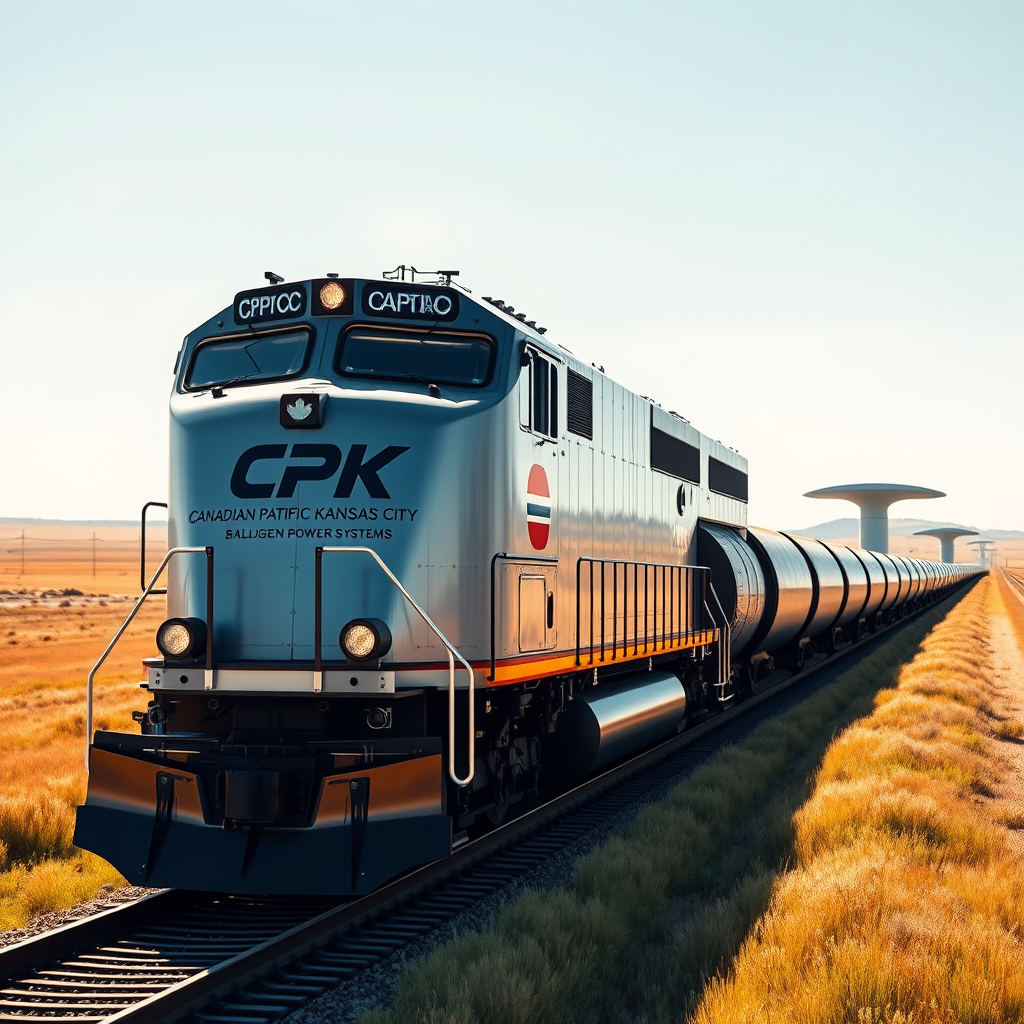
This article examines the significant partnership between Ballard Power Systems and Canadian Pacific Kansas City (CPKC) in advancing the adoption of hydrogen fuel cell technology for freight rail transportation in North America. The recent agreement between these two companies marks a substantial step towards decarbonizing the rail industry, a sector responsible for a significant portion of greenhouse gas emissions. We will delve into the specifics of this agreement, exploring the technical aspects of the fuel cell engines, the implications for CPKC’s decarbonization goals, and the broader context of hydrogen’s role in the future of freight rail. Further, we will consider the challenges and opportunities presented by this innovative approach to sustainable transportation, analyzing its potential for scalability and impact on the environmental footprint of the North American rail network. The analysis will also touch upon the infrastructure required to support widespread adoption of hydrogen fuel cell locomotives and the overall economic viability of this technology compared to traditional diesel-powered locomotives. This detailed overview will provide a clear understanding of the importance of this partnership and its potential to reshape the future of freight rail.
Ballard Power Systems and CPKC’s Expanding Partnership
The long-term supply agreement between Ballard Power Systems and CPKC represents a major expansion of their existing collaboration, which began in 2021. This latest agreement involves the delivery of 98 fuel cell engines, each boasting a 200 kW nameplate capacity, totaling 20 MW of power. These engines, scheduled for delivery in 2025, are intended to significantly expand CPKC’s hydrogen locomotive program across North America. This builds upon Ballard’s earlier delivery of 10 MW of fuel cell engines to CPKC by the end of 2024. The partnership’s success is evident in the successful integration of Ballard’s fuel cell engines into hydrogen-powered locomotives already operating in switching and freight service in Alberta, Canada.
Technological Advancements in Hydrogen Fuel Cell Locomotives
CPKC’s initiative, announced in 2020, aims to pioneer the design and construction of North America’s first line-haul hydrogen-powered locomotive. This innovative design utilizes a hybrid system combining fuel cells and batteries to power electric traction motors. The key advantage lies in the emission of only water vapor, representing a significant reduction in greenhouse gas emissions compared to traditional diesel locomotives. The fuel cell modules, providing 1.2 MW of electricity, complement the battery technology, offering a powerful and environmentally friendly solution. This hybrid approach addresses the challenges of range and rapid refueling often associated with purely battery-electric locomotives. The successful testing of retrofitted diesel locomotives with hydrogen fuel cells since 2022 further validates the technology’s potential.
Infrastructure Development and Operational Viability
The successful implementation of hydrogen-powered locomotives requires a robust supporting infrastructure. The completion of two hydrogen production and refueling stations in Calgary and Edmonton by CPKC and ATCO EnPower in November 2024 is a critical step in this direction. These stations are now operational, supporting CPKC’s current fleet of three hydrogen locomotives, which are demonstrating the practical viability of this technology in a real-world freight rail setting. The expansion of this refueling infrastructure is essential for the widespread adoption of hydrogen fuel cell locomotives across CPKC’s network and beyond.
Decarbonization Goals and Economic Considerations
This partnership directly addresses CPKC’s ambitious decarbonization goals. The transition to hydrogen fuel cell locomotives offers a compelling pathway to significantly reduce the company’s environmental impact, aligning with global efforts to mitigate climate change. While the initial investment in new technology and infrastructure is substantial, the long-term economic benefits include reduced operational costs associated with fuel and maintenance, as well as potential access to carbon offset credits and government incentives promoting sustainable transportation. Further research and development focusing on cost reduction and efficiency improvements of both the fuel cells and hydrogen production will be crucial in achieving broader market adoption.
Conclusions
The collaboration between Ballard Power Systems and CPKC represents a pivotal moment in the decarbonization of the North American freight rail industry. The substantial order for 98 fuel cell engines underscores CPKC’s commitment to hydrogen technology and its belief in its potential as a long-term replacement for diesel engines. The successful integration of Ballard’s fuel cells into operational locomotives, coupled with the development of supporting hydrogen refueling infrastructure, demonstrates the technological and operational feasibility of this approach. While challenges remain, including the expansion of refueling infrastructure and ongoing cost optimization, the partnership showcases a clear path towards a more sustainable and environmentally responsible freight rail system. The success of this initiative will not only reduce greenhouse gas emissions significantly but will also pave the way for wider adoption of hydrogen fuel cell technology in other transportation sectors, contributing to a cleaner and more sustainable future. The long-term viability and scalability of this approach will depend on continued technological advancements, strategic infrastructure investments, and supportive government policies. This collaboration serves as a compelling case study for the potential of innovative partnerships in driving the transition to a greener transportation future, showcasing the power of collaboration between industry leaders in achieving ambitious sustainability goals.

Railway infrastructure, rolling stock and transport technologies specialist focused on global rail industry developments, high-speed rail systems, signaling technologies and freight transportation. Covering railway investments, public transport modernization, rail operations and international mobility projects across Europe, Asia and North America.
RELATED POSTS

October 8, 2026 1:15 pm
Alstom secured a €1bn contract to build 13 automated trains,...

October 1, 2026 7:09 am
United States regulators confirmed a September 30 deadline for the...

October 8, 2026 12:18 pm
Siemens Mobility signed an agreement with VinSpeed to supply 350...

October 4, 2026 5:14 pm
Alstom secured a CA$4.7 billion order from VIA Rail Canada...

October 5, 2026 6:12 pm
AECOM and Jacobs secured a contract in September 2026 to...

October 4, 2026 11:08 pm
Sound Transit confirmed the September 30 opening of Seattle Pinehurst...