
Avanti West Coast’s New Trains: Static Testing Success
The static testing phase of Hitachi Rail’s £350 million project for Avanti West Coast’s new train fleet, involving the delivery of 23 intercity trains, marks a critical milestone as it focuses on ensuring the reliability and safety of the new fleet through rigorous testing across various functionalities before dynamic testing begins later in the year.
This article explores the significant milestone achieved by Hitachi Rail in the static testing phase of Avanti West Coast’s new train fleet. The £350 million project, involving the delivery of 23 intercity trains, represents a substantial investment in upgrading the UK’s rail infrastructure and improving passenger experience. This analysis will explore the specifics of the testing process, the technological advancements embodied in the new trains, their operational impact on Avanti West Coast’s network, and the broader implications for the UK rail industry. We will examine the transition from older diesel-powered trains to a mix of electric and bi-mode units, considering the environmental benefits and enhancements to passenger comfort. The article will also discuss the future rollout of these trains and their contribution to a more sustainable and efficient rail system.
Static Testing and Technological Advancements
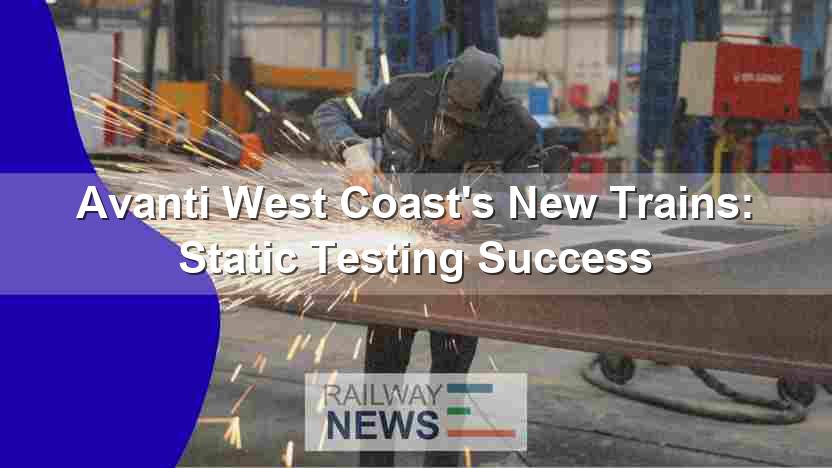
Hitachi Rail’s commencement of static testing at its Newton Aycliffe facility marks a critical juncture in the project. This phase involves rigorous testing of core functionalities across the entire trainset: engines, braking systems, door mechanisms, and onboard sanitation facilities (toilets). The initial focus on a Class 805 bi-mode train (a train capable of running on both electrified and non-electrified lines) showcases the multifaceted nature of the testing process. This meticulous approach ensures the reliability and safety of the new fleet before dynamic (on-track) testing commences later in the year.
The New Fleet: Class 805 and Class 807 Trains
The new fleet comprises two distinct classes of trains: ten seven-carriage Class 807 electric multiple units (EMUs) and thirteen five-carriage Class 805 bi-mode multiple units (BMUs). The inclusion of both EMUs and BMUs reflects Avanti West Coast’s operational requirements across its diverse network. The electric trains are optimized for electrified lines, offering enhanced efficiency and reduced emissions. The bi-mode trains provide flexibility, allowing operation on both electrified and non-electrified sections of track, ensuring seamless service across a broader geographical reach.
Operational Impact and Sustainability
The introduction of these new trains will significantly impact Avanti West Coast’s operations and contribute substantially to environmental sustainability. The replacement of older diesel-only Voyager trains with the new fleet is expected to result in a remarkable 61% reduction in carbon emissions, aligning with the UK’s broader commitment to decarbonization. Additionally, the upgraded passenger amenities—including improved Wi-Fi, at-seat charging, plug sockets, and a revamped catering service—promise to enhance the overall customer experience, increasing passenger satisfaction and potentially attracting more riders.
Future Rollout and Industry Implications
The new trains are slated to enter service next year. The Class 807 EMUs will operate on routes between London, the West Midlands, and Liverpool, while the Class 805 BMUs will service the London-North Wales corridor. The project’s success holds significant implications for the UK rail industry, demonstrating a commitment to modernizing rolling stock, enhancing passenger experience, and advancing sustainable transportation practices. The successful deployment of this new fleet can serve as a model for future rail modernization projects nationwide.
Conclusions
The static testing of Avanti West Coast’s new train fleet represents a pivotal step towards a more efficient, sustainable, and passenger-centric rail network in the UK. This £350 million investment by Hitachi Rail demonstrates a significant commitment to upgrading the nation’s rail infrastructure. The introduction of the Class 805 and Class 807 trains, encompassing both electric (EMU) and bi-mode (BMU) technology, addresses the operational demands of Avanti West Coast’s diverse network. The substantial reduction in carbon emissions, projected at 61%, showcases the environmental benefits of this modernization initiative, aligning with national decarbonization goals. Moreover, the enhanced passenger amenities, including improved Wi-Fi, charging facilities, and upgraded catering, are designed to elevate the overall customer experience, making rail travel more attractive and comfortable. The successful completion of testing and subsequent rollout of this new fleet will undoubtedly have positive repercussions for the entire UK rail industry, serving as a benchmark for future modernization projects and setting a higher standard for passenger service and environmental responsibility. The project’s success underscores the importance of strategic investment in rail infrastructure as a vital component of a modern, sustainable, and efficient transportation system. The future implications are vast, potentially influencing future procurement strategies and pushing the industry further toward a cleaner, more comfortable, and more efficient railway network for the benefit of all stakeholders.

Railway infrastructure, rolling stock and transport technologies specialist focused on global rail industry developments, high-speed rail systems, signaling technologies and freight transportation. Covering railway investments, public transport modernization, rail operations and international mobility projects across Europe, Asia and North America.
RELATED POSTS

October 8, 2026 1:15 pm
Alstom secured a €1bn contract to build 13 automated trains,...

October 1, 2026 7:09 am
United States regulators confirmed a September 30 deadline for the...

October 8, 2026 12:18 pm
Siemens Mobility signed an agreement with VinSpeed to supply 350...

October 4, 2026 5:14 pm
Alstom secured a CA$4.7 billion order from VIA Rail Canada...

October 5, 2026 6:12 pm
AECOM and Jacobs secured a contract in September 2026 to...

October 4, 2026 11:08 pm
Sound Transit confirmed the September 30 opening of Seattle Pinehurst...