
AutoCouple & FART: Revolutionizing Railway Tech
Hübner’s AutoCouple system revolutionizes train operations by automating the gangway coupling process, reducing time from 30 minutes to just 5 minutes per operation, leading to substantial cost savings and improved safety.
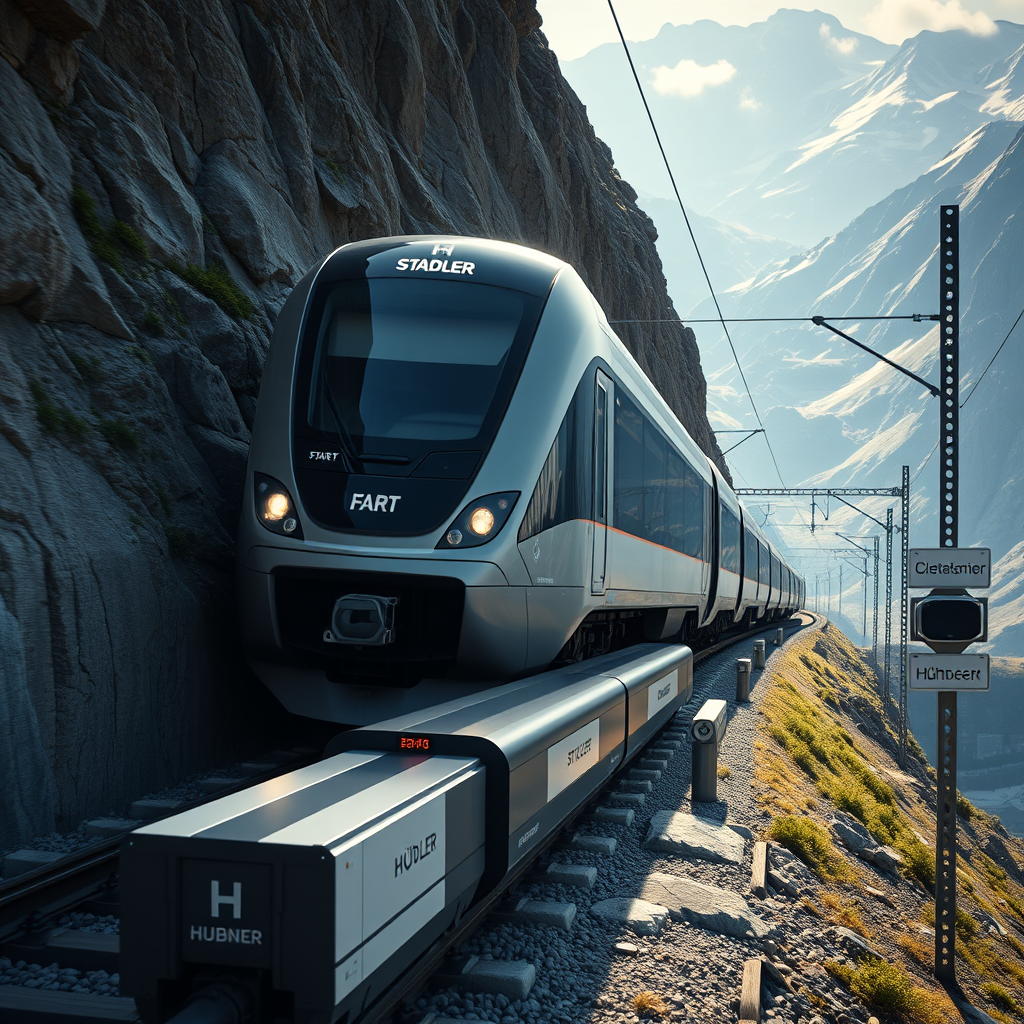
This article explores advancements in railway technology, focusing on two significant innovations: Hübner’s automatic gangway coupling system, AutoCouple, and Stadler’s new FART (Fully Articulated Rail Transport) trainset designed for steep inclines. The development of these technologies signifies a crucial shift towards greater efficiency, safety, and flexibility in railway operations. AutoCouple promises to revolutionize train coupling and decoupling, significantly reducing operational times and costs. Simultaneously, Stadler’s FART exemplifies progress in designing rolling stock optimized for challenging geographical terrains, enhancing the capabilities of railway networks worldwide. We will examine the technical details of these innovations, their potential impact on the railway industry, and the future implications for passenger transport and operational efficiency.
Hübner’s AutoCouple System: Automated Gangway Coupling
Hübner, a German light rail technology firm, has unveiled its AutoCouple system, an automated gangway coupling system designed to streamline train operations. This system dramatically reduces the time required to couple and decouple rail cars, a process that traditionally involves significant manual labor and time. According to Hübner, AutoCouple can reduce coupling time from 30 minutes to a mere 5 minutes, representing a 25-minute time saving per operation. This improvement translates into substantial cost savings for railway operators, stemming both from reduced labor costs and increased operational flexibility. The system enables train drivers to perform coupling and decoupling at the push of a button, fully automating the process while maintaining power grid connection. Additionally, the automation minimizes human interaction, thereby enhancing safety. The planned 2025 field tests in Toronto’s subway system will provide valuable real-world data on the system’s performance and reliability.
Enhanced Safety and Efficiency through Automation
The AutoCouple system’s impact extends beyond mere time savings. By automating a traditionally labor-intensive and potentially hazardous task, it significantly improves workplace safety. Reducing human intervention minimizes the risk of accidents and injuries associated with manual coupling. The system’s design prioritizes robustness and durability, ensuring reliable operation even in demanding environments. Future iterations are planned to incorporate power and data transmission between cars, further improving operational capabilities and enabling advanced train control systems. This integrated approach lays the groundwork for smarter, more interconnected railway systems, paving the way for advancements in areas like predictive maintenance and real-time performance monitoring.
Stadler’s FART Trainset: Conquering Steep Gradients
In contrast to AutoCouple’s focus on operational efficiency, Stadler’s FART trainset addresses the challenges of operating on steep inclines. Specifically designed for the Centovalli railway (connecting Locarno, Switzerland, and northern Italy), the FART is capable of traversing gradients as steep as 6% under its own power. This is a substantial achievement in railway engineering, demonstrating Stadler’s commitment to developing rolling stock optimized for challenging terrains. The FART’s design likely incorporates advanced traction systems, potentially including regenerative braking, to effectively manage the increased forces associated with steep inclines. This innovation expands the accessibility of railway networks to regions previously deemed unsuitable due to topographical limitations.
The Future of Railway Technology: A Synergistic Approach
Both AutoCouple and FART represent significant advancements in railway technology, highlighting a trend towards automation, increased efficiency, and enhanced capabilities. AutoCouple tackles the operational challenges of coupling and decoupling, while FART addresses the geographical limitations of steep gradients. These innovations are not isolated developments but rather part of a broader movement towards smarter, safer, and more sustainable railway systems. The synergy between these technologies suggests a future where automated systems handle routine tasks, freeing up human resources for higher-level functions, and specialized rolling stock expands the reach of rail networks into previously inaccessible regions. The integration of these innovations with other advancements in areas like signalling, communication, and predictive maintenance will further optimize rail operations, enhance the passenger experience, and contribute to a more efficient and sustainable transportation sector.
Conclusion
The advancements showcased by Hübner’s AutoCouple and Stadler’s FART represent a significant leap forward in railway technology. AutoCouple’s automated gangway coupling system promises a 25-minute reduction in coupling times, leading to considerable cost savings and increased operational efficiency. The automation also significantly improves safety by minimizing human intervention in a potentially hazardous task. The system’s future integration of power and data transmission further enhances its capabilities, setting the stage for smarter, more interconnected railway systems. Simultaneously, Stadler’s FART trainset demonstrates the capacity of modern railway engineering to overcome geographical limitations. Its ability to traverse 6% inclines under its own power opens up new possibilities for rail networks in challenging terrains, expanding access and connectivity in previously inaccessible regions. The combined impact of these innovations points towards a future of more efficient, safer, and flexible railway operations. The integration of such technologies with ongoing advancements in other areas like signalling, communication, and predictive maintenance will further optimize rail networks, leading to improvements in passenger experience, enhanced sustainability, and a more efficient transportation system as a whole. The successful implementation and widespread adoption of these and similar technologies will be crucial in shaping the future of the railway industry and ensuring its continued relevance in a rapidly evolving transportation landscape. The coming years will be pivotal in witnessing the widespread integration of these innovations and their impact on global railway systems.

Railway infrastructure, rolling stock and transport technologies specialist focused on global rail industry developments, high-speed rail systems, signaling technologies and freight transportation. Covering railway investments, public transport modernization, rail operations and international mobility projects across Europe, Asia and North America.
RELATED POSTS

October 1, 2026 7:09 am
United States regulators confirmed a September 30 deadline for the...

October 8, 2026 1:15 pm
Alstom secured a €1bn contract to build 13 automated trains,...

October 4, 2026 5:14 pm
Alstom secured a CA$4.7 billion order from VIA Rail Canada...

October 8, 2026 12:18 pm
Siemens Mobility signed an agreement with VinSpeed to supply 350...

October 5, 2026 6:12 pm
AECOM and Jacobs secured a contract in September 2026 to...

October 4, 2026 11:08 pm
Sound Transit confirmed the September 30 opening of Seattle Pinehurst...