
Atlas Railcar: Revolutionizing Nuclear Waste Transport
The Atlas Railcar is a 12-axle railcar designed for safely and efficiently transporting spent nuclear fuel (SNF) across the United States, following rigorous testing to meet AAR safety standards, with a capacity of up to seven types of SNF casks.
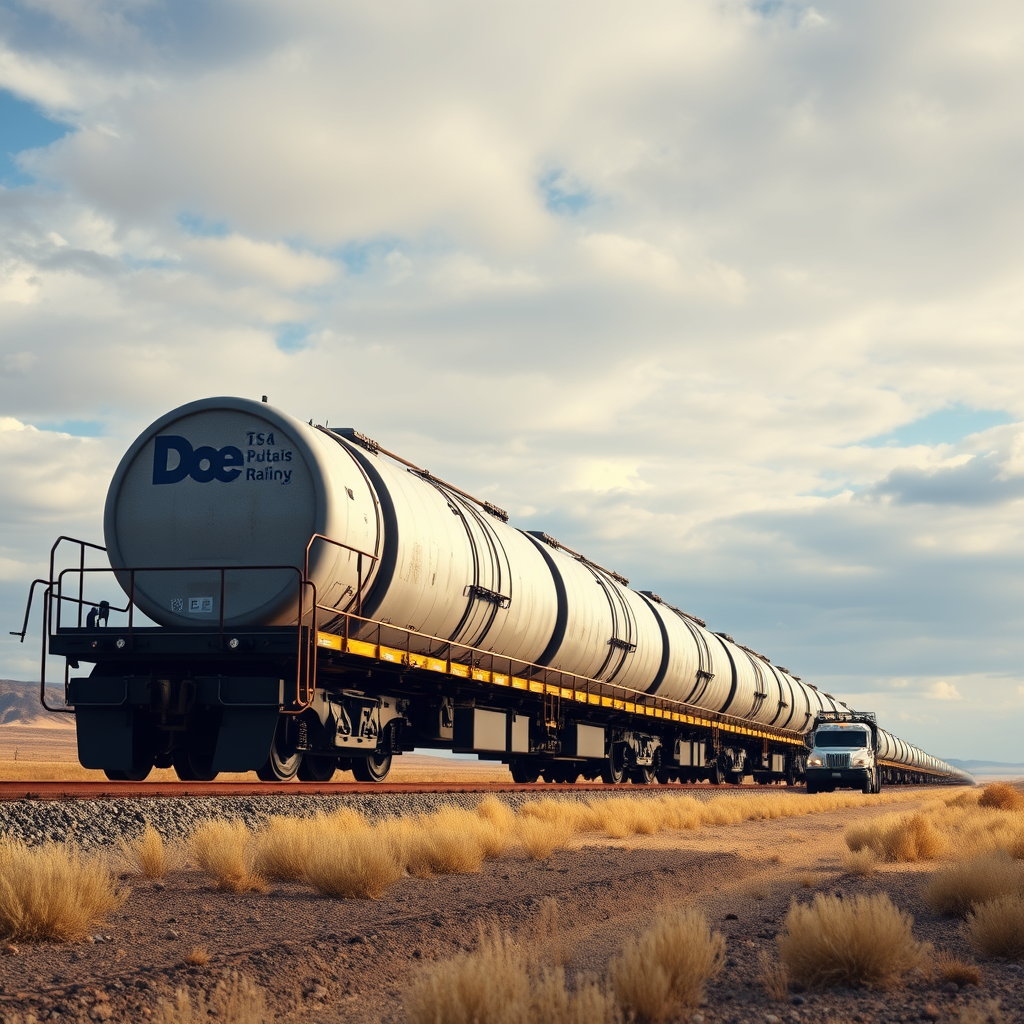
This article explores the development and upcoming launch of the Atlas Railcar, a revolutionary 12-axle railcar designed for the safe and efficient transportation of spent nuclear fuel (SNF). The United States Department of Energy (DoE) has invested significant resources in this project, aiming to address the critical challenge of managing nuclear waste. The development has spanned three years of rigorous testing, culminating in a demonstration of the system’s capabilities with the largest legally permissible load. This article explores the technical specifications of the Atlas Railcar, its safety features, and the regulatory hurdles faced before its operational deployment. Additionally, we’ll examine the broader implications of this technology for the nuclear waste management industry and its impact on the future of safe nuclear material transportation by rail.
The Atlas Railcar: Design and Capabilities
The Atlas Railcar represents a significant advancement in the transportation of SNF. Its 12-axle design allows for the carriage of exceptionally heavy loads, with a capacity to transport up to seven different types of spent nuclear fuel casks, ranging from 82 to 210 metric tons (t). This versatility is crucial given the diverse range of cask types used by commercial nuclear power plants. Each railcar boasts a maximum carrying capacity of 217,000 kg, significantly increasing the efficiency of SNF transportation compared to previous methods. The robust design has undergone extensive testing to meet the rigorous safety standards set by the Association of American Railroads (AAR), demonstrating its capability to withstand various operational stresses and loads.
Safety and Security Features
Safety is paramount in the transportation of radioactive materials. The Atlas Railcar’s design incorporates multiple layers of safety and security features. The train configuration includes buffer cars strategically positioned between the locomotives and the Atlas Railcars, as well as at the rear of the train, to absorb impacts and further protect the SNF casks. Additionally, a dedicated escort car accompanies each train, carrying security personnel and state-of-the-art monitoring equipment. This escort car provides real-time surveillance and ensures the secure transport of the high-value cargo. This detailed approach to security minimizes risks associated with transporting hazardous materials by rail. The design accounts for various emergency scenarios, ensuring containment of the SNF under any conceivable circumstances.
Regulatory Approval and Operational Deployment
While the Atlas Railcar has successfully completed rigorous testing, obtaining conditional approval from the AAR Equipment Engineering Committee is crucial before commencing regular operations. The DoE is currently awaiting this final approval. However, the upcoming unveiling at BNSF’s Yard in Denver, Colorado, during the DoE’s 2024 National Transportation Stakeholders Forum Annual Meeting will serve as a valuable demonstration, showcasing the railcar’s capabilities and facilitating further training for personnel involved in its operation. The approval process reflects the stringent regulatory oversight associated with the transportation of hazardous materials, ensuring the utmost safety and adherence to industry best practices.
Implications for Nuclear Waste Management
The successful deployment of the Atlas Railcar signifies a major step forward in the safe and efficient management of nuclear waste. The increased capacity and improved safety features offered by this railcar directly contribute to enhanced logistics and cost-effectiveness in transporting spent fuel from nuclear power plants to designated disposal sites. The ability to transport a wider range of cask types further streamlines the process, accommodating the variations in cask designs used across the industry. This innovative technology not only addresses the immediate need for safe nuclear waste transport but also establishes a foundation for future advancements in the handling of radioactive materials, shaping the landscape of the nuclear waste management industry and improving the overall process.
Conclusions
The development and impending launch of the Atlas Railcar represent a significant achievement in the field of nuclear waste transportation. The three-year testing period, culminating in successful trials with maximum legal loads, demonstrates the robustness and safety of this innovative 12-axle railcar. Its capacity to transport various types of spent nuclear fuel (SNF) casks, ranging from 82 to 210 metric tons, improves the efficiency of SNF transportation compared to legacy systems. The incorporation of multiple safety and security features, including buffer cars and a dedicated escort car, minimizes risks associated with transporting hazardous materials. While awaiting final regulatory approval from the Association of American Railroads (AAR) Equipment Engineering Committee, the planned unveiling in Denver signifies a pivotal moment, offering valuable training opportunities and showcasing the railcar’s capabilities. The successful implementation of the Atlas Railcar represents a crucial advancement in addressing the long-term challenges of nuclear waste management, offering a safer, more efficient, and sustainable solution for the transportation of SNF from nuclear power plants to disposal sites. This technology sets a new standard for the industry, promising improved logistics, cost-effectiveness, and overall safety, and ultimately contributes to a more sustainable approach to nuclear waste management. The ongoing commitment to rigorous testing and regulatory compliance highlights the seriousness with which this issue is being addressed, furthering public trust and confidence in the safety of this critical process.

Railway infrastructure, rolling stock and transport technologies specialist focused on global rail industry developments, high-speed rail systems, signaling technologies and freight transportation. Covering railway investments, public transport modernization, rail operations and international mobility projects across Europe, Asia and North America.
RELATED POSTS

October 8, 2026 1:15 pm
Alstom secured a €1bn contract to build 13 automated trains,...

October 1, 2026 7:09 am
United States regulators confirmed a September 30 deadline for the...

October 4, 2026 5:14 pm
Alstom secured a CA$4.7 billion order from VIA Rail Canada...

October 8, 2026 12:18 pm
Siemens Mobility signed an agreement with VinSpeed to supply 350...

October 5, 2026 6:12 pm
AECOM and Jacobs secured a contract in September 2026 to...

October 4, 2026 11:08 pm
Sound Transit confirmed the September 30 opening of Seattle Pinehurst...