
Alstom Wins $2.3B TTC Deal: New Subway Trains for Toronto
Alstom wins a $2.3B contract to deliver 70 new subway trains to Toronto, modernizing the TTC fleet and boosting local manufacturing in Ontario.
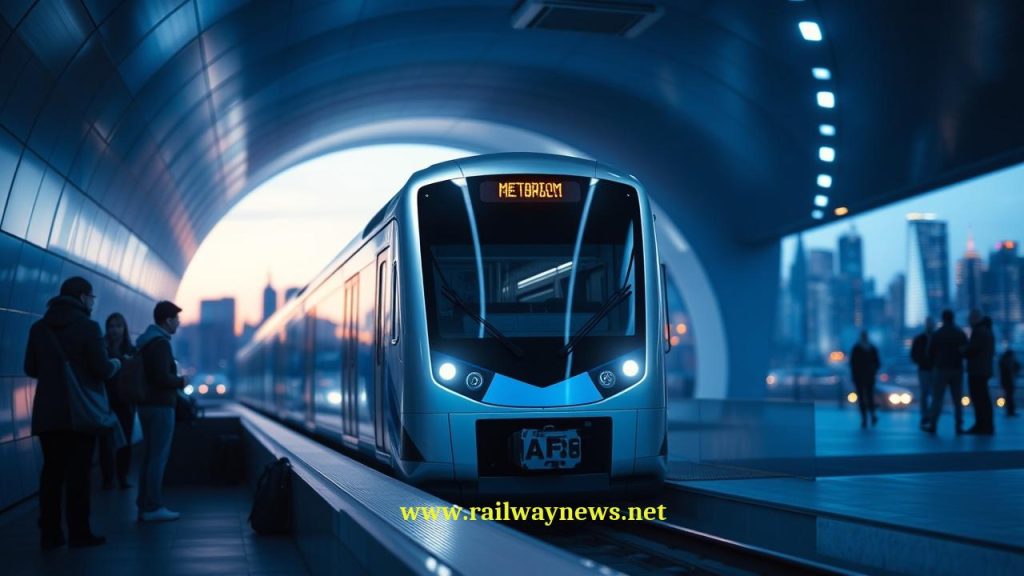
Alstom has secured a landmark USD 2.3 billion contract to supply 70 new Metropolis subway trains to the Toronto Transit Commission (TTC), a major rolling stock investment that surpasses other recent high-value transit system deals globally. The agreement, backed by all levels of government, prioritizes local manufacturing in Ontario and aims to modernize one of North America’s busiest transit networks.
| Category | Details |
|---|---|
| Contract Value | USD 2.3 Billion (approx. EUR 1.4 Billion) |
| Supplier | Alstom Group |
| Client | Toronto Transit Commission (TTC) |
| Rolling Stock | 70 x 6-car Metropolis “New Subway Trains” (NST) |
| Primary Deployment | Toronto Subway Line 2 (Bloor-Danforth) |
| Local Manufacturing | Assembly in Thunder Bay, ON; Testing in Kingston, ON |
In a significant move to overhaul its public transportation infrastructure, the Toronto Transit Commission (TTC) has finalized an agreement with Alstom for a new fleet of subway trains. The deal provides for an initial delivery of 70 six-car Metropolis trains, designated as New Subway Trains (NST), with options for up to 150 additional units. The bulk of the new fleet—55 trains—is slated to replace the aging rolling stock on the critical Line 2 Bloor-Danforth, with the remaining 15 units allocated for network growth, including the Yonge North and Scarborough subway extensions.
The new Metropolis trains for Toronto are designed with a focus on passenger experience and operational efficiency. Each six-car train will feature spacious, open-gangway interiors, allowing passengers to move freely between cars. The design incorporates multifunctional areas to accommodate wheelchairs, strollers, and bicycles, alongside modern passenger information systems. Technologically, the trains will be equipped with energy-efficient LED lighting, intelligent climate control, wireless charging ports for personal devices, and advanced cybersecurity measures to protect onboard systems. Alstom’s eco-design principles, including optimized propulsion and the use of digital design tools, are intended to minimize the environmental footprint of the fleet throughout its lifecycle.
The USD 2.3 billion price tag positions this agreement as one of the most substantial recent investments in public transit rolling stock worldwide. For context, it significantly exceeds Indra’s recent USD 1.1 billion contract to manage London’s transport ticketing systems and stands as a major capital expenditure, distinct from massive infrastructure proposals like the MTA’s $7.7 billion 125th Street subway extension in New York. A cornerstone of the deal is its robust local economic component; the trains will be designed in Canada, assembled at Alstom’s Thunder Bay plant, and tested in Kingston. This commitment is projected to create 945 direct and 1,700 indirect jobs, leveraging Canadian steel and aluminum to bolster the domestic supply chain.
Key Takeaways
- Fleet Modernization: The contract directly addresses the urgent need to replace end-of-life rolling stock on TTC’s Line 2, enhancing reliability and capacity for hundreds of thousands of daily riders.
- Major Economic Impact: With a commitment to local assembly and sourcing, the deal will generate over 2,600 direct and indirect jobs in Ontario, strengthening Canada’s domestic rail manufacturing sector.
- Passenger-Centric Design: The new trains will feature modern amenities such as open gangways, wireless charging, and dedicated multifunctional spaces, significantly improving the commuter experience.
Editor’s Analysis
This Alstom-TTC agreement is a textbook example of how modern public transit procurement is evolving into a tool for both urban modernization and national industrial strategy. Beyond the clear benefit of new, reliable trains for Toronto, the contract’s emphasis on local content in Thunder Bay and Kingston is a political and economic masterstroke. In an era of fragile global supply chains, securing domestic manufacturing for critical infrastructure is a key priority for governments. For Alstom, this demonstrates its ability to leverage its global Metropolis platform while adapting to local manufacturing requirements, a flexible model that is crucial for winning large-scale, government-backed contracts in North America and beyond.
Frequently Asked Questions
- How many new trains is the TTC receiving from Alstom?
- The initial contract is for 70 new six-car subway trains, with options for up to 150 additional units in the future.
- Where will the new Toronto subway trains be built?
- The trains will be designed in Canada, with final assembly taking place at Alstom’s facility in Thunder Bay, Ontario, and subsequent testing at a facility in Kingston, Ontario.
- What is the primary purpose of the new train fleet?
- Of the 70 trains, 55 are designated to replace the aging fleet on Toronto’s Line 2 (Bloor-Danforth), while the other 15 will support network expansion projects on Line 1 and Line 2.

Railway infrastructure, rolling stock and transport technologies specialist focused on global rail industry developments, high-speed rail systems, signaling technologies and freight transportation. Covering railway investments, public transport modernization, rail operations and international mobility projects across Europe, Asia and North America.
RELATED POSTS

October 1, 2026 7:09 am
United States regulators confirmed a September 30 deadline for the...

October 4, 2026 5:14 pm
Alstom secured a CA$4.7 billion order from VIA Rail Canada...

October 1, 2026 12:13 am
Illinois approved $1.5 billion annually for the Northern Illinois Transit...

October 6, 2026 2:14 am
Union Pacific launched export rail shipments with Ferromex to deliver...

October 1, 2026 6:10 am
Amtrak approved a System Expansion Committee on July 30 to...

October 1, 2026 3:12 am
Greenbrier confirmed Brian Comstock as new president and CEO effective...