
ADIF: Enhancing Barcelona Cercanías with EUR 1.9M Investment
ADIF invests EUR 1.9 million in Barcelona Cercanías upgrades, focusing on modernizing three key stations for improved operational capacity and user experience.
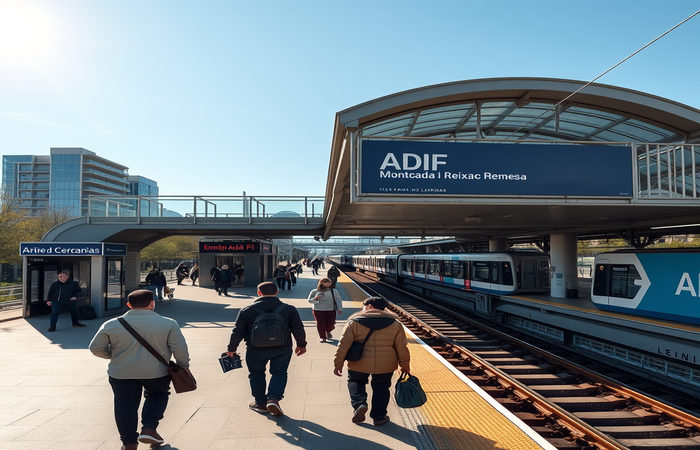
Barcelona, Spain – October 26, 2023 – ADIF (Administrador de Infraestructuras Ferroviarias), Spain’s railway infrastructure manager, has awarded a significant contract valued at EUR 1.9 million for the design phase of crucial infrastructure upgrades within the Barcelona Cercanías (commuter rail) network. This initiative, a part of the “Transforming commuter rail” (Trasformem Rodalíes) plan, focuses on enhancing the operational capacity, modernizing, and improving the overall user experience across three key stations: Sant Sadurní d’Anoia, Tordera, and Montcada i Reixac-Manresa. The project’s scope includes detailed assessments of building, track, and electrification aspects. These enhancements are designed to improve the efficiency, safety, and sustainability of the suburban rail network while ensuring complete accessibility and connectivity for all passengers. The project reflects a commitment to modernizing the rail infrastructure and providing better service to the growing population of Barcelona and its surrounding areas.
Strategic Overview: The “Transforming Commuter Rail” Plan
The “Transforming commuter rail” (Trasformem Rodalíes) initiative represents a strategic investment in modernizing and expanding the Barcelona Cercanías network. This project is driven by the need to meet increasing passenger demand, improve service quality, and enhance the overall commuter rail experience. The project’s primary goal is to increase the operational capacity, functionality, efficiency, modernity, safety, and sustainability of the railway facilities. The design phase, expected to last 18 months, will define the most appropriate technical and construction solutions. Following the design phase, a construction supervision phase of 12 months will ensure the proper execution of the plans. The project aims to address current challenges, such as platform limitations, accessibility issues, and operational inefficiencies, to create a more integrated, efficient, and user-friendly rail system.
Station-Specific Improvements: Sant Sadurní d’Anoia, Tordera, and Montcada i Reixac-Manresa
The upgrades encompass detailed enhancements tailored to the specific needs of each station.
- Sant Sadurní d’Anoia: This station, serving line R4, will see modifications to the track layout, improvements to platform accessibility, and enhanced integration with the surrounding urban environment. The passenger building will be refurbished to standardize its exterior appearance and improve passenger circulation. New canopies will be added, lighting installations will be improved, and designated zones for vehicle stops will be created, improving access for public transport and private vehicles.
- Tordera: Located on a single-track section, Tordera station, which serves lines R1 and RG1, will receive a new 200-meter-long passing loop with its corresponding platform to improve train crossing operations and enhance operational efficiency. The project includes works on tracks, platforms, and the connections between platforms. An assessment of the need for a grade-separated crossing and analysis of accessibility compliance will also be conducted.
- Montcada i Reixac-Manresa: This station, also on line R4, will have its platforms extended to a useful length of 200 meters and improve accessibility and connectivity between platforms. This will include the construction of an accessible route from the station entrances to the trains, including a passenger underpass. The station will also receive modernized facilities, including efficient lighting, modern communication systems, and a revamped passenger concourse.
Detailed Construction and Design Elements
The design phase will meticulously address critical infrastructure elements. At Sant Sadurní d’Anoia, the focus will be on modernizing the existing passenger building, standardizing its appearance, and enhancing both internal and external passenger circulation, meeting new urban and accessibility requirements. The design will include plans for extending and/or installing new canopies and improving lighting. Tordera’s design phase will involve constructing a new passing loop and related platform to improve train crossing operations, and ensuring accessibility compliance on platforms. For Montcada i Reixac-Manresa, the design will focus on platform extensions and improving accessibility through a new passenger underpass. All projects will incorporate modern facilities, efficient lighting, and passenger concourses to ensure a seamless travel experience.
Conclusion
The investment by ADIF in the Barcelona Cercanías network underscores the commitment to upgrade and enhance Spain’s rail infrastructure. The three stations targeted for improvements, Sant Sadurní d’Anoia, Tordera, and Montcada i Reixac-Manresa, will undergo significant transformations designed to boost operational efficiency, improve accessibility, and modernize the commuter rail experience for passengers. The “Transforming commuter rail” plan reflects ADIF’s strategic vision for a sustainable and passenger-centric rail network. The multi-faceted approach, encompassing track layout adjustments, platform extensions, passenger building refurbishments, and the integration of modern technologies, will bring significant improvements to the safety and efficiency of the Barcelona Cercanías system.
The strategic improvements at each station highlight ADIF’s commitment to addressing unique challenges within the network, from optimizing train crossing operations at Tordera to improving accessibility at Montcada i Reixac-Manresa and enhancing the passenger experience at Sant Sadurní d’Anoia. These developments represent a vital step in creating a more robust, efficient, and passenger-friendly rail network that caters to the evolving needs of Barcelona’s growing population.
**Summary of Companies Involved:**
* **ADIF (Administrador de Infraestructuras Ferroviarias):** The primary entity in charge of this project, responsible for managing and developing railway infrastructure in Spain.
1.

Railway infrastructure, rolling stock and transport technologies specialist focused on global rail industry developments, high-speed rail systems, signaling technologies and freight transportation. Covering railway investments, public transport modernization, rail operations and international mobility projects across Europe, Asia and North America.
RELATED POSTS

October 1, 2026 7:09 am
United States regulators confirmed a September 30 deadline for the...

October 8, 2026 1:15 pm
Alstom secured a €1bn contract to build 13 automated trains,...

October 4, 2026 5:14 pm
Alstom secured a CA$4.7 billion order from VIA Rail Canada...

October 8, 2026 12:18 pm
Siemens Mobility signed an agreement with VinSpeed to supply 350...

October 5, 2026 6:12 pm
AECOM and Jacobs secured a contract in September 2026 to...

October 4, 2026 11:08 pm
Sound Transit confirmed the September 30 opening of Seattle Pinehurst...