
Regional Rail Signs Massachusetts Central Railroad Deal
Regional Rail finalized an agreement to acquire the Massachusetts Central Railroad, adding 28 miles of track and expanding its network to 18 railroads by 2026.
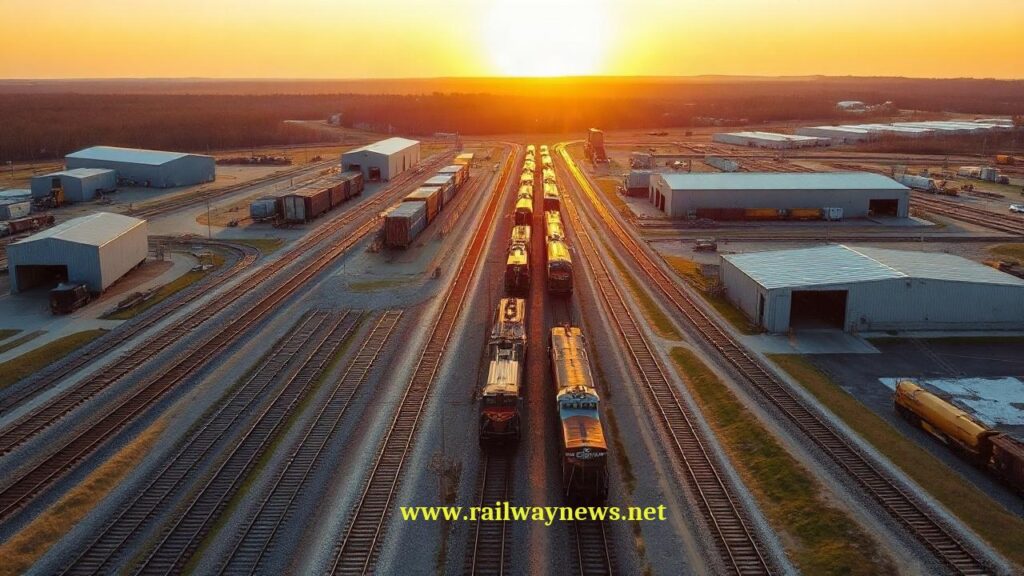
⚡ In Brief: Regional Rail is acquiring the Massachusetts Central Railroad, a 28-mile Massachusetts short line with an integrated reload centre, expanding the 3i-backed operator’s network to 18 railroads while the purchase price goes undisclosed.
PALMER, Mass. – Regional Rail LLC has finalized its agreement to acquire the Massachusetts Central Railroad (MCER), adding approximately 28 miles of former New York Central branch line between Palmer and South Barre, Massachusetts. Closing is expected shortly after July 1, 2026, and will expand the 3i-backed operator to 18 railroads across 10 U.S. states and two Canadian provinces. The transaction also brings in Wildwood Reload, a warehousing and transloading business serving industrial customers in the region.
What Is the Full Scope of This Development?
The acquisition combines an operating freight railroad with a standalone industrial services business under one owner. MCER hauls waste, chemicals, plastics and lumber while Wildwood Reload provides warehousing and transloading capacity; together, the two assets give Regional Rail a multimodal logistics foothold in central Massachusetts.
Reported route length varies: the seller announcement cites 28 miles, while trade-press operating records list 25 miles of former New York Central branch between Palmer and South Barre (Source: Trains.com, 2026). The gap is consistent with whether yard trackage, sidings and connecting lead-in tracks are counted in the advertised mileage. The acquisition does not include any mainline freight property in Regional Rail’s existing Northeast cluster—MCER is a standalone short line with a single line segment.
Key Development Data
| Parameter | Value |
|---|---|
| Company / Organisation | Regional Rail LLC acquiring Massachusetts Central Railroad (MCER) and Wildwood Reload |
| Total Value | Not disclosed |
| Parties Involved | Regional Rail (buyer); 3i (backer); Massachusetts Central Railroad and Wildwood Reload (targets) |
| Timeline / Completion | Closing expected shortly after July 1, 2026 |
| Country / Corridor | U.S. — Palmer to South Barre, Massachusetts |
How Does This Compare to Industry Trends?
No purchase price, MCER revenue, traffic volume, or Wildwood Reload profit figure was disclosed by either party, making direct financial benchmarking impossible at time of publication.
The scale of the deal is modest by U.S. short line standards: roughly 600 short-line and regional railroads operate in North America, and the largest consolidator, Genesee & Wyoming, controls more than 100 of them (Source: G&W corporate, 2025). Regional Rail’s growth curve, however, is unusually steep for a private-equity-backed operator—since 3i took its stake in July 2019, the company has grown from three railroads to 18, adding 15 properties in less than seven years. That pace of serial acquisition mirrors the broader consolidation cycle that has seen Class I systems shed branch lines into lower-cost short line operators for two decades.
Macro market forecasts contextualise why sponsors continue buying short lines. Future Market Insights values the global rail freight market at USD 370.0 billion in 2025, projecting USD 602.7 billion by 2036 at a 4.5% CAGR (Source: Future Market Insights, 2025); Market.us, using a broader definition, puts the same 2025 market at USD 1.61 trillion (Source: Market.us, 2025). The order-of-magnitude spread between houses cautions buyers against relying on any single rail freight growth projection when pricing a niche Class III asset like MCER.
Editor’s Analysis
Regional Rail is executing the classic financial-sponsor playbook: acquire small, entrepreneur-built franchises, retain local operating identity, and bolt on adjacent industrial services revenue such as Wildwood Reload’s transload business. The MCER deal is strategically logical for 3i, whose infrastructure mandate favours cash-generative assets with real-estate-backed upside over pure transportation operations, and the 28-mile property’s waste and plastics flows are largely recession-resistant. The unanswered question is how much traffic the line can add: MCER’s storage and transload mix suggests the buyer is valuing land, warehousing and customer relationships as much as the railroad’s underlying carloads.
FAQ
Q: What commodities does the Massachusetts Central Railroad move?
A: The railroad hauls waste, chemicals, plastics and lumber, and also provides storage and transloading services. Wildwood Reload adds warehousing and transloading for industrial customers in the region.
Q: Why do some reports say the railroad is 28 miles and others say 25 miles?
A: The seller announcement cites 28 miles, while operating summaries list 25 miles of former New York Central branch between Palmer and South Barre. The difference is likely attributable to whether yard and siding trackage are included in the total route mileage.
Q: How much did Regional Rail pay for the Massachusetts Central?
A: The purchase price was not disclosed. The transaction is expected to close shortly after July 1, 2026, pending customary conditions.

Railway infrastructure, rolling stock and transport technologies specialist focused on global rail industry developments, high-speed rail systems, signaling technologies and freight transportation. Covering railway investments, public transport modernization, rail operations and international mobility projects across Europe, Asia and North America.
RELATED POSTS

October 8, 2026 1:15 pm
Alstom secured a €1bn contract to build 13 automated trains,...

October 1, 2026 7:09 am
United States regulators confirmed a September 30 deadline for the...

October 8, 2026 12:18 pm
Siemens Mobility signed an agreement with VinSpeed to supply 350...

October 4, 2026 5:14 pm
Alstom secured a CA$4.7 billion order from VIA Rail Canada...

October 5, 2026 6:12 pm
AECOM and Jacobs secured a contract in September 2026 to...

October 1, 2026 12:13 am
Illinois approved $1.5 billion annually for the Northern Illinois Transit...