
BART Opens 3 Substations for 20% More Transbay Tube Power
BART opened 3 traction substations in San Francisco and Oakland in the first half of 2026, adding 20% Transbay Tube power capacity and improving redundancy.
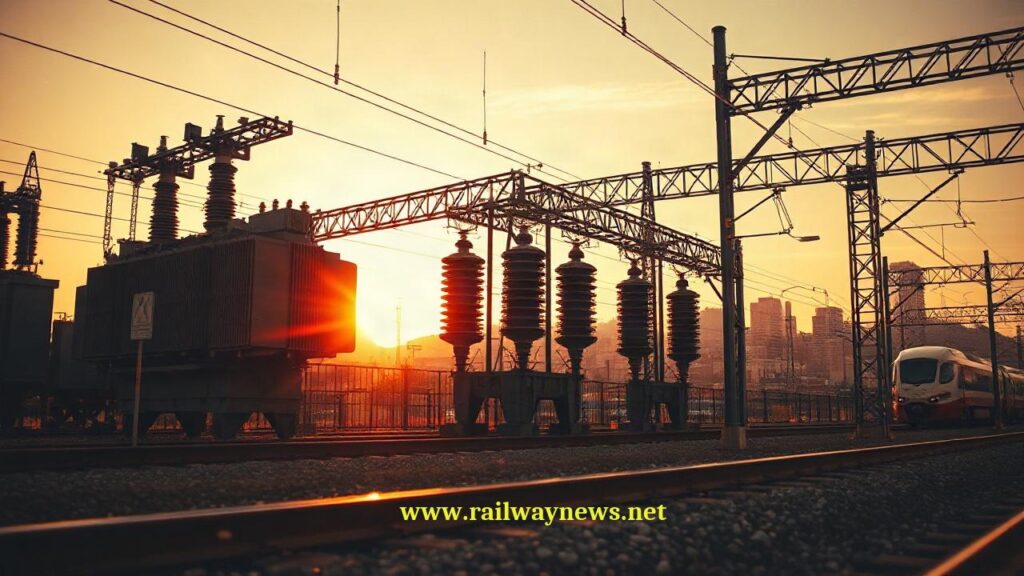
⚡ In Brief: Bay Area Rapid Transit brought three traction power substations online between January and June 2026 in San Francisco and Oakland, increasing available capacity by about 20% and improving Transbay Tube power redundancy.
San Francisco, California – Bay Area Rapid Transit energized three traction power substations between January and June 2026, adding roughly 20 percent capacity to the network that feeds trains through downtown San Francisco and the Transbay Tube corridor. The substations are located at Civic Center/UN Plaza Station, Montgomery St. Station and near the Oakland entrance to the Transbay Tube. Myat San, BART’s chief infrastructure officer, said traction power substations are the backbone of the system and that the energized stations increase capacity and improve redundancy.
What Is the Full Scope of This Project?
The project is an infrastructure upgrade at three fixed sites rather than a single substation replacement. Two sites are on the San Francisco side of the Transbay Tube and one is on the Oakland side, allowing BART to route power from multiple locations when any substation is taken out of service. BART says the package raises available power by approximately 20 percent over baseline, improves voltage performance, and reduces strain on older electrical equipment during heavy demand. The work is linked to the Transbay Corridor Core Capacity Program, which is intended to support additional trains through the Tube.
Key Project Data
| Parameter | Value |
|---|---|
| Project / Contract Name | BART Traction Power Substations (three sites under Transbay Corridor Core Capacity Program) |
| Total Value | Not disclosed; majority funded by Measure RR, with TCCCP, FTA and BART contributions |
| Parties Involved | BART; funding partners include Measure RR, Transbay Corridor Core Capacity Program, Federal Transit Administration |
| Timeline / Completion | Substations energized between January and June 2026 |
| Country / Corridor | USA — San Francisco and Oakland, California, Transbay Tube corridor |
How Does This Compare to Similar Projects?
BART has not disclosed what this substation package cost, preventing direct benchmarking against other U.S. traction power projects. The funding mix fits the operator’s larger Measure RR capital envelope, a voter-approved program that has supported systemwide state-of-good-repair work since 2016. U.S. commuter rail activity in 2025 showed parallel investment in future operations: MBTA shortlisted three teams for its Regional Rail Operating Contract, while Tri-Rail in Florida exceeded 4.5 million passenger journeys in its best annual ridership year (Source: Rail Market, 2025). Those figures are not direct technical equivalents, but they indicate that BART’s approach of adding physical power assets before raising service frequency is common across U.S. agencies managing congested legacy corridors.
Editor’s Analysis
Substation commissioning is the quiet pre-condition for BART to increase Transbay Tube throughput; the 20% capacity gain will become visible only when BART adds trains under TCCCP. Because the Tube funnels all cross-bay movements through one connection, redundancy at Civic Center, Montgomery St. and the Oakland portal reduces the chance of a single electrical failure stopping corridor service. This is part of a wider market shift: high-speed rail investment rose 24% globally in 2025, but mature U.S. systems are still spending heavily on electrical resilience in dense urban corridors rather than only new-build lines (Source: Business Research Insights, 2025).
FAQ
Q: Why does BART need traction power substations in downtown San Francisco and Oakland?
A: Every BART train draws power from substations, and the Transbay Tube concentrates many trains in one corridor. The three new sites let BART draw power from alternate substations during outages and raise available capacity by about 20% for future Transbay service.
Q: What was the total cost of the three substations?
A: BART did not disclose a project total. Funding came primarily from voter-approved Measure RR, with additional Transbay Corridor Core Capacity Program, Federal Transit Administration and BART funds.
Q: Will train frequency increase as soon as the substations are online?
A: BART has not announced a specific service increase date. The substations are an enabling step in the Transbay Corridor Core Capacity Program, and the operator said the increased capacity makes it possible to run additional trains through the Tube.

Railway infrastructure, rolling stock and transport technologies specialist focused on global rail industry developments, high-speed rail systems, signaling technologies and freight transportation. Covering railway investments, public transport modernization, rail operations and international mobility projects across Europe, Asia and North America.
RELATED POSTS

October 8, 2026 1:15 pm
Alstom secured a €1bn contract to build 13 automated trains,...

October 1, 2026 7:09 am
United States regulators confirmed a September 30 deadline for the...

October 8, 2026 12:18 pm
Siemens Mobility signed an agreement with VinSpeed to supply 350...

October 4, 2026 5:14 pm
Alstom secured a CA$4.7 billion order from VIA Rail Canada...

October 5, 2026 6:12 pm
AECOM and Jacobs secured a contract in September 2026 to...

October 1, 2026 12:13 am
Illinois approved $1.5 billion annually for the Northern Illinois Transit...