
Budapest-Belgrade Rail Confirms Launch Delayed to Sept 2026
Hungary confirmed the €2.5B Hungarian rail upgrade will not see any passenger service before Sept 2026 after Chinese software defects delayed its control system.
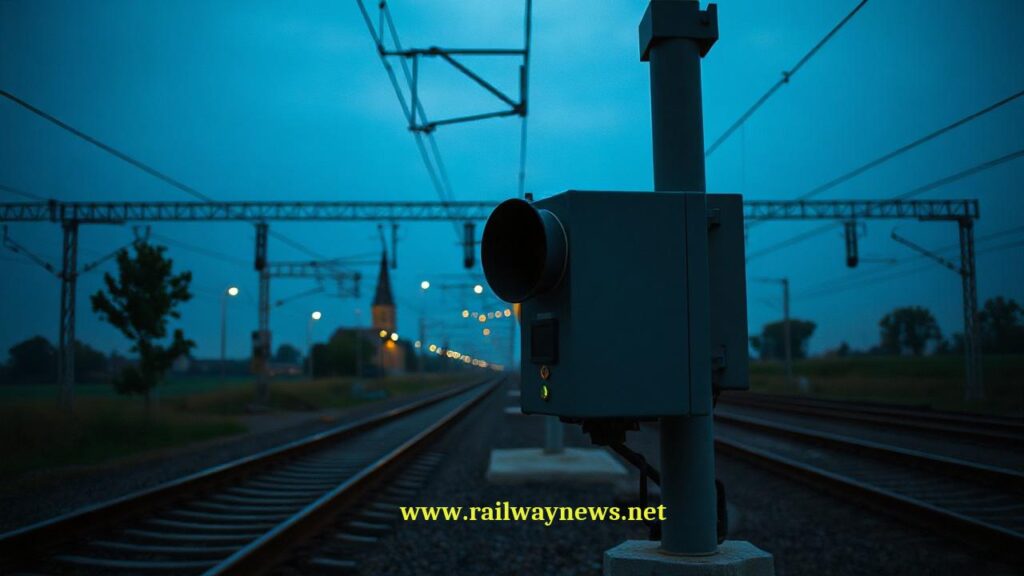
⚡ In Brief: Passenger services on the modernised Budapest–Belgrade railway line face further delays after software deficiencies were discovered in the Chinese-supplied traffic control system, with September 2026 now the earliest possible launch date for the EUR 2.5–2.7 billion, 166-km Hungarian section.
BUDAPEST, HUNGARY – Hungarian Transport Minister Dávid Vitézy confirmed on 20 July 2026 that passenger operations on the upgraded Budapest–Belgrade line cannot commence until the Chinese contractor resolves software deficiencies identified in the train control system. The EUR 2.5–2.7 billion project has already missed three publicly announced deadlines, including a February 2026 target set by former minister János Lázár, and freight-only operations began on 27 February 2026 under speed restrictions of 100 km/h. If the contractor delivers software fixes within weeks, unoccupied test runs could start in the first half of August, placing the earliest possible passenger launch in September 2026.
What Is the Full Scope of This Project?
The Hungarian section of the Budapest–Belgrade railway modernization comprises approximately 166 km of upgraded double-track infrastructure between Budapest-Ferencváros and Kelebia at the Serbian border, designed for maximum speeds of 160 km/h with an expected travel time reduction of roughly 90 minutes compared to pre-upgrade schedules. Electrification and station works are physically complete, but the traffic control system—supplied by an unnamed Chinese contractor—lacks full operational certification, leaving the line restricted to single-train-per-direction freight movements at reduced speeds. The project was financed primarily through a loan from the Export-Import Bank of China, with total costs estimated between EUR 2.5 billion and EUR 2.7 billion.
Key Project Data
| Parameter | Value |
|---|---|
| Project / Contract Name | Budapest–Belgrade Railway Modernisation (Hungarian Section) |
| Total Value | EUR 2.5–2.7 billion |
| Parties Involved | Hungarian Government (MÁV), Chinese contractor (name not disclosed), Export-Import Bank of China (financier), Serbian authorities (cross-border coordination) |
| Timeline / Completion | Freight service: 27 February 2026; Passenger service: September 2026 (earliest optimistic estimate); prior deadlines of February, March, and Easter 2026 all missed |
| Country / Corridor | Hungary / Budapest–Belgrade corridor, part of the broader Budapest–Belgrade–Skopje–Athens link to the Port of Piraeus |
How Does This Compare to Similar Projects?
The Budapest–Belgrade line is one of the most closely watched Chinese-financed rail projects in Europe, forming the northern segment of a strategic corridor that connects to the China-operated Port of Piraeus in Greece. At approximately EUR 15–16 million per km for the Hungarian section, the per-kilometre cost sits well above the European average for conventional line upgrades—typically EUR 5–12 million per km—but below the EUR 20–30 million per km range typical of European high-speed new builds. (Source: European Court of Auditors, 2023) By comparison, the China–Kyrgyzstan–Uzbekistan railway, which secured its financing agreement in 2025, is projected at roughly EUR 4.7 billion for 523 km, or approximately EUR 9 million per km, reflecting lower labour and land acquisition costs in Central Asia. (Source: Jamestown Foundation, 2025) Serbia’s own rail market contracted 12% in freight volumes during 2025, with road haulage commanding 63.7% of all goods transported, underscoring the corridor’s strategic importance for shifting freight from road to rail. (Source: trans.info, 2025) The identity of the Chinese contractor responsible for the Hungarian section’s control system software has not been publicly disclosed by Hungarian authorities.
Editor’s Analysis
The repeated software-related delays on the Hungarian section expose a structural tension in Chinese-financed infrastructure exports: physical construction proceeds rapidly, but the certification of signalling and control systems against European Union safety standards creates a bottleneck that Chinese contractors have yet to resolve efficiently. This pattern has appeared in other BRI-linked rail projects in the Western Balkans, where interoperability between Chinese-supplied systems and EU-regulated networks remains unresolved at border crossings—electric locomotives still cannot cross uninterrupted between Hungary and Serbia. The Serbian rail market’s 12% freight decline in 2025, combined with intermittent network shutdowns linked to domestic political protests, raises questions about near-term traffic volumes on a line whose financial viability depends on capturing freight from the dominant road sector. (Source: Railmarket, 2025; trans.info, 2025) Minister Vitézy’s commitment to “honest and transparent” communication—explicitly rejecting deadline promises that cannot be met—signals a departure from the overoptimistic scheduling that characterised the project under his predecessor.
FAQ
Q: When will passenger trains actually start running between Budapest and Belgrade?
A: The Hungarian government’s most optimistic projection is September 2026, contingent on the Chinese contractor resolving software deficiencies in the coming weeks and successful completion of unoccupied test runs starting in August. Minister Vitézy cautioned that any further deficiencies discovered during testing will cause additional delays.
Q: What is causing the repeated delays on the Budapest–Belgrade line?
A: The physical infrastructure—tracks, stations, and electrification—is complete, but the traffic control system supplied by an unnamed Chinese contractor contains software deficiencies that prevent full safety certification. Until these are corrected and the system is certified, passenger operations cannot be authorised under EU safety regulations.
Q: How much faster will the journey be once the line is fully operational?
A: Hungarian state railway company MÁV estimates travel time between Budapest and Kelebia (the border station) will decrease by approximately 90 minutes. The double-track line is designed for speeds up to 160 km/h, though current freight operations are limited to 100 km/h, or 40 km/h in reduced visibility.
Q: Who is financing the Budapest–Belgrade railway upgrade?
A: The Hungarian section, costing between EUR 2.5 billion and EUR 2.7 billion, was financed primarily through a loan from the Export-Import Bank of China. The specific commercial terms, including the interest rate and repayment period, have not been publicly disclosed.
Q: Why can freight trains run on the line but not passenger trains?
A: Freight traffic began on 27 February 2026 under temporary operational restrictions—single train per direction, reduced speeds, and manual dispatching procedures—that do not meet the stricter safety certification requirements for passenger services. Passenger operations require a fully certified, automated control system that can safely manage multiple train pairs at higher speeds.
Note: The identity of the Chinese contractor supplying the control system was not confirmed through independent verification at time of publication. Cost-per-kilometre benchmarks for European rail projects are drawn from European Court of Auditors assessments and may not reflect identical project scopes.

Railway infrastructure, rolling stock and transport technologies specialist focused on global rail industry developments, high-speed rail systems, signaling technologies and freight transportation. Covering railway investments, public transport modernization, rail operations and international mobility projects across Europe, Asia and North America.
RELATED POSTS

October 1, 2026 7:09 am
United States regulators confirmed a September 30 deadline for the...

October 8, 2026 1:15 pm
Alstom secured a €1bn contract to build 13 automated trains,...

October 4, 2026 5:14 pm
Alstom secured a CA$4.7 billion order from VIA Rail Canada...

October 1, 2026 12:13 am
Illinois approved $1.5 billion annually for the Northern Illinois Transit...

October 6, 2026 2:14 am
Union Pacific launched export rail shipments with Ferromex to deliver...

October 1, 2026 6:10 am
Amtrak approved a System Expansion Committee on July 30 to...