
SMART Approves Geyserville Rail Station in California
SMART approved the Geyserville rail station in 2025, expanding California train service on its 70-mile route to end a 70-year transit hiatus in Sonoma County.
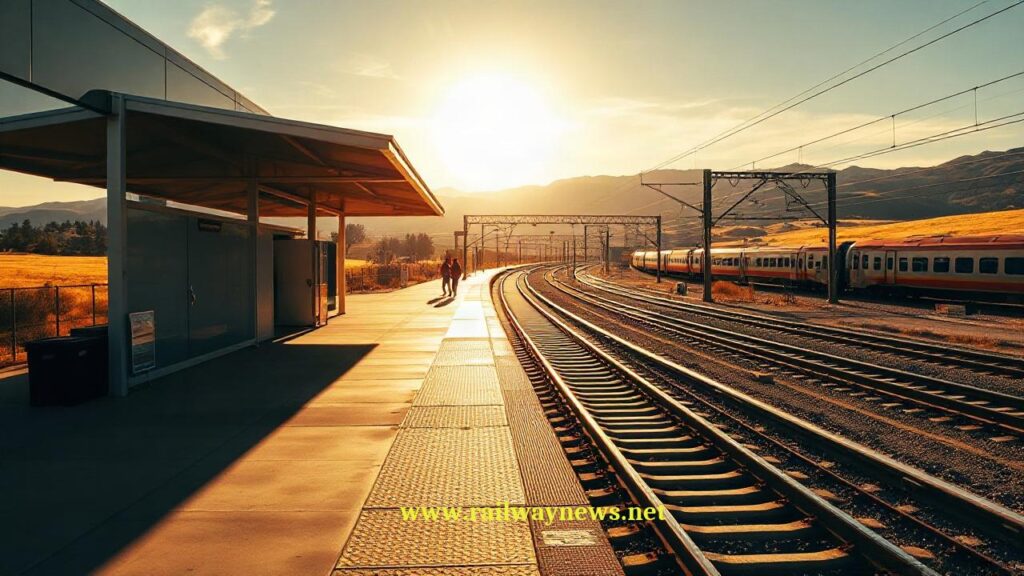
⚡ In Brief: The Sonoma-Marin Area Rail Transit board approved an amendment incorporating the proposed Geyserville commuter rail station into its development plan, positioning the agency to restore passenger service to northern Sonoma County after a nearly 70-year hiatus.
GEYSERVILLE, USA – The Sonoma-Marin Area Rail Transit (SMART) board of directors formally voted in 2025 to add the proposed Geyserville Station to the agency’s official development program. The infrastructure plan targets the reactivation of passenger rail along the northern corridor between Healdsburg and Cloverdale, restoring scheduled rail access to the community for the first time in nearly 70 years. SMART will position the stop near Highway 128 and Remmel Road within its existing public right-of-way.
What Is the Full Scope of This Project?
The Geyserville Station initiative encompasses engineering, site development, and platform construction within SMART’s publicly owned right-of-way at Highway 128 and Remmel Road. The project integrates into SMART’s 2025 five-year strategic plan, which directs the phased completion of the voter-approved passenger rail corridor originally sanctioned under Measure Q in 2008. The addition extends active development north from the planned Healdsburg terminal toward the final terminus in Cloverdale, covering the northern portion of the 70-mile main line. Specific engineering specifications, track realignments, and station platform lengths have not been finalized. Capital expenditure budgets and construction procurement schedules were not disclosed by the agency.
Key Project Data
| Parameter | Value |
|---|---|
| Project / Contract Name | Geyserville Commuter Rail Station Development |
| Total Value | Not disclosed |
| Parties Involved | Sonoma-Marin Area Rail Transit (SMART) |
| Timeline / Completion | Not disclosed |
| Country / Corridor | United States / Sonoma-Marin Main Line (Larkspur–Cloverdale) |
How Does This Compare to Similar Projects?
Regional commuter expansions across North America reflect sustained service reactivations supported by an international 7% surge in commuter and passenger traffic recorded in late 2025 (Source: Railway Association of Canada, 2025). The broader global passenger rail segment is projected to achieve a 5.8% compound annual growth rate through 2033 as transit agencies prioritize existing track beds over new highway construction (Source: Future Market Insights, 2025). In contrast to greenfield commuter systems, SMART’s use of a legacy right-of-way eliminates property acquisition delays, mirroring incremental corridor re-openings across secondary regional markets. However, while regional operators like Canada’s Alto passenger network secured defined capital budgets for initial corridor segments, SMART has not established dedicated funding mechanisms for the Geyserville construction phase.
Editor’s Analysis
SMART’s decision to formally map Geyserville into its capital program closes a geographic policy gap, aligning agency goals with voter commitments dating back to 2008. As the global railroad market expands from USD 332.05 billion in 2025 at an annual rate of 5.57%, secondary commuter rail extensions remain vulnerable to capital funding shortfalls unless supported by federal or state grants (Source: Market Data Forecast, 2025). The agency’s expansion northward relies entirely on balancing low-density rural ridership against the long-term regional mandate to deliver passenger rail to Cloverdale.
FAQ
Q: Where will the new Geyserville SMART station be located?
A: The station is planned near the intersection of Highway 128 and Remmel Road in Geyserville, California. The site falls within SMART’s existing track right-of-way and the town’s designated urban service area.
Q: How much will the Geyserville Station project cost and when will it open?
A: Capital costs and construction delivery schedules were not disclosed by the SMART board during the resolution approval. Independent verification of the budget was not available at time of publication.
Q: When did passenger trains last operate through Geyserville?
A: Scheduled passenger service ceased through Geyserville nearly 70 years ago, prior to the consolidation of regional freight operations. The current expansion plan marks the first formal municipal effort since then to reactivate passenger rail in the area.

Railway infrastructure, rolling stock and transport technologies specialist focused on global rail industry developments, high-speed rail systems, signaling technologies and freight transportation. Covering railway investments, public transport modernization, rail operations and international mobility projects across Europe, Asia and North America.
RELATED POSTS

October 1, 2026 7:09 am
United States regulators confirmed a September 30 deadline for the...

October 8, 2026 1:15 pm
Alstom secured a €1bn contract to build 13 automated trains,...

October 4, 2026 5:14 pm
Alstom secured a CA$4.7 billion order from VIA Rail Canada...

October 1, 2026 12:13 am
Illinois approved $1.5 billion annually for the Northern Illinois Transit...

October 6, 2026 2:14 am
Union Pacific launched export rail shipments with Ferromex to deliver...
October 1, 2026 6:10 am
Amtrak approved a System Expansion Committee on July 30 to...