
Wabtec Wins $195M Vale PTC Contract for Brazil Railways
Wabtec secured a $195 million contract from Vale to deploy its I-ETMS positive train control system on the Carajás and Vitória a Minas railways in Brazil by 2031.
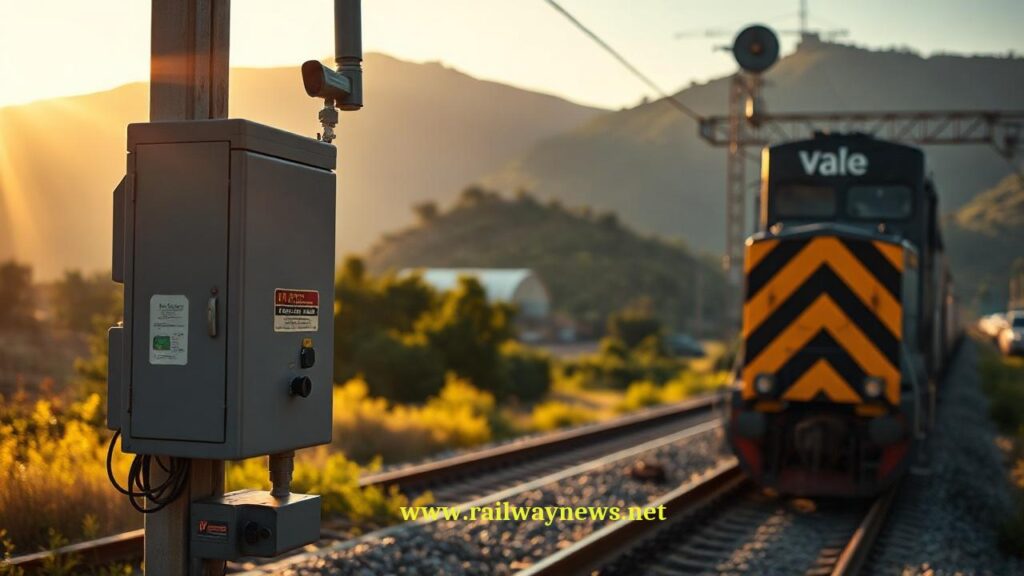
⚡ In Brief: Wabtec has been awarded a contract by Vale to implement its I-ETMS positive train control system on Brazil’s Carajás and Vitória a Minas railways, at an estimated cost of R$1 billion ($195 million).
Brazil – Wabtec Corporation has secured a contract from Vale to deploy its Interoperable Electronic Train Management System (I-ETMS), a Positive Train Control (PTC) technology, on the Carajás Railway (EFC) and Vitória a Minas Railway (EFVM), the country’s only two regularly operating passenger-rail lines. The project is valued at Brazilian R$1 billion (approximately $195 million) and will be rolled out in phases through 2031.
What Does This Contract Cover?
The contract covers the design, integration, and phased deployment of Wabtec’s I-ETMS PTC system across the Estrada de Ferro Carajás (EFC) and Estrada de Ferro Vitória a Minas (EFVM) railways, including onboard locomotive computers and existing wayside infrastructure. Work scope includes data transmission and monitoring technology to enhance operational predictability and reliability, along with full integration with Vale’s current signaling and train control architectures. No breakdown of per-railway costs or number of equipped locomotives was disclosed.
Key Contract Data
| Parameter | Value |
|---|---|
| Contract Name | I-ETMS Implementation on EFC and EFVM Railways |
| Total Value | R$1 billion ($195 million) |
| Parties Involved | Vale (operator), Wabtec (supplier) |
| Timeline / Completion | Phased through 2031. Interim milestones not disclosed. |
| Country / Corridor | Brazil – Carajás Railway (EFC) and Vitória a Minas Railway (EFVM) |
How Does This Compare to Similar Contracts?
PTC implementation contracts in the Americas have historically been concentrated in the United States, where the Federal Railroad Administration (FRA) mandated the technology across roughly 58,000 route miles, with total industry costs estimated above $10 billion. (Source: FRA, 2018). The Vale deal marks one of the first large-scale PTC deployments in South America. Its R$1 billion value is significant for a two-railway project, though smaller than the $2.9 billion budgeted for the Northeast Corridor’s Advanced Civil Speed Enforcement System (ACSES) upgrade. (Source: Amtrak, 2022). The contract also aligns with a broader surge in Brazilian railway spending: approximately 40 billion reais were invested between 2023 and 2025, a 60% rise compared to 25 billion reais in the 2019–2022 period. (Source: DatamarNews, 2025). Comparable PTC contract data for other South American operators was not publicly available at time of publication.
Editor’s Analysis
The Wabtec contract signals that Vale is moving to adopt advanced, interoperable safety systems on its core corridors, likely in anticipation of growing freight volumes and sustained passenger demand. This PTC investment may become a technical benchmark as the Brazilian government advances its first National Rail Concessions Policy and seeks to restore up to 10,000 kilometers of idle federal rail network. Private investors bidding on newly offered segments may face interoperability requirements modeled on this system, making the Vale-Wabtec deployment a potential reference for national standards. (Source: BNamericas, 2025).
FAQ
Q: What is I-ETMS and how does it improve safety?
A: I-ETMS is Wabtec’s Interoperable Electronic Train Management System, a Positive Train Control technology that uses continuous data transmission, onboard GPS, and trackside monitors to automatically enforce speed restrictions and prevent collisions. It integrates with locomotives and existing signaling to stop trains before they pass a signal at danger or exceed track limits.
Q: When will the PTC system be fully operational on these railways?
A: The project will be implemented in phases through 2031. Vale and Wabtec have not publicly disclosed detailed interim milestones or a date for full system activation on the EFC and EFVM lines.
Q: How will this contract impact Vale’s freight and passenger operations?
A: The system is designed to enhance predictability and reliability, which could reduce schedule disruptions and potentially increase line capacity. Specific projections for freight tonnage or passenger punctuality have not been officially confirmed by the operator.

Railway infrastructure, rolling stock and transport technologies specialist focused on global rail industry developments, high-speed rail systems, signaling technologies and freight transportation. Covering railway investments, public transport modernization, rail operations and international mobility projects across Europe, Asia and North America.
RELATED POSTS

October 1, 2026 7:09 am
United States regulators confirmed a September 30 deadline for the...

October 8, 2026 1:15 pm
Alstom secured a €1bn contract to build 13 automated trains,...

October 4, 2026 5:14 pm
Alstom secured a CA$4.7 billion order from VIA Rail Canada...

October 1, 2026 12:13 am
Illinois approved $1.5 billion annually for the Northern Illinois Transit...

October 6, 2026 2:14 am
Union Pacific launched export rail shipments with Ferromex to deliver...

October 1, 2026 6:10 am
Amtrak approved a System Expansion Committee on July 30 to...