
Alstom and Siemens Secure São Paulo Signalling Contracts
Alstom and Siemens secured São Paulo signalling contracts for a CPTM Line 10 depot and a 3.3 km driverless metro extension serving 110,000 daily passengers.
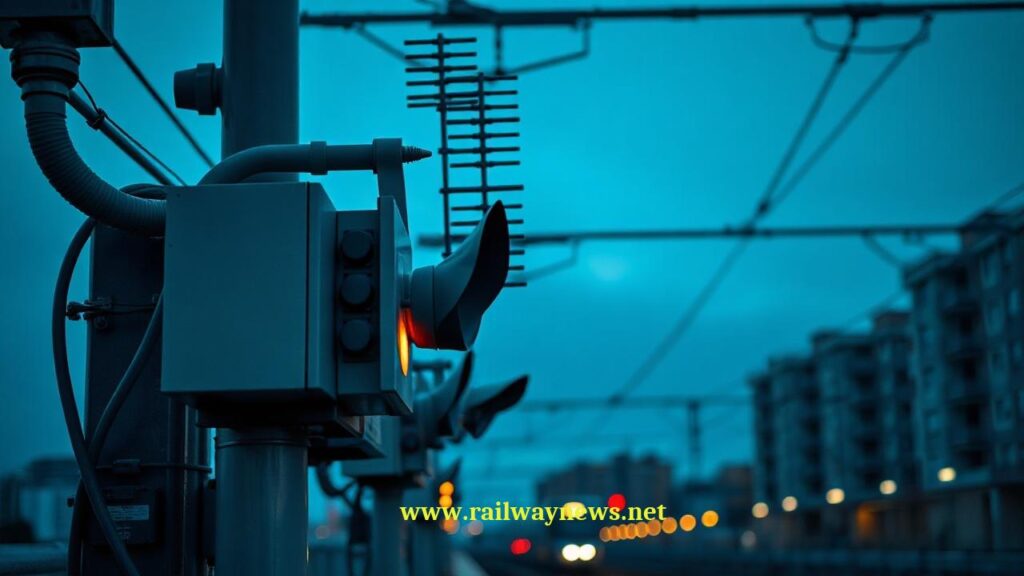
⚡ In Brief: Alstom and Siemens Mobility secured separate rail signalling contracts in São Paulo — Alstom for CPTM’s Mauá Norte depot on Line 10 and Siemens for the 3.3 km driverless extension of Metro Line 4-Yellow to Taboão da Serra, projected to serve 110,000 passengers daily.
SÃO PAULO, Brazil – Alstom signed a contract with CPTM to deliver a complete SIL 4 signalling system for the new Mauá Norte depot on Line 10 (Turquoise), while Siemens Mobility was selected by concessionaire Motiva to equip the 3.3 km Line 4-Yellow extension with Trainguard MT CBTC and GoA4-level automation. The Siemens contract adds two new stations — Chácara do Jockey and Taboão da Serra — and extends the fully automated line to 16.1 km total length. Neither company disclosed the financial value of their respective contracts.
What Does This Contract Cover?
The Alstom contract covers delivery, installation, testing, and commissioning of a complete signalling system for the Mauá Norte depot, situated between Mauá and Capuava stations on CPTM’s Line 10. The system includes electronic interlocking, track-side equipment for switch control, light signals, and track occupancy detection — all designed to SIL 4 safety standards — plus auxiliary subsystems for video surveillance, access control, telecommunications infrastructure, and dedicated radio communications. The Siemens Mobility contract covers the full signalling package for the Line 4-Yellow extension: Trainguard MT CBTC, electronic interlocking, telecommunications, operational supervision, and GoA4 driverless automation. The extension marks the first time São Paulo’s metro crosses the city boundary, with Taboão da Serra station serving an estimated 110,000 passengers daily and benefiting more than 280,000 residents in the region.
Key Contract Data
| Parameter | Alstom — Mauá Norte Depot | Siemens Mobility — Line 4-Yellow Extension |
|---|---|---|
| Contract Name | Mauá Norte Depot Signalling System | Line 4-Yellow Extension Signalling & Automation |
| Total Value | Not disclosed | Not disclosed |
| Parties Involved | Alstom (supplier), CPTM (operator/client) | Siemens Mobility (supplier), Motiva (concessionaire) |
| Timeline / Completion | 18 months construction + 6 months monitoring + 2-year warranty | Not disclosed |
| Country / Corridor | Brazil — São Paulo, CPTM Line 10 (Turquoise), Mauá–Capuava section | Brazil — São Paulo Metro Line 4-Yellow, Vila Sônia to Taboão da Serra |
| System Type | Electronic interlocking, SIL 4, trackside equipment, auxiliary subsystems | Trainguard MT CBTC, GoA4 driverless automation, electronic interlocking |
| Scale | 6 new tracks for shunting, train formation, and stabling | 3.3 km double-track tunnel, 2 stations, ~110,000 passengers/day |
How Does This Compare to Similar Contracts?
These two contracts sit within a broader São Paulo rail signalling overhaul that includes Alstom’s separate deployment of Latin America’s first European Train Control System (ETCS) Level 2 on CPTM Lines 8-Diamond and 9-Emerald. That project, confirmed by Alstom in parallel reporting, targets mainline operational efficiency gains through continuous speed supervision and in-cab signalling — a different operational domain from the depot-focused Mauá Norte contract but part of the same regional investment wave. Globally, smart signalling deployments have demonstrated measurable corridor-level benefits: European implementations improved operational efficiency by 19% while reducing congestion, and equivalent U.S. systems delivered an 18% efficiency gain with reduced delays across freight and passenger corridors (Source: Business Research Insights / independent.org, 2025). São Paulo’s concurrent pursuit of CBTC for metro, ETCS Level 2 for suburban mainlines, and SIL 4 depot automation places it among the most multi-layered signalling modernization programs in Latin America. Comparable multi-system signalling upgrades are underway in cities such as Paris (Lines 15–18 automated metro alongside RER ETCS) and Singapore (CBTC retrofits on North-South and East-West lines), though São Paulo’s simultaneous greenfield extension and brownfield depot automation creates a distinct operational profile. Contract value non-disclosure is consistent with both companies’ practice for subsidiary urban rail contracts in emerging markets, where competitive sensitivity and concessionaire negotiation cycles typically delay public financial reporting.
Editor’s Analysis
São Paulo is executing a rare triple-play signalling strategy — digitising mainline corridors, extending driverless metro, and automating depot movements — within overlapping procurement timelines. The Line 4-Yellow extension to Taboão da Serra addresses a geographic gap: no metro station previously existed beyond the city’s administrative boundary despite dense suburban demand. The 110,000 daily passenger projection signals a corridor where operational punctuality, already near 100% on the existing Line 4 at 90-second headways, will face pressure to maintain that standard across the extended route. For CPTM, the Mauá Norte depot contract represents a quieter but operationally critical investment — depot throughput constraints are a known bottleneck in São Paulo’s suburban rail network, and SIL 4 automation directly reduces shunting-related incident risk during non-revenue hours. The non-disclosure of contract values in both cases is notable but not unusual: Brazil’s concession-driven metro model often delays financial transparency until project close-out.
FAQ
Q: What does GoA4 automation mean for passengers on Line 4-Yellow?
A: GoA4 (Grade of Automation 4) means fully unattended train operation with no driver or attendant on board. Line 4-Yellow was already Latin America’s first GoA4 line, operating at 90-second intervals with punctuality and availability approaching 100% across its existing 740,000 daily passengers.
Q: When will the Mauá Norte depot signalling system become operational?
A: Alstom’s contract specifies an 18-month implementation period followed by six months of operational monitoring, placing full handover approximately 24 months from contract commencement. A two-year warranty period extends beyond that milestone.
Q: What is the value of these two signalling contracts?
A: Neither Alstom nor Siemens Mobility disclosed the financial terms of their respective contracts with CPTM and Motiva. This has not been officially confirmed by either client at time of publication.
Q: How does CBTC differ from the ETCS Level 2 system Alstom is installing on Lines 8 and 9?
A: CBTC (Communications-Based Train Control) is designed for high-frequency urban metro operations with moving-block principles that enable very short headways — critical for Line 4’s 90-second intervals. ETCS Level 2 is a mainline railway standard using fixed-block signalling with continuous speed supervision via GSM-R radio, optimised for mixed-traffic suburban and regional corridors like CPTM Lines 8 and 9.
Q: Will the Line 4-Yellow extension reduce congestion on other São Paulo transport corridors?
A: The extension is projected to serve 110,000 passengers per day and benefit over 280,000 residents in the Taboão da Serra region, many of whom currently rely on bus corridors to access the metro network at Vila Sônia. Quantified congestion-relief projections for specific parallel corridors were not disclosed in the contract announcement.

Railway infrastructure, rolling stock and transport technologies specialist focused on global rail industry developments, high-speed rail systems, signaling technologies and freight transportation. Covering railway investments, public transport modernization, rail operations and international mobility projects across Europe, Asia and North America.
RELATED POSTS

September 5, 2026 4:19 pm
CPK launched formal tender talks with four consortia to design...

September 6, 2026 4:12 am
Alstom delivered the first of 100 new G Class trams...

September 5, 2026 7:14 pm
HS2 Ltd signed renegotiated civils contracts with EKFB and Align...
September 5, 2026 6:17 pm
Universal Signalling won a deal to install its U-Cross system...
September 6, 2026 8:17 am
DB InfraGO reopened the Nuremberg-Regensburg line in Bavaria on 31...
September 7, 2026 11:16 pm
China Railway Tunnel Group completed the 11.3-km underwater Yangtze tunnel...