
Network Rail Completes £20M London Charing Cross Upgrade
Network Rail invested £20 million in London Charing Cross to renew two kilometres of track and rebuild six terminal platforms over a 22-day rail closure.
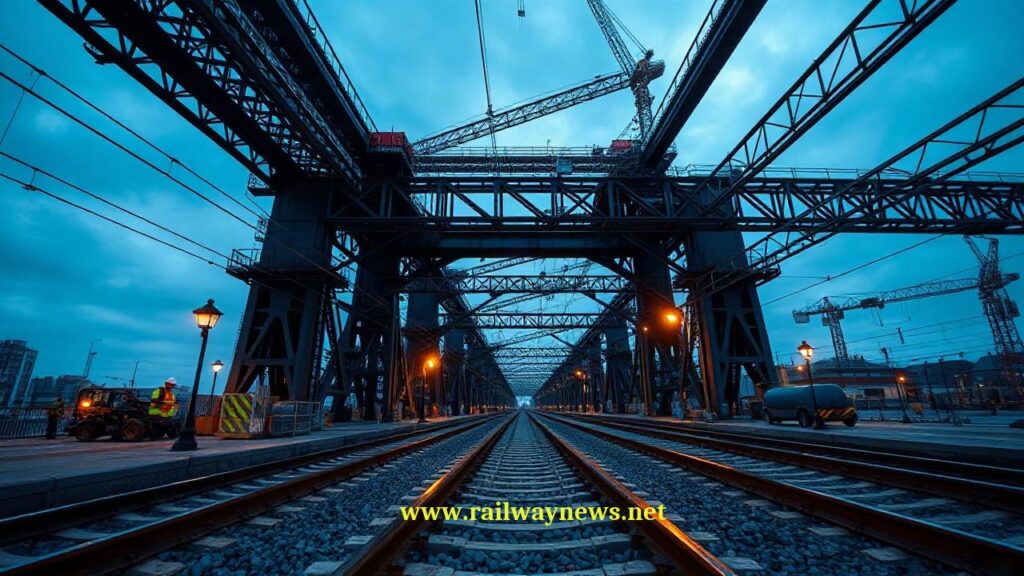
⚡ In Brief: Network Rail and Southeastern completed a £20 million, 22-day engineering programme across London Charing Cross, Waterloo East, and Hungerford Bridge, replacing nearly two kilometres of life-expired track and rebuilding all six terminal platforms.
LONDON, United Kingdom – Network Rail and operator Southeastern reopened the vital central London corridor between London Charing Cross and London Bridge following an intensive 22-day continuous blockade. The £20 million infrastructure programme replaced nearly two kilometres of 36-year-old track and removed 540 tonnes of deteriorated platform concrete. Work concluded on schedule ahead of the autumn commuter ramp-up, compressing maintenance that previously faced years of phased possessions into three weeks.
What Is the Full Scope of This Project?
The capital renewal package integrated heavy track replacement, Thames bridge refurbishment, and deep station rebuilds into a single coordinated possession. Engineers replaced approximately two kilometres of track alongside associated switches and crossings situated south of the Hungerford Bridge, renewing life-expired wheel timbers and executing structural steel remediation prior to recoating the structure. At Charing Cross station, civil teams demolished life-expired concrete decks across all six terminal platforms simultaneously, installing new structural steel frames surfaced with more than 2,000 square metres of glass-reinforced plastic decking. Concurrently, Waterloo East received extensive station fabric remediation, including weatherproofing structural footbridge steel and installing openable, self-cleaning glass panels to enhance interior illumination and airflow. Detailed financial allocations across the individual station, track, and bridge work packages were not publicly disclosed by the delivery partners.
Key Project Data
| Parameter | Value |
|---|---|
| Project / Contract Name | Charing Cross and Waterloo East Renewals Programme |
| Total Value | £20 million (Source: Southeastern Railway, 2024) |
| Parties Involved | Network Rail, Southeastern, Southern Renewals Enterprise (SRE) |
| Timeline / Completion | 22-day blockade completed August 2024 |
| Country / Corridor | United Kingdom / South Eastern Main Line |
How Does This Compare to Similar Projects?
Delivering these renewals inside a single 22-day summer blockade bypassed the alternative requirement for 60 individual weekend possessions or four discontinuous nine-day shutdowns. Phased weekend working on high-density urban corridors typically inflates site setup costs, extends plant mobilization overheads, and exposes train operators to prolonged performance penalties over multiple timetable cycles. By executing during August when commuter demand drops by approximately 20 per cent, project managers limited economic passenger disruption while securing continuous round-the-clock site access. The asset intervention aligns with broader modernization expenditure across the UK rail sector, which was valued at USD 108.15 billion with a projected compound annual growth rate of 6.65% through 2034 (Source: Market Data Forecast, 2025). Specific asset-by-asset expenditure breakdowns for comparable urban terminal overhauls on the southern network were not publicly available at time of publication.
Editor’s Analysis
The Charing Cross blockade validates the collaborative delivery framework established under the Southern Renewals Enterprise, shifting major terminal interventions away from fragmented maintenance contracts. Concentrating civil platform replacements alongside major bridge renewals within one extended line closure delivers superior capital efficiency, directly supporting the UK rail market’s 6.65% expansion projection through 2034 (Source: Market Data Forecast, 2025). As national budget constraints tighten, expect UK infrastructure managers to increasingly favor single, high-impact summer closures over protracted weekend possessions to address the massive backlog of 1980s-era track and structural assets.
FAQ
Q: Why did Network Rail choose a 22-day full closure instead of weekend works?
A: A continuous 22-day blockade replaced an estimated 60 weekend closures, substantially reducing labor and plant mobilization costs. It also allowed simultaneous demolition of 540 tonnes of platform concrete at Charing Cross that could not safely occur while passengers used the terminal.
Q: What was the total cost and duration of the Charing Cross upgrade?
A: The entire engineering programme cost approximately £20 million and lasted 22 consecutive days during the summer travel period. Network Rail and Southeastern spent 18 months planning the multi-disciplinary works prior to site execution.
Q: What infrastructure components were replaced on Hungerford Bridge?
A: Engineers replaced the bridge’s timber track supports and completed structural repairs to the bridge steelwork before applying protective repainting. Associated switches, crossings, and nearly two kilometres of 36-year-old approach tracks were also completely renewed.

Railway infrastructure, rolling stock and transport technologies specialist focused on global rail industry developments, high-speed rail systems, signaling technologies and freight transportation. Covering railway investments, public transport modernization, rail operations and international mobility projects across Europe, Asia and North America.
RELATED POSTS

October 8, 2026 1:15 pm
Alstom secured a €1bn contract to build 13 automated trains,...

October 1, 2026 7:09 am
United States regulators confirmed a September 30 deadline for the...

October 8, 2026 12:18 pm
Siemens Mobility signed an agreement with VinSpeed to supply 350...

October 4, 2026 5:14 pm
Alstom secured a CA$4.7 billion order from VIA Rail Canada...

October 1, 2026 12:13 am
Illinois approved $1.5 billion annually for the Northern Illinois Transit...

October 5, 2026 6:12 pm
AECOM and Jacobs secured a contract in September 2026 to...