
Keikyu Launches Digital Patapata at Kamiooka Station
Keikyu Corporation installed a digital patapata departure display at Kamiooka Station on July 2, 2026, attracting over 2 million video views in 24 hours.
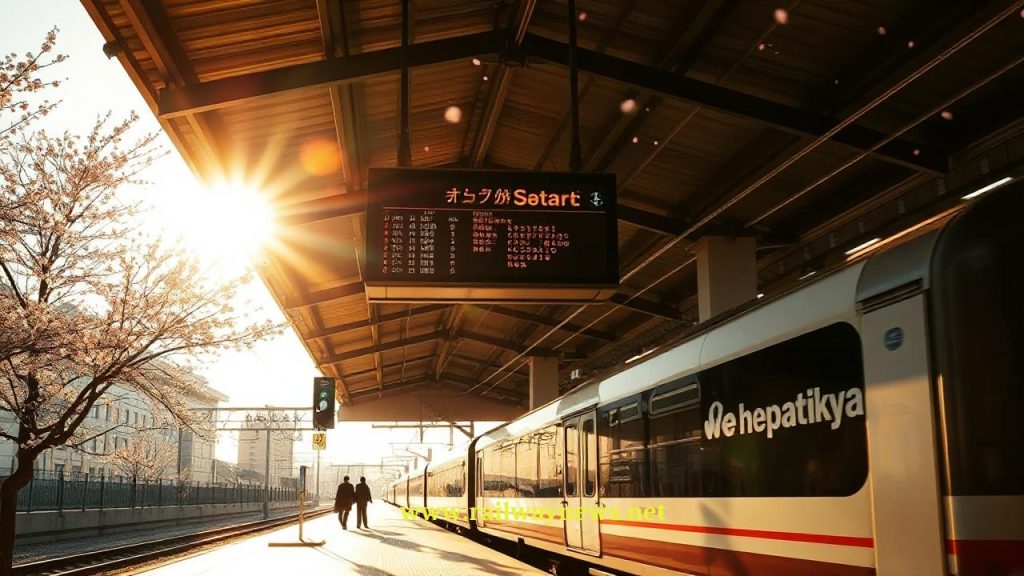
⚡ In Brief: Keikyu Corporation installed a digital departure display at Kamiooka Station in Yokohama on July 2, 2026, reviving the iconic patapata flip-flap board experience that disappeared from its network in 2022.
YOKOHAMA, JAPAN – Keikyu Corporation activated a digital departure board at Kamiooka Station on July 2, 2026, that replicates the motion and sound of classic mechanical flip-flap displays. The video of the new “Digital Patapata” screen surpassed 2 million views in under 24 hours, reflecting strong passenger nostalgia for the clacking departure boards that were last used on the Keikyu network in February 2022.
What Are the Technical Specifications?
The digital display does not present information instantly like a conventional LCD screen. Instead, letters and numbers rotate sequentially to mimic the original mechanical flaps, and speakers reproduce the characteristic patapata sound that once defined Japanese station platforms. Full hardware and software specifications, including screen resolution, update frequency, and sound synthesis method, were not disclosed by the operator.
Key Technical Data
| Parameter | Value |
|---|---|
| Technology / System Name | Digital Patapata departure display |
| Total Value | Not disclosed |
| Parties Involved | Keikyu Corporation |
| Timeline / Completion | Installed July 2, 2026 (first train) |
| Country / Corridor | Japan, Tokyo–Yokohama area, Kamiooka Station |
Where Does This Technology Stand in the Market?
Keikyu’s platform display enters a niche market of digitally recreated retro information boards. Solari di Udine, the original manufacturer of mechanical split-flap displays, has offered a digital emulation product since 2018; one notable installation is the Solari Digital board at London St Pancras International, which also reproduces flap motion and acoustics (Source: Solari di Udine, 2018). Unlike the St Pancras concourse display, Keikyu’s unit is positioned as a fully functional platform departure screen, making it a rarer application. The digital patapata’s early success demonstrates that blending heritage aesthetics with low-maintenance digital management can generate significant passenger engagement, even as most operators replace old mechanical boards with standard LCDs.
Editor’s Analysis
The viral reaction to Kamiooka’s digital patapata confirms that sensory elements — sound, motion, rhythm — remain a powerful component of station identity, not merely a maintenance problem. Keikyu’s decision to test a digital replica rather than accept a blank LCD screen signals a cost-conscious strategy that preserves emotional equity with passengers. No official rollout plan exists, but the operator’s prior trial at Aomono-Yokocho Station and the rapid social media traction suggest a pattern that could influence other Japanese railways facing the same trade-off between nostalgia and operational reliability. This aligns with a broader Japanese sector trend: after years of removing mechanical displays, operators now experiment with digitally resurrecting them as heritage-forward information points.
FAQ
Q: How does the digital patapata display recreate the original sound and movement?
A: The screen uses sequential character “rotations” rather than instant text swaps, and built-in speakers emit the characteristic clacking noise. Keikyu has not disclosed whether the audio is synthesized or sampled from original boards.
Q: Will Keikyu install more digital patapata displays across its network?
A: Keikyu has not confirmed any expansion. The positive reaction to the Kamiooka installation and a earlier trial at Aomono-Yokocho Station increase the likelihood, but any decision remains pending official announcement.
Q: Why did Keikyu remove the original mechanical flip-flap boards in 2022?
A: The mechanical patapata boards at Keikyu Kawasaki Station were retired in February 2022 due to maintenance challenges and spare-part scarcity. The digital version addresses those concerns while retaining the familiar passenger experience.

Railway infrastructure, rolling stock and transport technologies specialist focused on global rail industry developments, high-speed rail systems, signaling technologies and freight transportation. Covering railway investments, public transport modernization, rail operations and international mobility projects across Europe, Asia and North America.
RELATED POSTS
September 6, 2026 5:19 am
Hitachi delivered Taiwan's first N700ST high-speed train from Japan in...

September 5, 2026 4:19 pm
CPK launched formal tender talks with four consortia to design...
September 6, 2026 1:17 am
Hitachi Toshiba Supreme Consortium confirmed the first of 12 N700ST...
September 6, 2026 6:17 am
Hungary ordered a national ban on most freight trains from...

September 6, 2026 4:12 am
Alstom delivered the first of 100 new G Class trams...

September 5, 2026 7:14 pm
HS2 Ltd signed renegotiated civils contracts with EKFB and Align...