
Madrid Approves €880M 7.2km Metro Line 11 Extension
Madrid approved an €880.6 million, 7.2 km extension of Metro Line 11 from Mar de Cristal to Valdebebas Norte, adding four stations and an airport link.
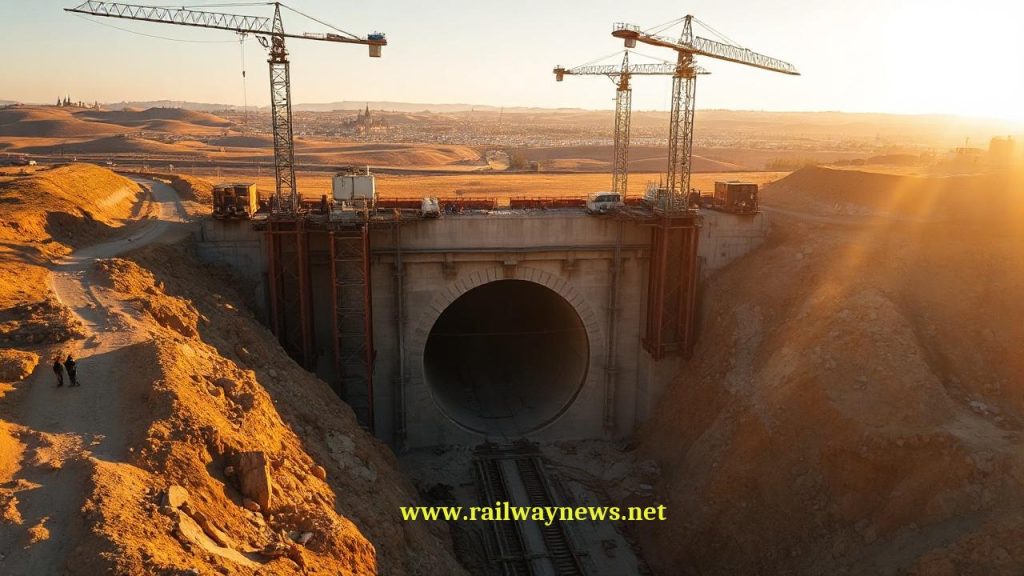
⚡ In Brief: Madrid’s regional government approved an €880.6 million investment to extend Metro Line 11 by 7.2 km from Mar de Cristal to Valdebebas Norte, adding four stations and two interchange hubs with existing lines and the airport.
Madrid, Spain – The Community of Madrid has authorised a €880.6 million construction contract to build a 7.2‑km underground extension of Metro Line 11, linking Mar de Cristal with the rapidly developing Valdebebas Norte district. The project will deliver four new stations and interchange connections to Lines 4, 8 and the Cercanías commuter rail network at Adolfo Suárez Madrid‑Barajas Airport Terminal 4.
What Is the Full Scope of This Project?
The 7.2 km extension will run entirely underground from Mar de Cristal station (Lines 4 and 8) to a new terminus at Valdebebas Norte. Intermediate stops will serve the expanded IFEMA exhibition centre (IFEMA‑Cárcavas), the future City of Justice complex, and the Hospital Enfermera Isabel Zendal medical campus, before reaching the airport Terminal 4 station where passengers can transfer to Line 8 and Cercanías services. This northern segment complements the 6.3‑km southern section already under construction between Plaza Elíptica and Conde de Casal, where a tunnel boring machine recently broke through at Madrid Río station. Together they form the future diagonal Line 11, designed to relieve the heavily used orbital Line 6 and deliver direct metro access to the capital’s main economic, judicial and health facilities as well as one of Europe’s largest current residential developments at Valdebebas. No opening date was specified in the approval announcement, and the identity of the construction contractor has not yet been made public.
Key Project Data
| Parameter | Value |
|---|---|
| Project / Contract Name | Line 11 Extension (Mar de Cristal – Valdebebas Norte) |
| Total Value | €880.6 million |
| Parties Involved | Promoter: Community of Madrid; construction contractor not disclosed |
| Timeline / Completion | Not disclosed |
| Country / Corridor | Spain, Madrid northeast transport corridor |
How Does This Compare to Similar Projects?
At roughly €122 million per kilometre, the Madrid extension falls within the lower half of the European metro tunnelling cost range, typically €100 million to €300 million per kilometre depending on geology and station density (Source: European Commission, Urban Mobility Framework, 2022). The Paris Metro Line 15 South, a 33‑km orbital line, is valued at around €227 million per kilometre (Source: Société du Grand Paris, 2020), while the 3.2‑km Battersea extension of London’s Northern Line cost approximately €400 million per kilometre after accounting for deep‑level works and central‑London land values (Source: Transport for London, 2021). The Los Angeles Crenshaw/LAX light‑rail project, partly underground, averaged $153 million (€140 million) per kilometre (Source: LA Metro, 2023). Poland’s PKP PLK recently awarded a €34 million preparatory contract for a 4‑km high‑speed rail tunnel in Łódź, a preliminary scope that illustrates the wide variation in per‑unit costs across modes and project stages. Madrid’s investment gains scale from an integrated approach: linking airport, exhibition grounds, new commercial courts and a major hospital with a single corridor replicates the multi‑anchor strategy seen in high‑return metro expansions elsewhere, though no formal cost‑benefit ratio or employment projection was issued with the approval.
Note: Independent verification of the exact cost‑per‑kilometre for the Plaz Elíptica–Conde de Casal segment was not available at time of publication.
Editor’s Analysis
Madrid is doubling down on the proven formula of using major metro extensions to unlock peripheral development zones while relieving central‑network bottlenecks. By connecting the airport, IFEMA, the future City of Justice and the Valdebebas housing mega‑project, the Line 11 extension mirrors the land‑use integration that underpinned the success of London’s Jubilee Line extension to Stratford and Paris’s Line 14 to Saint‑Lazare. The absence of a published timeline or contractor name suggests the final award and detailed programme are still being negotiated, but the move reinforces the broader European trend of fixed‑rail investment acting as a post‑pandemic economic stabiliser. Rail infrastructure programmes comparable in ambition, such as Eurostar’s network, forecast supporting 23,000 jobs in 2025 and contributing almost £2 billion annually to the UK economy, with productivity benefits alone reaching £420 million by 2035 (Source: Eurostar Economic Impact Report). While the Madrid metro does not yet provide equivalent local employment projections, the corridor is likely to deliver similarly outsized returns given the density of planned commercial and residential development along its path.
FAQ
Q: How long will construction of the new Line 11 extension take?
A: The Community of Madrid has not published a completion deadline. Metro tunnelling projects of this length in dense urban areas typically require five to seven years from contract award to passenger service, though specific ground conditions and station complexity can alter that range.
Q: Which contractor will deliver the €880.6 million works?
A: The Regional Government Council authorised the contract award but did not name the successful bidder at the time of the announcement, so the identity of the construction consortium remains unconfirmed.
Q: How will the extension affect crowding on Line 6 and Line 8?
A: By providing a direct alternative route to the airport and major employment zones, the project is expected to divert some trips away from the circular Line 6 and relieve airport‑bound traffic on Line 8, though precise ridership redistribution figures have not been released.

Railway infrastructure, rolling stock and transport technologies specialist focused on global rail industry developments, high-speed rail systems, signaling technologies and freight transportation. Covering railway investments, public transport modernization, rail operations and international mobility projects across Europe, Asia and North America.
RELATED POSTS

October 8, 2026 1:15 pm
Alstom secured a €1bn contract to build 13 automated trains,...

October 1, 2026 7:09 am
United States regulators confirmed a September 30 deadline for the...

October 8, 2026 12:18 pm
Siemens Mobility signed an agreement with VinSpeed to supply 350...

October 4, 2026 5:14 pm
Alstom secured a CA$4.7 billion order from VIA Rail Canada...

October 5, 2026 6:12 pm
AECOM and Jacobs secured a contract in September 2026 to...

October 1, 2026 12:13 am
Illinois approved $1.5 billion annually for the Northern Illinois Transit...