
Singapore Invests SGD 800M in Automated MRT Depots
Singapore invested EUR 542.12 million on 7 July 2025 in a five-year programme to automate the MRT depot inspections using AI sensors and drones.
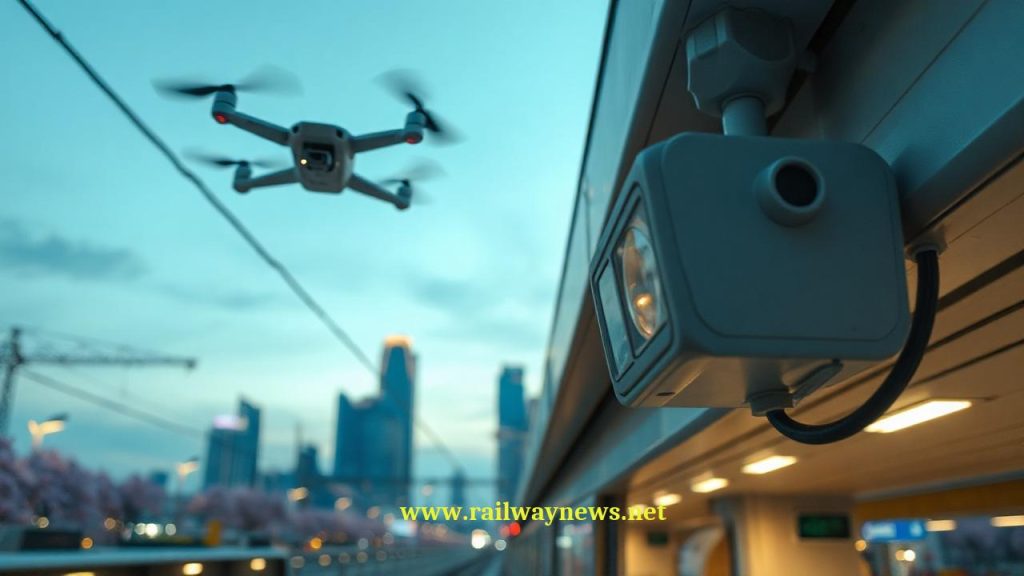
⚡ In Brief: Singapore announced a SGD 800 million (EUR 542.12 million) five-year transport R&D programme on 7 July 2025, targeting fully automated MRT depots, AI-based sensors, and drone infrastructure inspections.
SINGAPORE – Singapore’s government disclosed a SGD 800 million (EUR 542.12 million) investment envelope for transportation research and innovation over the next five years during a parliamentary session on 7 July 2025. The programme prioritises fully automated MRT depots, AI-driven infrastructure sensors, and drone-based inspections across the urban rail network. No specific depots were named for the initial rollout, and a complete timeline has not been disclosed.
What Are the Technical Specifications?
The automation programme extends beyond existing driverless train operations on multiple MRT lines to encompass depot-level activities including train inspection, preparation, and maintenance through digital systems, robotics, and artificial intelligence. Infrastructure inspection will deploy AI-based sensors and drones capable of collecting imagery and condition data on tracks, structures, and equipment, with automated flagging of potential defect areas for human analysis.
Key Technical Data
| Parameter | Value |
|---|---|
| Technology / System Name | MRT Depot Automation & AI Inspection Programme (no formal programme name disclosed) |
| Total Value | SGD 800 million (EUR 542.12 million) across all transport modes |
| Parties Involved | Government of Singapore; specific technology vendors not disclosed |
| Timeline / Completion | Five-year funding envelope; individual project timelines not disclosed |
| Country / Corridor | Singapore – MRT urban rail network (land transport component); also covers aviation, maritime, and logistics |
Where Does This Technology Stand in the Market?
Singapore’s move toward depot automation places it among a cohort of early-adopting metro operators globally. The Paris Metro’s Line 14 and Sydney Metro have both implemented varying degrees of automated depot functionality—Siemens Mobility supplied the communications-based train control (CBTC) and depot automation systems for Paris Line 14’s extension, while Alstom’s Urbalis 400 system underpins Sydney Metro’s driverless depot operations. Both systems achieve automated train wake-up, pre-departure self-testing, and stabling without human intervention. Singapore’s existing MRT lines already operate under driverless configurations on the North East Line, Circle Line, and Downtown Line using Alstom Urbalis and Siemens Trainguard Sirius CBTC, respectively, meaning the depot automation layer builds on proven signalling foundations. (Source: Siemens Mobility, 2023; Alstom, 2022)
In drone-based infrastructure inspection, German operator Deutsche Bahn has deployed automated drone inspections for overhead line equipment and track since 2021, while Japan’s JR East has tested AI-based image recognition for tunnel lining inspections since 2020. Singapore’s stated shift from fixed-interval to condition-based maintenance aligns with the predictive maintenance frameworks increasingly adopted by Network Rail in the UK, where a 2025 asset management maturity assessment flagged maintenance optimisation as a core efficiency lever. (Source: Deutsche Bahn, 2021; JR East, 2020; Network Rail/ORR, 2025)
The railway signalling market—closely tied to automation programmes of this type—is forecast to grow at a compound annual rate exceeding 7% through 2030, driven by metro automation and digital signalling upgrades in Asia-Pacific and Europe. India’s emergence as a railway products exporter, including complex electronics and propulsion systems, reflects the broader supply chain expansion serving this demand. (Source: IndexBox, 2024; Business Standard, 2025)
Note: The specific technology vendors, depot locations, and phased implementation schedule for Singapore’s automated depot programme were not disclosed at time of publication.
Editor’s Analysis
Singapore is pursuing a managed automation transition—explicitly framing technology as a workforce transformation tool rather than a labour replacement strategy. The parallel investment in structured internships and technical education partnerships signals that the government views talent pipeline development as a co-requisite of infrastructure automation, not an afterthought. This contrasts with automation rollouts in some North American and European freight contexts where workforce reskilling programmes followed technology deployment rather than being synchronised with it. The SGD 800 million figure, spread across four transport modes, suggests the rail-specific allocation is a fraction of the total—meaning delivery will depend heavily on how effectively the Land Transport Authority coordinates with existing signalling and rolling stock suppliers already embedded in the MRT ecosystem.
FAQ
Q: Which MRT lines in Singapore already operate with driverless trains?
A: Singapore’s North East Line, Circle Line, and Downtown Line operate under full driverless (UTO – unattended train operation) configurations. The new depot automation programme targets behind-the-scenes maintenance and inspection work, not on-board train operations.
Q: When will the first fully automated MRT depot become operational?
A: No date has been officially disclosed. The government confirmed the five-year SGD 800 million funding envelope during the 7 July 2025 parliamentary session but did not specify a phased timeline for depot conversions.
Q: Will automation result in job losses for MRT workers?
A: The government’s stated position is that AI and robotics should shift roles toward higher-skilled functions—software, automation, robotics, data analysis—rather than eliminate staff. Retraining and professional development programmes are included in the plan, though specific headcount impacts have not been confirmed.

Railway infrastructure, rolling stock and transport technologies specialist focused on global rail industry developments, high-speed rail systems, signaling technologies and freight transportation. Covering railway investments, public transport modernization, rail operations and international mobility projects across Europe, Asia and North America.
RELATED POSTS

October 8, 2026 1:15 pm
Alstom secured a €1bn contract to build 13 automated trains,...

October 1, 2026 7:09 am
United States regulators confirmed a September 30 deadline for the...

October 8, 2026 12:18 pm
Siemens Mobility signed an agreement with VinSpeed to supply 350...

October 4, 2026 5:14 pm
Alstom secured a CA$4.7 billion order from VIA Rail Canada...

October 1, 2026 12:13 am
Illinois approved $1.5 billion annually for the Northern Illinois Transit...

October 5, 2026 6:12 pm
AECOM and Jacobs secured a contract in September 2026 to...