
Madrid Approves €880M Metro Line 11 Extension 7.2 km
The Community of Madrid approved an €880.6 million investment to extend Metro Line 11 by 7.2 km, adding four new stations and two airport interchanges.
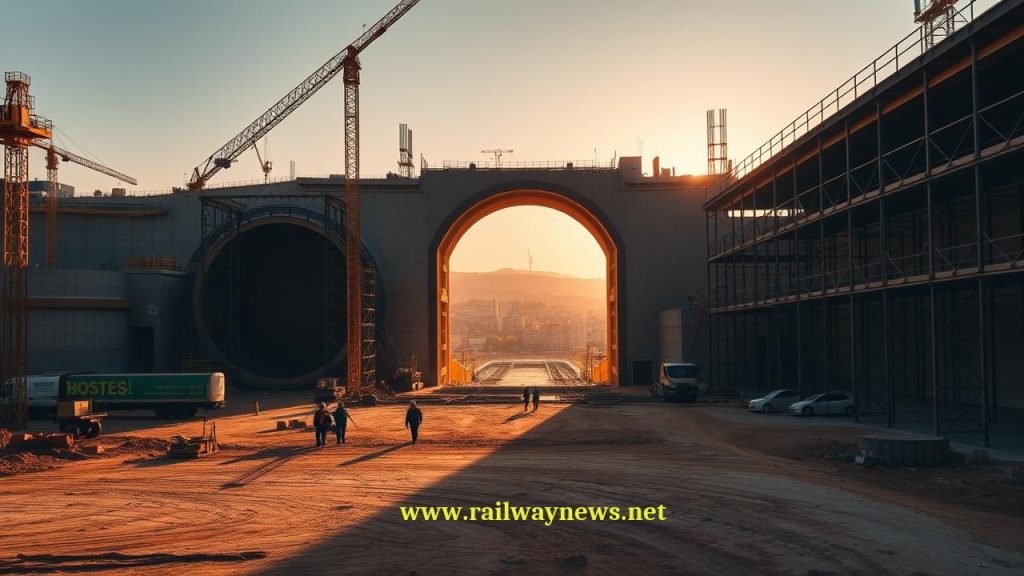
⚡ In Brief: The Community of Madrid approved an €880.6 million investment to extend Metro Line 11 by 7.2 km from Mar de Cristal to Valdebebas Norte, adding four new stations and two interchanges to the airport and existing lines.
MADRID, SPAIN – The Community of Madrid has authorized the construction contract for the 7.2 km extension of Metro Line 11 to Valdebebas Norte, backed by an EUR 880.6 million investment. The project will deliver four new stations and intermodal connections at Mar de Cristal (Lines 4 and 8) and Terminal 4 of Adolfo Suárez Madrid-Barajas Airport (Line 8 and Cercanías).
What Is the Full Scope of This Project?
The extension adds 7.2 km of new track and six stations—four entirely new and two integrated into existing infrastructure—creating a direct corridor from the IFEMA exhibition grounds to the emerging Valdebebas Norte residential district. The new stations are IFEMA-Cárcavas (serving the IFEMA expansion and future MADRING circuit), Ciudad de la Justicia (future City of Justice complex), Hospital Enfermera Isabel Zendal (medical campus), and Valdebebas Norte (terminus in the new residential area). Two connecting stations at Mar de Cristal and Terminal 4 will link with Metro Lines 4 and 8, and with the Cercanías commuter rail network, strengthening the airport’s public transport catchment and intermodality across the northeastern corridor.
Key Project Data
| Parameter | Value |
|---|---|
| Project / Contract Name | Madrid Metro Line 11 Extension (Mar de Cristal – Valdebebas Norte) |
| Total Value | EUR 880.6 million |
| Parties Involved | Community of Madrid (client); construction contractor not yet announced |
| Timeline / Completion | Construction contract authorized; completion date not disclosed |
| Country / Corridor | Spain, Madrid (northeast corridor) |
How Does This Compare to Similar Projects?
Poland’s Budimex won a €34 million contract in 2023 to prepare a 4 km high-speed rail tunnel in Łódź, as part of the Warsaw–Łódź “Y” line—a project that highlights the growing cost differential between preparatory works and full metro extensions in dense urban settings (Source: Global Construction Review, 2023). Madrid’s per-kilometre cost of approximately €122 million reflects the complexity of tunnelling beneath a built-up capital with multiple station caverns and airport interfaces. The Warsaw–Łódź section is scheduled to open in 2032, while the Community of Madrid has not disclosed a target date for the Line 11 extension, making a timeline comparison premature at this stage.
Editor’s Analysis
The Line 11 extension is a strategic component of Madrid’s ambition to create a diagonal cross-city line that relieves the oversaturated Line 6 and ties the airport more tightly into the regional rail network. Eurostar’s 2026 economic impact report estimated that high-speed and airport rail links can generate productivity benefits of £420 million annually and support 40,000 jobs (Source: Eurostar, 2026)—a pattern Madrid is likely to replicate as it channels business travellers and residents through an expanded intermodal hub. This investment follows a broader European trend of capital cities upgrading orbital and airport connections to capture agglomeration effects.
FAQ
Q: When will the new stations open?
A: The Community of Madrid has not disclosed a target opening date; the construction contract has been approved but the completion timeline remains unconfirmed.
Q: Which companies will build the extension?
A: The construction contractor has not yet been named publicly; the authorization covers the procurement phase, and the winning bidder is expected to be announced following contract finalization.
Q: How does this extension improve travel times?
A: By providing a direct metro link to the airport from the northeast, it eliminates the need to interchange at the congested Mar de Cristal or use Line 8 exclusively, and it will divert traffic from the busy Line 6, cutting journey times for commuters across the northern districts.

Railway infrastructure, rolling stock and transport technologies specialist focused on global rail industry developments, high-speed rail systems, signaling technologies and freight transportation. Covering railway investments, public transport modernization, rail operations and international mobility projects across Europe, Asia and North America.
RELATED POSTS
July 4, 2026 11:41 pm
Eurostar cancelled all direct London–Amsterdam trains through July 2 after...

July 1, 2026 1:37 pm
NRHS awarded $187K to 34 U.S. rail heritage projects in...

July 4, 2026 11:02 pm
Eurostar suspends all direct London–Dutch trains through 2 July after...
BART secured the non-monetary GFOA Triple Crown Award for fiscal...
July 1, 2026 4:22 pm
Správa železnic opened a €60M multimodal hub at Jihlava město...

July 7, 2026 12:01 am
Hitachi Rail completed the acquisition of Clever Devices, a U.S....