
Eurostar Upgrades Alstom €2B Celestia Order to 55°C
Eurostar upgraded its €2B order for 50 Alstom Celestia international trains to a 55°C spec after recent heat waves severely disrupted its existing fleet.
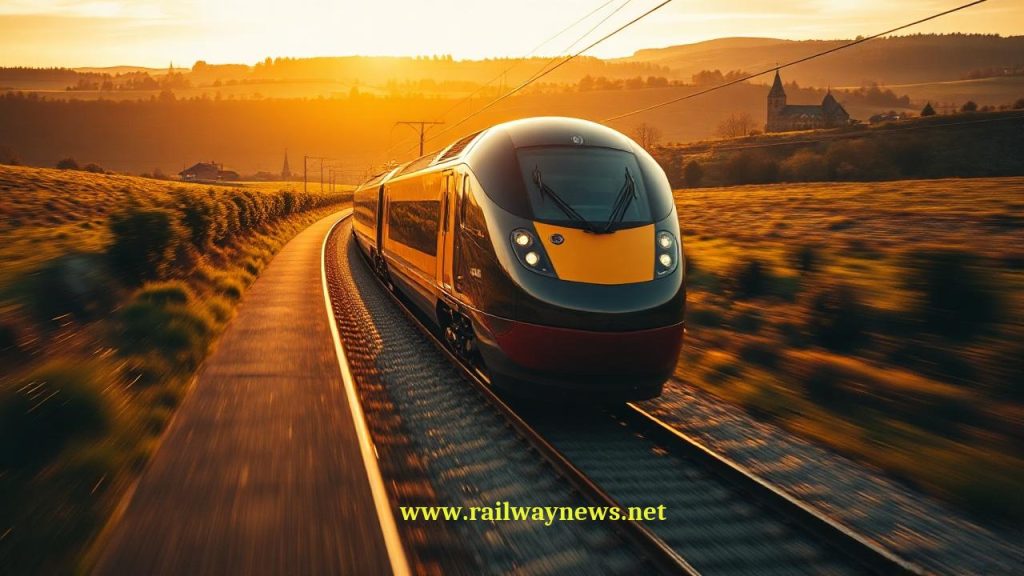
⚡ In Brief: Eurostar upgraded its approximately €2 billion order for 50 Alstom Celestia double-decker trains to require full equipment operation at 55°C—up from the original 45°C specification—following recent European heat waves, with service entry after 2031 and operations extending into the 2060s.
PARIS/LONDON – Eurostar has revised the technical specifications for its 50-train Celestia double-decker order from Alstom, raising the maximum operating temperature threshold from 45°C to 55°C after heat waves exposed vulnerabilities in the operator’s existing fleet. The contract modification, applied to a deal valued at approximately €2 billion, mandates that air-conditioning systems, onboard electronics, microprocessors, and running gear function at ambient temperatures more typical of the Sahara than northern Europe. Eurostar CEO Gwendoline Cazenave confirmed the decision to The Telegraph, describing the upgrade as an informally named “Sahara option” that carries a cost premium the operator has not publicly quantified.
What Does This Contract Cover?
Eurostar’s modified contract with Alstom covers the supply of 50 Celestia double-decker train sets—the first double-decker family certified for Channel Tunnel operations—each configured for over 1,000 passengers, with upgraded air-conditioning, higher-grade electronic components, microprocessors rated for sustained high-temperature operation, and running gear engineered for 55°C ambient conditions. The original 45°C specification was deemed sufficient for routes concentrated in the United Kingdom, France, Belgium, the Netherlands, and Germany, but reassessment following the French heat wave that saw Pissos, near Bordeaux, record 44.3°C—and over 40% of France exceed 40°C—prompted the revision. The trains are expected to remain in revenue service for approximately 30 years, taking operations into the 2060s.
Key Contract Data
| Parameter | Value |
|---|---|
| Contract Name | Celestia double-decker train order (Eurostar / Alstom) |
| Total Value | Approximately €2 billion |
| Parties Involved | Eurostar (operator); Alstom (manufacturer) |
| Timeline / Completion | Service entry not before 2031; ~30-year operational lifespan into the 2060s |
| Country / Corridor | UK–France–Belgium–Netherlands–Germany (Channel Tunnel international routes) |
| Capacity per Train Set | Over 1,000 passengers (double-decker configuration) |
| Temperature Specification (Revised) | 55°C ambient (up from 45°C) |
| Cost Premium for 55°C Upgrade | Not disclosed |
How Does This Compare to Similar Contracts?
The 55°C operating specification places the Eurostar Celestia procurement among the most thermally ambitious rolling stock contracts in European high-speed rail. For context, Alstom’s 2018 Avelia Horizon contract with SNCF—covering 100 TGV M train sets for approximately €2.7 billion—was designed to standard French network climate conditions without a publicly stated extreme-heat threshold comparable to 55°C. (Source: Alstom, 2018) Across the infrastructure side, the challenge is starker: Network Rail faced regulatory concern in 2026 after cutting renewals works due to cost pressures and high inflation, with the Office of Rail and Road requesting further evidence that safety and performance outcomes would not be compromised—highlighting the gap between rolling stock adaptation speed and infrastructure retrofit timelines. (Source: Construction News / ORR, 2026) Eurostar separately reported that its UK operations support 23,000 jobs and generate almost £2 billion in gross value added economic activity, with projections rising to 40,000 jobs and £2.8 billion by 2035—figures that underscore the economic exposure should heat-related disruption persist. (Source: RailbusinessUK, 2026)
Editor’s Analysis
Eurostar’s “Sahara option” represents a procurement decision where climate adaptation cost is accepted as a non-negotiable line item rather than a theoretical risk to be hedged later. The operator’s internal data—approximately one in ten trains already affected by high temperatures, passengers stranded for over two hours without air conditioning in Belgium, and emergency evacuations along the tracks—converted a future climate projection into an operational balance-sheet problem. The broader signal for rolling stock manufacturers is unambiguous: tenders for assets with 30-year lifespans will increasingly embed climate specifications drawn from regions far hotter than the corridors those assets will initially serve. Alstom’s Celestia platform now carries a thermal benchmark that competitors—Siemens Mobility with the Velaro platform and Hitachi Rail with the ETR1000—will be measured against in future international high-speed procurements. The infrastructure lag identified in the Network Rail case means speed restrictions and temporary closures on heat-warped track will remain a bottleneck even after the 55°C-rated trains enter service.
FAQ
Q: How much more does the 55°C “Sahara option” cost compared to the original 45°C specification?
A: Eurostar has not publicly disclosed the cost premium for the upgraded specification. CEO Gwendoline Cazenave confirmed the solution is more expensive but characterised it as a necessary investment for assets that will operate into the 2060s.
Q: When will the new Celestia trains enter passenger service?
A: Eurostar has stated the Celestia double-decker trains will not enter service before 2031. The operator plans a roughly 30-year operational lifespan, meaning the fleet is expected to remain in revenue service through the 2060s.
Q: What happens to Eurostar services during extreme heat before the new trains arrive?
A: Eurostar operates a seasonal extreme-temperature plan called “Solstice” that includes pre-departure air-conditioning and water reserve checks, plus reserved depot slots for urgent repairs. Approximately one in ten trains has experienced some level of heat-related malfunction or delay, and the operator is in discussions with infrastructure managers across its network to improve stranded-train procedures during extreme heat events.

Railway infrastructure, rolling stock and transport technologies specialist focused on global rail industry developments, high-speed rail systems, signaling technologies and freight transportation. Covering railway investments, public transport modernization, rail operations and international mobility projects across Europe, Asia and North America.
RELATED POSTS

September 6, 2026 5:19 am
Hitachi delivered Taiwan's first N700ST high-speed train from Japan in...

September 5, 2026 4:19 pm
CPK launched formal tender talks with four consortia to design...

September 6, 2026 1:17 am
Hitachi Toshiba Supreme Consortium confirmed the first of 12 N700ST...

September 6, 2026 6:17 am
Hungary ordered a national ban on most freight trains from...

September 5, 2026 7:14 pm
HS2 Ltd signed renegotiated civils contracts with EKFB and Align...
September 7, 2026 8:16 am
Midea, Gree and TCL shipped air conditioners via China Railway...