
GTR Reports 90% Satisfaction at Gipsy Hill Station
GTR completed its second Model Station pilot at London’s Gipsy Hill station in July 2026, raising passenger satisfaction from 79% to 90% through decluttering and digital upgrades.
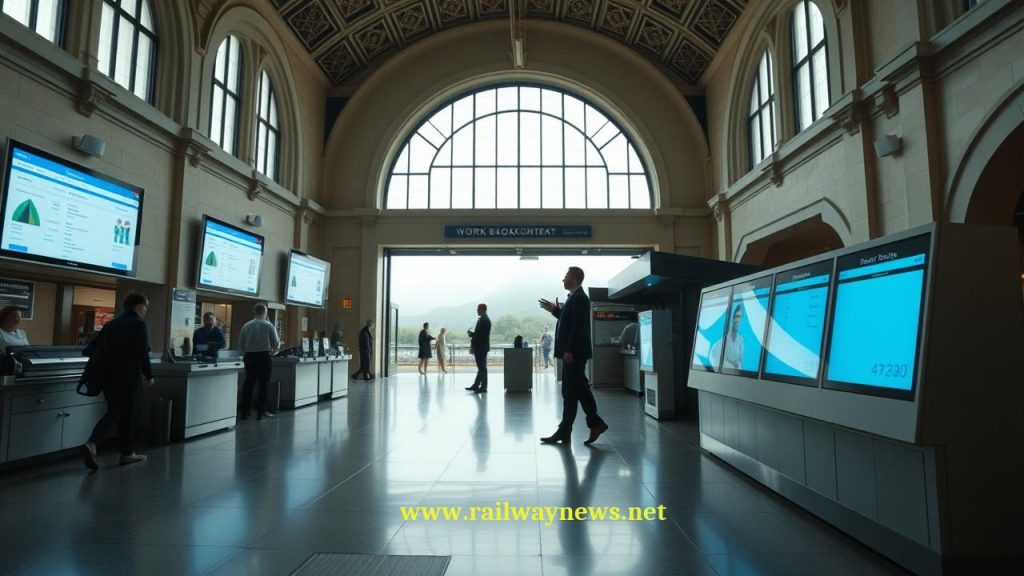
⚡ In Brief: GTR completed the second Model Station pilot at Gipsy Hill, south London, increasing passenger satisfaction from 79% to 90% through decluttering, digital upgrades and staff training, with the concept set for replication across 236 stations.
LONDON – Govia Thameslink Railway (GTR) has trialled its “Model Stations” concept at Gipsy Hill, the second of three London pilot sites, recording an 11-percentage-point rise in customer satisfaction to 90% after refurbishment. The station, managed by Southern, was redesigned between April and July 2026 with new zones for journey planning, ticket purchase and travel, alongside interactive screens displaying British Sign Language departure times. No capital cost figure for the Gipsy Hill works was disclosed by the operator.
What Is the Full Scope of This Project?
The Model Stations concept transforms existing station buildings through low-cost physical and operational changes rather than major capital construction. At Gipsy Hill, the booking hall was decluttered and split into three zones — “Plan your Journey,” “Get your Tickets” and “Start your Journey” — with new flooring, brighter lighting and a coffee shop. Staff completed the “Great Journey Makers” training programme, focused on creating moments of connection, and wear new uniforms to be more approachable. Customer information screens now display real-time train formation, toilet and lift availability, and an interactive journey planner includes BSL videos. Wayfinding signs and the station welcome map were redesigned to a modern standard, while all network maps and engineering work posters were consolidated in one area. Outside, the station garden is maintained by the community group Friends of Gipsy Hill, which celebrated the station’s 170th anniversary. GTR’s parent organisation, DfT Operator (DFTO), sees the pilot as a blueprint for a publicly owned, customer-focused railway ahead of Great British Railways’ formal establishment by end‑2027.
Key Project Data
| Parameter | Value |
|---|---|
| Project / Contract Name | Gipsy Hill Model Station Pilot |
| Total Value | Not disclosed |
| Parties Involved | GTR (Southern), Friends of Gipsy Hill, Lambeth Council, DFTO |
| Timeline / Completion | Completed July 2026 (celebrated 3 July 2026) |
| Country / Corridor | United Kingdom, London |
How Does This Compare to Similar Projects?
The Gipsy Hill pilot contrasts sharply with the UK’s largest rail project, HS2, where £46.8bn had already been spent by 2025 and final costs are projected to reach £87.7bn–£102.7bn (Source: UK Department for Transport, 2025). Whereas HS2 demands decades-long construction, GTR’s model stations deliver immediate, tangible improvements — a +11-point satisfaction gain — at a fraction of the cost. Comparable low-cost station modernisation programmes elsewhere include Deutsche Bahn’s “Zukunftsbahnhof” initiative, which refurbished over 200 small stations with decluttering and digital signage and reported customer satisfaction rises of 5‑8 percentage points (Source: DB Station&Service, 2023), and SNCF Gares & Connexions’ “Accueil” programme in France that similarly focused on staff service training and local partnerships. The exact cost of the Gipsy Hill upgrade was not disclosed, preventing a direct cost‑effectiveness comparison with these international benchmarks.
Note: GTR did not release the sample size or methodology for the customer satisfaction survey that generated the 90% figure. The operator stated it would monitor the station using a new Customer Service Quality Management standard.
Editor’s Analysis
The Model Stations pilot emerges as the UK government prepares to launch Great British Railways by end‑2027, a body that must modernise thousands of stations under public ownership. GTR’s blueprint demonstrates that high-impact improvements can be achieved without waiting for the multi‑billion‑pound, long‑term projects that have dominated headlines. The shift toward community co‑management, seen through the partnership with the Friends of Gipsy Hill, also aligns with European best practice where station gardens and local stewardship increase passenger attachment and usage. If DFTO can replicate the 11‑point satisfaction jump across even a third of GTR’s 236 stations, the cumulative gain in passenger goodwill could meaningfully support the case for continued public investment in local rail at a time when HS2’s spiralling costs erode taxpayer confidence.
FAQ
Q: How much did the Gipsy Hill refurbishment cost?
A: GTR has not disclosed the budget for the Gipsy Hill works. Company officials emphasised that significant improvements can be made at low cost by rethinking existing spaces and partnering with community groups, but no financial figure was provided.
Q: Which other stations are part of the Model Stations pilot?
A: Enfield Chase in north London was the first station to be completed under the programme. Elstree & Borehamwood will be the third and final pilot, with its refurbishment set to finish in the weeks following the Gipsy Hill completion.
Q: Will this concept be rolled out across the entire GTR network?
A: GTR intends to use the three pilot sites to create a design and operational blueprint, then invite managers from its 236 stations to visit and consider how to bring their own locations up to the same standard. No timeline for a full network rollout has been confirmed.

Railway infrastructure, rolling stock and transport technologies specialist focused on global rail industry developments, high-speed rail systems, signaling technologies and freight transportation. Covering railway investments, public transport modernization, rail operations and international mobility projects across Europe, Asia and North America.
RELATED POSTS

October 8, 2026 1:15 pm
Alstom secured a €1bn contract to build 13 automated trains,...

October 1, 2026 7:09 am
United States regulators confirmed a September 30 deadline for the...

October 4, 2026 5:14 pm
Alstom secured a CA$4.7 billion order from VIA Rail Canada...

October 1, 2026 12:13 am
Illinois approved $1.5 billion annually for the Northern Illinois Transit...

October 5, 2026 6:12 pm
AECOM and Jacobs secured a contract in September 2026 to...

October 4, 2026 11:08 pm
Sound Transit confirmed the September 30 opening of Seattle Pinehurst...