
SBB Launches CHF 3.3B Zürich-Winterthur Four-Track
SBB launched a CHF 3.3B four-track expansion of the Zürich–Winterthur corridor, adding a 9 km Brütten Tunnel to boost daily train capacity 30% to 900 by 2037.
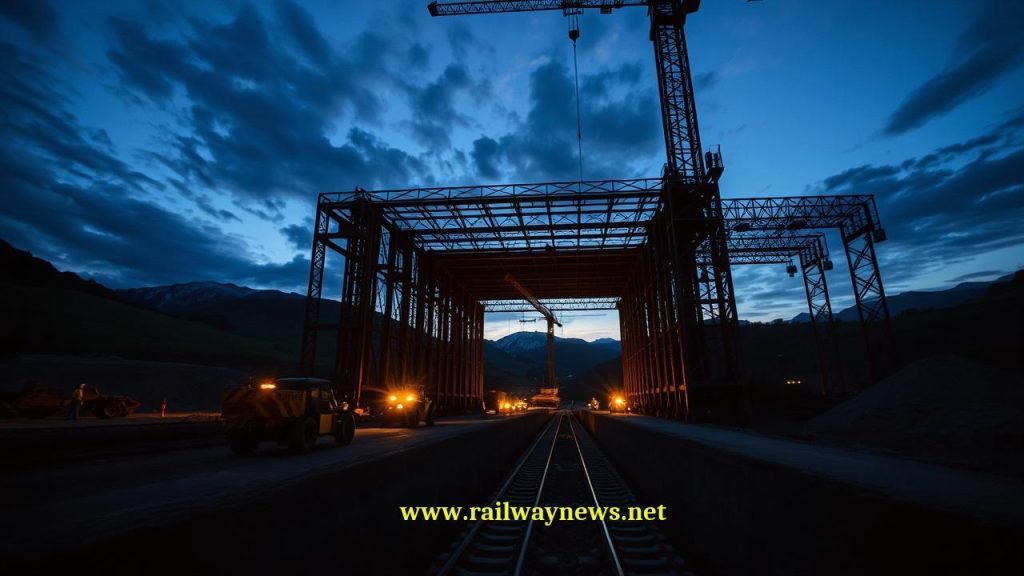
⚡ In Brief: Switzerland launched the CHF 3.3 billion MehrSpur Zürich–Winterthur project, adding a 9 km twin-tube Brütten Tunnel and four-tracking the corridor to lift capacity by 30%, enabling 900 trains per day.
BASSERSDORF, Switzerland – The Swiss Federal Railways (SBB) broke ground on the MehrSpur Zürich–Winterthur expansion, a 30‑km corridor upgrade anchored by the 9 km Brütten Tunnel. Federal Transport Minister Albert Rösti, Zurich Canton State Councillor Martin Neukom, and SBB CEO Vincent Ducrot attended the ceremony in Bassersdorf, the future main construction hub. The project will increase line capacity to 900 daily trains and serve over 150,000 passengers, with total funding cleared at CHF 3.3 billion (EUR 3.53 billion) from the Federal Railway Infrastructure Fund.
What Is the Full Scope of This Project?
The MehrSpur project delivers a fourth track along the 30 km Zürich–Winterthur axis and a 9 km, twin‑tube single‑track tunnel under the Brütten area. Beyond the tunnel, the plan includes full station modernisations at Dietlikon, Bassersdorf, Wallisellen, and Winterthur Töss, plus expanded access infrastructure. Aggregate daily throughput rises 30 percent, accommodating commuter, intercity, and freight services simultaneously. Tunnel drilling begins in 2029, with phased completions between 2028 and 2037, and the entire corridor is expected to be fully operational by 2037.
Key Project Data
| Parameter | Value |
|---|---|
| Project / Contract Name | MehrSpur Zürich–Winterthur (four‑track expansion & Brütten Tunnel) |
| Total Value | CHF 3.3 billion (EUR 3.53 billion) |
| Parties Involved | SBB (project lead), Swiss federal government, Canton of Zurich |
| Timeline / Completion | Tunnel drilling start 2029; phased station works 2028–2037; full corridor operational 2037 (no precise 2037 date confirmed) |
| Country / Corridor | Switzerland / Zürich–Winterthur main line |
How Does This Compare to Similar Projects?
Comparable data for a standalone Swiss railway tunnel project of this scale was not publicly available at time of publication. The Brütten Tunnel is, however, one of the flagship elements of SBB’s Strategic Development Programme (STEP) 2035, which commits over CHF 13 billion to rail capacity enhancements nationwide (Source: SBB, 2023). The Zürich–Winterthur corridor upgrade also aligns with Switzerland’s 2025 urban rail investment trends, where funding emphasis is shifting toward decarbonisation and smart analytics, reducing resource consumption and operational emissions (Source: Industry market analysis, 2025).
Editor’s Analysis
The MehrSpur project removes the single largest bottleneck in Switzerland’s east‑west mainline, directly linking the country’s economic engine to the national network. By delivering a bypass for the heart of the S‑Bahn system and establishing 15‑minute headways as the baseline, SBB is not just adding capacity—it is rewiring the operational timetable for the next three decades. With Swiss passenger demand forecast to grow 30 percent by 2040 (Source: Swiss Federal Office of Transport, 2024), this investment locks in the modal‑shift advantage that underpins the country’s transport policy.
FAQ
Q: When will the Brütten Tunnel open for rail traffic?
A: Tunnel excavation starts in 2029 and the structure is expected to become operational in 2037. No specific month or quarterly window within 2037 has been announced.
Q: How will train services be affected during construction?
A: SBB will carry out installation work at night to keep most daytime services running. Temporary schedule adjustments on Zürich S‑Bahn lines will begin in December 2026, and noise, vibration, and community impact measures are being implemented throughout the build.
Q: What is the daily capacity increase once the project is complete?
A: The line will be able to handle 900 trains per day, a 30 percent increase, carrying more than 150,000 passengers daily and allowing additional freight paths on this heavily used corridor.

Railway infrastructure, rolling stock and transport technologies specialist focused on global rail industry developments, high-speed rail systems, signaling technologies and freight transportation. Covering railway investments, public transport modernization, rail operations and international mobility projects across Europe, Asia and North America.
RELATED POSTS

October 8, 2026 1:15 pm
Alstom secured a €1bn contract to build 13 automated trains,...

October 1, 2026 7:09 am
United States regulators confirmed a September 30 deadline for the...

October 8, 2026 12:18 pm
Siemens Mobility signed an agreement with VinSpeed to supply 350...

October 4, 2026 5:14 pm
Alstom secured a CA$4.7 billion order from VIA Rail Canada...

October 5, 2026 6:12 pm
AECOM and Jacobs secured a contract in September 2026 to...

October 1, 2026 12:13 am
Illinois approved $1.5 billion annually for the Northern Illinois Transit...