
GTR Boosts Satisfaction to 90% at Gipsy Hill Station
GTR lifted passenger satisfaction from 79% to 90% at London’s Gipsy Hill station after a low-cost decluttering and digital information upgrade on 3 July 2025.
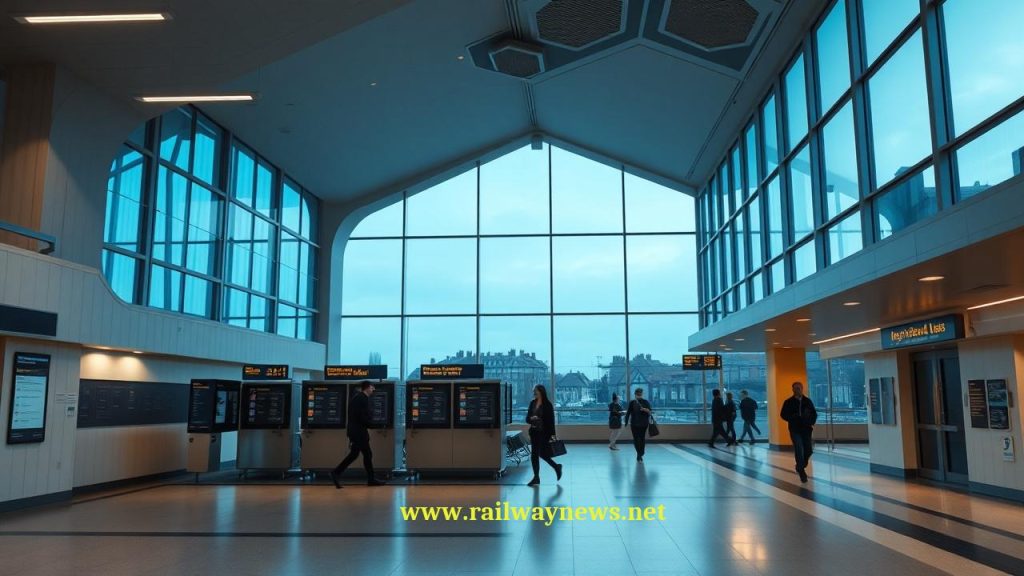
⚡ In Brief: GTR’s refurbishment of Gipsy Hill station in south London, completed 3 July 2025, lifted passenger satisfaction from 79% to 90% under a low-cost “Model Stations” blueprint to be replicated across its 236-station network.
LONDON, UK – Govia Thameslink Railway (GTR) officially reopened Gipsy Hill station on 3 July 2025 after a decluttering and digital upgrade that boosted customer satisfaction scores by 11 percentage points, reaching 90% post-refurbishment. The project is the second pilot in GTR’s “Model Stations” concept, following Enfield Chase and preceding a third at Elstree & Borehamwood. The operator, part of publicly-owned DFTO, aims to standardise the low-cost, passenger-centric design across its entire network of 236 stations.
What Is the Full Scope of This Project?
The Gipsy Hill refurbishment removed physical and visual clutter from the booking hall, recast the space into three distinct zones—“Plan your Journey,” “Get your Tickets,” and “Start your Journey”—and installed new flooring, brighter lighting, and modern information screens. Real-time departure data now includes carriage numbers, toilet and lift availability, plus an interactive screen with British Sign Language for accessibility. Staff completed the “Great Journey Makers” training and wear a new uniform. A coffee shop was added, wayfinding signs upgraded, and the station garden maintained in partnership with the local “Friends of Gipsy Hill” community group. No structural expansion occurred; the focus was on reorganisation, digital information, and community identity.
Key Project Data
| Parameter | Value |
|---|---|
| Project / Contract Name | Gipsy Hill Model Station refurbishment |
| Total Value | Not disclosed |
| Parties Involved | GTR (Southern), DFTO, Friends of Gipsy Hill, Lambeth Council, Helen Hayes MP |
| Timeline / Completion | Pilot completed 3 July 2025; all three pilots to conclude in coming weeks |
| Country / Corridor | United Kingdom (London – Southern network) |
How Does This Compare to Similar Projects?
UK rail infrastructure spending in 2025 is marked by extremes. While GTR’s model stations require minimal capital outlay—the exact sum was not released, but the operator cites “low cost” and immediate improvements—HS2’s project reset alone consumed £77.8 million on consultancy fees, part of a £153 million exercise to reorganise a programme that has already cost £46.8 billion and faces estimates up to £102.7 billion (Source: UK Parliament expenditure reporting, 2025). Gipsy Hill’s 11-point satisfaction surge from decluttering, digital information, and community partnership contrasts sharply with HS2’s managerial reset that aims to save £2.5 billion through simplification. Meanwhile, the digital focus at Gipsy Hill—real-time screens, interactive journey planning, BSL video—aligns with an international push to equip stations for the Future Railway Mobile Communication System (FRMCS). Latvia’s state railway, for example, is deploying a private 5G network from LMT Group to test FRMCS-ready connectivity by 2035, a backhaul upgrade that will eventually support passenger-facing digital services similar to those now live at Gipsy Hill but requires years of infrastructure investment (Source: LMT Group/Developing Telecoms, 2025). This juxtaposition demonstrates how immediate, user-visible upgrades can yield rapid customer satisfaction gains without waiting for long-term network overhauls.
Editor’s Analysis
GTR’s approach strips station investment back to basics: what passengers see, touch, and experience on arrival. At a time when the UK government is absorbing operators under Great British Railways and scrutinising every pound ahead of the 2027 GBR launch, a high-satisfaction, low-cost template is a politically and fiscally attractive proof-of-concept. The 11-percentage-point jump at Gipsy Hill validates the thesis that community co-design and digital information – not lavish architecture – drive passenger approval. If the model can be replicated across the network, it could recalibrate industry expectations about the true cost of improving passenger experience, especially when compared to the multi-billion-pound overheads dragging down other rail programmes. (Trend reference: The drive toward ISO 19650-certified digital project delivery, recently re-confirmed by UK-based DGTRA for the second year, signals an industry-wide push to embed efficiency standards that the model station concept echoes at a physical station level – Source: BSI, 2025.)
FAQ
Q: What exactly is the “Model Stations” concept?
A: It is GTR’s blueprint for improving passenger experience by decluttering, zoning, upgrading digital information, training staff in customer service, and partnering with local community groups. The approach is designed to be replicated across GTR’s 236 stations using low-cost, high-impact interventions.
Q: How much did the Gipsy Hill refurbishment cost?
A: The operator did not publicly disclose the financial investment. GTR emphasised that significant improvements were made at low cost by looking at stations “through the eyes of customers” and working with volunteer groups such as the Friends of Gipsy Hill.
Q: Will passengers at other stations see similar upgrades?
A: GTR plans to take the successful elements from the three pilot stations—Enfield Chase, Gipsy Hill, and Elstree & Borehamwood—and roll them out network-wide. No timetable for full rollout has been announced, but managers are being invited to visit the completed pilots to learn and adapt the concept for their own locations.

Railway infrastructure, rolling stock and transport technologies specialist focused on global rail industry developments, high-speed rail systems, signaling technologies and freight transportation. Covering railway investments, public transport modernization, rail operations and international mobility projects across Europe, Asia and North America.
RELATED POSTS

October 8, 2026 1:15 pm
Alstom secured a €1bn contract to build 13 automated trains,...

October 1, 2026 7:09 am
United States regulators confirmed a September 30 deadline for the...

October 4, 2026 5:14 pm
Alstom secured a CA$4.7 billion order from VIA Rail Canada...

October 5, 2026 6:12 pm
AECOM and Jacobs secured a contract in September 2026 to...

October 1, 2026 12:13 am
Illinois approved $1.5 billion annually for the Northern Illinois Transit...

October 4, 2026 11:08 pm
Sound Transit confirmed the September 30 opening of Seattle Pinehurst...