
LTG Infra Awards EUR 9.18M Rail Baltica Station Design Lithuania
LTG Infra awarded Sintagma EUR 9.18M to design Rail Baltica regional station infrastructure at Jonava and Panevėžys, Lithuania.
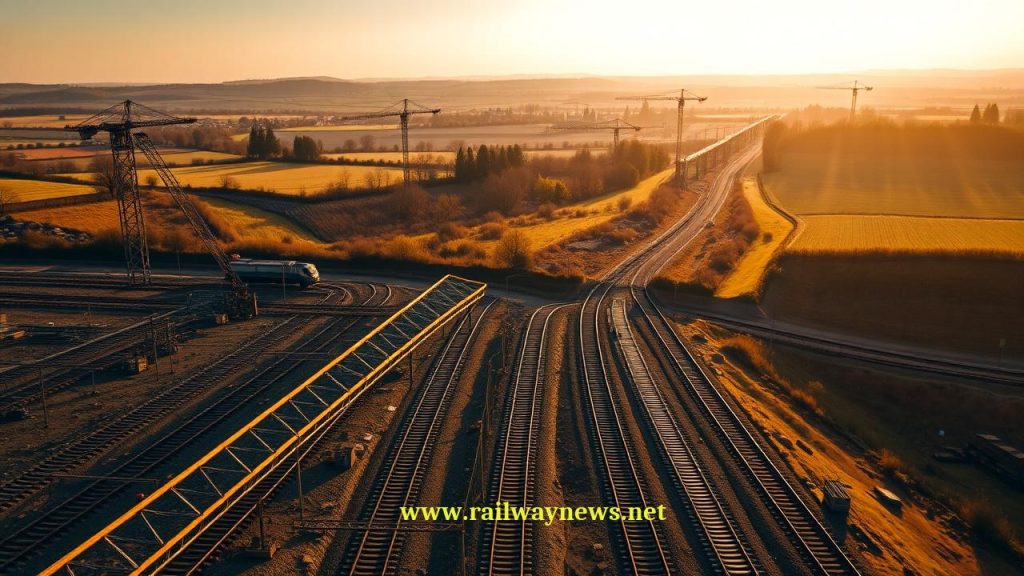
⚡ In Brief: Lithuanian infrastructure manager LTG Infra has awarded Italian engineering firm Sintagma two contracts worth a combined EUR 9.18 million to design and supervise regional station infrastructure for the Rail Baltica corridor.
VILNIUS, LITHUANIA – Lithuanian railway infrastructure manager LTG Infra has signed two contracts totaling EUR 9.18 million with Italian engineering firm Sintagma for the design and construction supervision of regional station infrastructure. The agreements, finalized in May 2024, cover the regional passenger nodes at Jonava and Panevėžys (Gustonys) along the upcoming Rail Baltica high-speed corridor. Sintagma will deliver the comprehensive infrastructure designs within a 24-month timeframe.
What Does This Contract Cover?
The two contracts cover the complete engineering design and subsequent construction supervision for the trackside and access infrastructure at two key regional nodes, totaling EUR 9.18 million. Specifically, the Jonava station contract is valued at EUR 2.18 million, while the larger-scale Panevėžys (Gustonys) station infrastructure contract is valued at EUR 7 million, inclusive of VAT. Sintagma’s design mandate includes utility networks, local railway lines, access roads, viaducts, and passenger platforms—featuring four platforms at Panevėžys and two at Jonava. Crucially, the contracts exclude the design of the actual station buildings, which will be tendered under separate, upcoming procurement processes.
Key Contract Data
| Parameter | Value |
|---|---|
| Contract Name | Rail Baltica Regional Station Infrastructure Design & Supervision (Jonava and Panevėžys) |
| Total Value | EUR 9.18 million (including VAT) |
| Parties Involved | LTG Infra (Lithuania) and Sintagma S.r.l. (Italy) |
| Timeline / Completion | 24-month design phase followed by construction supervision |
| Country / Corridor | Lithuania / Rail Baltica Corridor |
How Does This Compare to Similar Contracts?
At EUR 9.18 million, this design package aligns with regional station planning benchmarks across the Rail Baltica corridor, where localized node designs typically range between EUR 1.5 million and EUR 4 million per site. For comparison, Estonia’s national coordinator, Rail Baltic Estonia, awarded similar design contracts for regional halts in 2023 averaging approximately EUR 2.1 million per station (Source: Rail Baltica, 2023). However, these regional contract values remain significantly lower than major international passenger hub designs; for instance, the design contract for the Riga Central Station hub in Latvia exceeded EUR 20 million (Source: RB Rail AS, 2019). Detailed construction budgets for the Lithuanian regional station buildings themselves were not disclosed at the time of publication.
Editor’s Analysis
Securing established European engineering specialists like Sintagma highlights Lithuania’s strategy to align Rail Baltica with Western European technical interoperability standards. As global passenger rail investments rise to meet decarbonization targets, integrating regional hubs early ensures that local populations benefit from the high-speed line rather than just major metropolitan areas (Source: Fortune Business Insights, 2025). This decentralized approach is critical for securing ongoing European Union Co-funding, which heavily prioritizes regional connectivity and economic cohesion.
FAQ
Q: Which company won the design contracts for the Lithuanian Rail Baltica stations?
A: The Italian engineering firm Sintagma won both contracts awarded by LTG Infra. The company is responsible for designing the infrastructure at the Jonava and Panevėžys (Gustonys) stations.
Q: What is the total value of these railway contracts?
A: The combined value of the two contracts is EUR 9.18 million. This includes EUR 2.18 million for the Jonava station and EUR 7 million for the Panevėžys (Gustonys) station infrastructure.
Q: Will these contracts deliver completed station buildings?
A: No, these contracts only cover the surrounding infrastructure, platforms, access roads, and utility connections. The actual station passenger buildings will be designed and built under separate projects.

Railway infrastructure, rolling stock and transport technologies specialist focused on global rail industry developments, high-speed rail systems, signaling technologies and freight transportation. Covering railway investments, public transport modernization, rail operations and international mobility projects across Europe, Asia and North America.
RELATED POSTS
September 6, 2026 5:19 am
Hitachi delivered Taiwan's first N700ST high-speed train from Japan in...

September 5, 2026 4:19 pm
CPK launched formal tender talks with four consortia to design...
September 6, 2026 6:17 am
Hungary ordered a national ban on most freight trains from...
September 5, 2026 7:14 pm
HS2 Ltd signed renegotiated civils contracts with EKFB and Align...

September 6, 2026 4:12 am
Alstom delivered the first of 100 new G Class trams...
September 6, 2026 1:17 am
Hitachi Toshiba Supreme Consortium confirmed the first of 12 N700ST...