
Iran Confirms Tehran-Mashhad Rail Suspension After US Strike
Iran suspended Tehran–Mashhad rail services after a U.S. strike damaged the Aq Tekeh Khan bridge, halting the 926-km corridor handling over 20M annual journeys.
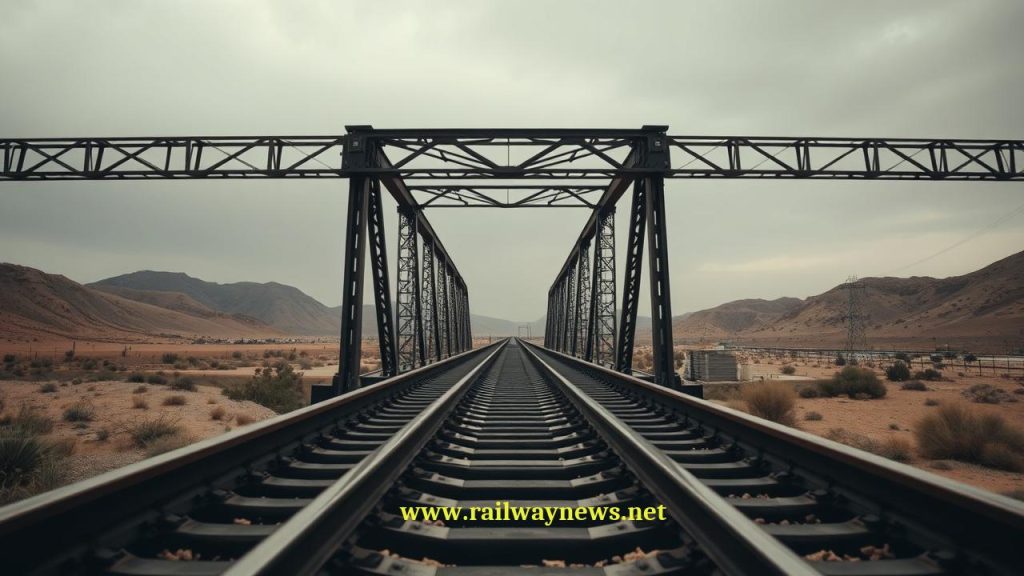
⚡ In Brief: Iran suspended passenger rail services on the Tehran–Mashhad route Thursday after a reported U.S. cruise missile strike damaged the Aq Tekeh Khan railway bridge in Golestan province, stranding travelers on one of Iran’s most strategically vital rail corridors during funeral processions for former Supreme Leader Ayatollah Ali Khamenei.
TEHRAN, Iran – Iran’s state-owned railway company suspended all passenger train services between Tehran and Mashhad on Thursday after an early-morning projectile strike damaged a section of track on the Aq Tekeh Khan bridge in northern Golestan province. A U.S. official quoted by Axios stated the U.S. military targeted two railway bridges in northern Iran with cruise missiles during strikes carried out Wednesday. The suspension disrupted travel for an undisclosed number of passengers on the 926-km route, which normally handles over 20 million passenger journeys annually and serves as Iran’s highest-capacity intercity rail corridor.
What Happened and What Is the Scale of Impact?
The Aq Tekeh Khan railroad bridge in Golestan province was struck by a projectile on Thursday morning, prompting immediate suspension of all passenger services on the Tehran–Mashhad line. Iranian railway authorities deployed technical and operational teams to the site, with reconstruction work underway as of Thursday. Stranded passengers are being redirected to road transport for the journey to Mashhad, a major city in northeastern Iran and one of the country’s most significant Shia pilgrimage centers. Some affected travelers have publicly complained about the disruption, according to Iranian media reports. The incident marks the first reported strike on Iranian transportation infrastructure by the United States since the April 8 ceasefire took effect. The timing is particularly acute: international press outlets are simultaneously covering funeral processions for Iran’s former Supreme Leader, Ayatollah Ali Khamenei, for whom mourners were traveling to Mashhad.
Key Incident Data
| Parameter | Value |
|---|---|
| Incident Type | Military strike on railway bridge; service disruption |
| Total Value | Not disclosed |
| Parties Involved | Islamic Republic of Iran Railways (RAI); U.S. military (reported, not independently verified) |
| Timeline / Completion | Service suspended Thursday; repair timeline not disclosed |
| Country / Corridor | Iran — Golestan province; Tehran–Mashhad mainline |
How Does This Compare to Similar Incidents on This Network?
This is the first confirmed disruption of Iranian railway infrastructure attributed to a U.S. military strike since at least the 1980s, representing a significant departure from the pattern of regional proxy conflict. By comparison, Russia’s war in Ukraine has seen over 500 documented attacks on railway infrastructure since February 2022, including precision strikes on bridges, junctions, and electrification substations — though those have been dispersed across a network roughly four times the route length of the Tehran–Mashhad line (Source: Ukrainian Railways operational reports, 2022–2025). The targeting of the Aq Tekeh Khan bridge is notable for its focus on a single chokepoint within a corridor that carries both heavy passenger volume and freight linking Iran to Turkmenistan, Kazakhstan, and ultimately China’s Belt and Road network. Unlike the sustained degradation campaigns observed in Ukraine, this appears to be a limited, signaling strike. The second bridge reportedly targeted has not been publicly identified. The full extent of structural damage to either bridge was not independently verifiable at time of publication.
Editor’s Analysis
The strike on the Tehran–Mashhad railway corridor introduces a new dimension to U.S.–Iran military escalation: the direct disruption of civilian logistics infrastructure on the Iranian mainland. For freight operators and logistics planners across the Caspian region, the incident raises immediate questions about corridor reliability at a moment when Iran’s maritime chokepoint — the Strait of Hormuz — is simultaneously under pressure. China’s rail freight market posted a 15.3% year-on-year increase in total goods import and export value through the first five months of 2026, and the Tehran–Mashhad line forms a segment of the land bridge that bypasses Hormuz entirely (Source: China Ports data via Seatrade Maritime, 2026). Any sustained interruption would shift risk calculations for cargo owners currently routing through Bandar Abbas toward alternative corridors through Azerbaijan or Russia.
FAQ
Q: What caused the suspension of Tehran–Mashhad train services?
A: A projectile — reported by Axios as a U.S. cruise missile — struck the Aq Tekeh Khan railway bridge in Golestan province on Thursday morning, damaging track infrastructure and forcing Islamic Republic of Iran Railways to halt all passenger operations on the route while repair crews assess and rebuild the affected section.
Q: When will train services between Tehran and Mashhad resume?
A: Iranian railway authorities have stated only that repair work is underway “as quickly as possible.” No specific reopening date or estimated repair duration has been officially disclosed.
Q: How are stranded passengers being transported?
A: Stranded passengers are being transferred to road coaches for the remainder of their journey to Mashhad. Some travelers have complained to Iranian media about the conditions of the alternative arrangements, though the total number of affected passengers has not been published by the operator.

Railway infrastructure, rolling stock and transport technologies specialist focused on global rail industry developments, high-speed rail systems, signaling technologies and freight transportation. Covering railway investments, public transport modernization, rail operations and international mobility projects across Europe, Asia and North America.
RELATED POSTS

October 8, 2026 1:15 pm
Alstom secured a €1bn contract to build 13 automated trains,...

October 1, 2026 7:09 am
United States regulators confirmed a September 30 deadline for the...

October 8, 2026 12:18 pm
Siemens Mobility signed an agreement with VinSpeed to supply 350...

October 4, 2026 5:14 pm
Alstom secured a CA$4.7 billion order from VIA Rail Canada...

October 5, 2026 6:12 pm
AECOM and Jacobs secured a contract in September 2026 to...

October 1, 2026 12:13 am
Illinois approved $1.5 billion annually for the Northern Illinois Transit...