
UNIFE Reports ERTMS Only 17% Complete TEN-T Core
17% of the EU TEN-T core railway network is equipped with European Rail Traffic Management System (ERTMS), UNIFE confirmed, prompting calls for urgent action by late 2024.
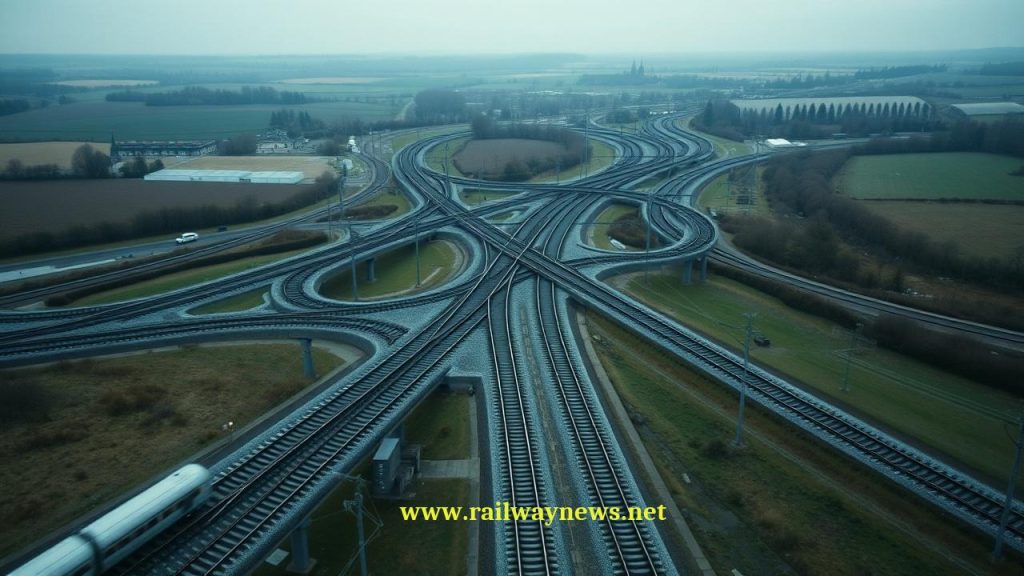
⚡ In Brief: European rail suppliers are calling for urgent action to accelerate the European Rail Traffic Management System (ERTMS) implementation, citing that only 17% of the TEN-T core network is equipped, leaving the project significantly behind schedule.
VALENCIENNES, FRANCE – The European rail supply industry, represented by UNIFE Director General Enno Wiebe, has called for a drastic reduction in bureaucracy and increased coordination to unblock the stalled rollout of the European Rail Traffic Management System (ERTMS). As of the end of 2024, data shows only 17% of the TEN-T core network (approx. 10,600–12,400 km) and 19% of EU rolling stock are equipped with the technology, prompting calls for urgent action at a conference organized by the European Union Agency for Railways (ERA).
What Does This Regulation Cover?
The call to action focuses on accelerating the implementation of the European Rail Traffic Management System (ERTMS), a mandatory EU-wide standard for train control and command systems. The initiative aims to create a single, interoperable European railway area by replacing legacy national signalling systems. Key bottlenecks identified include complex authorization processes, excessive project-specific requirements, a lack of harmonized trackside equipment, and insufficient coordination and funding among Member States.
Key Regulatory Data
| Parameter | Value |
|---|---|
| Regulation / Policy Name | European Rail Traffic Management System (ERTMS) Implementation |
| Total Value | Not disclosed |
| Parties Involved | UNIFE, European Union Agency for Railways (ERA), EU Member States |
| Timeline / Completion | Targets set under TEN-T Regulation; ERTMS Work Plan No. 3 for 2026 |
| Country / Corridor | EU TEN-T Core Network |
How Does This Compare to Global Standards?
The challenges facing Europe’s multi-national ERTMS rollout contrast with the centrally managed implementation of China’s CTCS (Chinese Train Control System). While based on ERTMS standards, CTCS has been deployed rapidly and uniformly across China’s high-speed network due to unified state control. In North America, the federally mandated Positive Train Control (PTC) system also faced significant delays and cost overruns but was driven by a singular safety mandate rather than pan-continental interoperability. The European approach, requiring coordination across dozens of Member States and infrastructure managers, introduces layers of administrative and technical complexity not seen in these more centralized systems.
Editor’s Analysis
The persistent delays in ERTMS deployment highlight a fundamental conflict between the EU’s goal of a single railway area and the reality of fragmented national interests and bureaucratic processes. The supply industry’s frustration signals that the technology is mature, but the political and administrative frameworks are failing to keep pace. This inertia not only hinders interoperability but also delays the benefits of a digitized railway and complicates the vital transition to the next-generation Future Railway Mobile Communication System (FRMCS). The global trend is toward software-defined rail operations, and Europe’s inability to execute this foundational digital step risks widening the technology gap with other regions (Source: CleanTechnica, 2026).
FAQ
Q: What is ERTMS and why is it important?
A: ERTMS is a unified European standard for railway signalling and speed control. Its implementation is critical for ensuring trains from different countries can operate safely across the entire EU network, creating a “Single European Railway Area.”
Q: How far behind schedule is the ERTMS implementation?
A: The project is “significantly behind schedule,” according to the European ERTMS Coordinator. As of late 2024, only 17% of the core TEN-T network trackside and 19% of EU rolling stock were equipped with the necessary technology.
Q: What are the main obstacles to faster ERTMS deployment?
A: The primary bottlenecks are not technological but administrative and financial. They include excessive bureaucracy in authorization, lack of funding, poor cross-border coordination, and too many variations in technical requirements between projects and countries.

Railway infrastructure, rolling stock and transport technologies specialist focused on global rail industry developments, high-speed rail systems, signaling technologies and freight transportation. Covering railway investments, public transport modernization, rail operations and international mobility projects across Europe, Asia and North America.
RELATED POSTS

September 6, 2026 5:19 am
Hitachi delivered Taiwan's first N700ST high-speed train from Japan in...

September 5, 2026 4:19 pm
CPK launched formal tender talks with four consortia to design...
September 6, 2026 1:17 am
Hitachi Toshiba Supreme Consortium confirmed the first of 12 N700ST...
September 6, 2026 6:17 am
Hungary ordered a national ban on most freight trains from...

September 6, 2026 4:12 am
Alstom delivered the first of 100 new G Class trams...

September 5, 2026 7:14 pm
HS2 Ltd signed renegotiated civils contracts with EKFB and Align...