
New Private Operator Orders 12 Alstom Trains France
A new French private operator ordered 12 Alstom Avelia Horizon trains for over €850 million, launching high-speed services in France from 2028, adding 10 million seats.
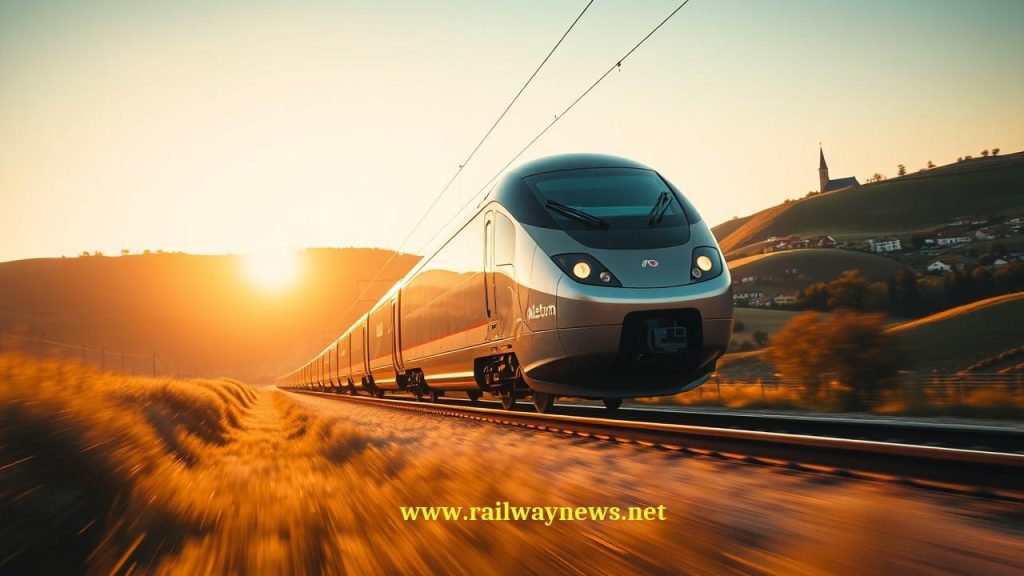
⚡ In Brief: A new private operator, backed by €1 billion in funding, will launch high-speed rail services in France from 2028, ordering 12 Alstom Avelia Horizon trains to add 10 million seats annually on routes from Paris to Bordeaux, Rennes, and Nantes.
PARIS, FRANCE – A new private rail company founded by former state railway executive Rachel Picard has placed an order worth over €850 million for 12 high-speed trainsets from Alstom. The operator, supported by total funding of approximately €1 billion, plans to launch its first commercial service on the Paris–Bordeaux route in 2028, targeting corridors where it claims demand exceeds current capacity.
What Is the Full Scope of This Project?
The project encompasses the launch of new open-access high-speed services from Paris to Bordeaux, Rennes, Nantes, and Angers, aiming to add approximately 10 million seats per year to the network. The core asset is an order for 12 Alstom Avelia Horizon trainsets, the same platform as the TGV M, which are scheduled for delivery at a rate of one per month starting in 2028, with the full fleet operational by 2029. The operator states it will pay an estimated €200 million annually in network access fees, arguing its entry is justified by an estimated 15% of potential high-speed customers being unable to find a seat on current services.
Key Project Data
| Parameter | Value |
|---|---|
| Project / Contract Name | New High-Speed Service to Western France |
| Total Value | Approx. €1 billion (project funding); >€850 million (trainset order) |
| Parties Involved | New private operator (founded by Rachel Picard), Alstom |
| Timeline / Completion | First service 2028; Full fleet delivery by 2029 |
| Country / Corridor | France / Paris to Bordeaux, Rennes, Nantes, Angers |
How Does This Compare to Similar Projects?
This initiative is the most advanced private high-speed project in France since Italian state operator Trenitalia launched services on the Paris-Lyon-Milan corridor in December 2021. Following Trenitalia’s entry, France’s Transport Regulatory Authority (ART) reported an average fare reduction of 10% on the Paris-Lyon route, an effect the new operator hopes to replicate. The operator’s rationale that demand exceeds supply is supported by wider European trends; a recent analysis found that nearly half of the EU’s busiest flight routes are difficult or impossible to book by train due to fragmented ticketing systems (Source: Transport & Environment, 2024). Unlike a direct price-based challenge, this new operator’s stated strategy is to capture unmet demand on congested routes.
Editor’s Analysis
This project represents a significant test of the liberalisation goals set by the EU’s Fourth Railway Package within the French domestic market. By focusing on adding capacity rather than solely competing on price, the operator is testing a market-expansion strategy that could prove more resilient than a direct price war, provided its claim of 15% latent demand is accurate. The decision to use the same Alstom Avelia Horizon platform as the incumbent’s TGV M shifts the competitive battleground to onboard service, pricing strategy, and operational efficiency, factors which the company is strategically keeping undisclosed for now.
FAQ
Q: Who is the new rail operator in France?
A: The service will be run by a new company founded in 2024 by Rachel Picard, a former senior executive at the existing French public rail group. The commercial brand name for the service has not yet been announced.
Q: How much does one of the new trains cost?
A: The total order for 12 Alstom Avelia Horizon trainsets is valued at over €850 million. This results in an average cost of approximately €70.8 million per trainset.
Q: Will this new service be cheaper than the existing TGV?
A: The company’s pricing model has not been disclosed. However, the entry of new operators typically increases price competition; the arrival of Trenitalia on the Paris-Lyon route led to an average fare drop of 10%, according to the Transport Regulatory Authority.

Railway infrastructure, rolling stock and transport technologies specialist focused on global rail industry developments, high-speed rail systems, signaling technologies and freight transportation. Covering railway investments, public transport modernization, rail operations and international mobility projects across Europe, Asia and North America.
RELATED POSTS

October 8, 2026 1:15 pm
Alstom secured a €1bn contract to build 13 automated trains,...

October 1, 2026 7:09 am
United States regulators confirmed a September 30 deadline for the...

October 8, 2026 12:18 pm
Siemens Mobility signed an agreement with VinSpeed to supply 350...

October 4, 2026 5:14 pm
Alstom secured a CA$4.7 billion order from VIA Rail Canada...

October 5, 2026 6:12 pm
AECOM and Jacobs secured a contract in September 2026 to...

October 1, 2026 12:13 am
Illinois approved $1.5 billion annually for the Northern Illinois Transit...