
FPC Awards $5.1 Billion 2,700 Railcar Contract Russia
Russia’s Federal Passenger Company awarded Tver Carriage Works a $5.1 billion contract for 2,700 single and double-deck passenger railcars for its long-distance fleet, delivered 2026-2030.
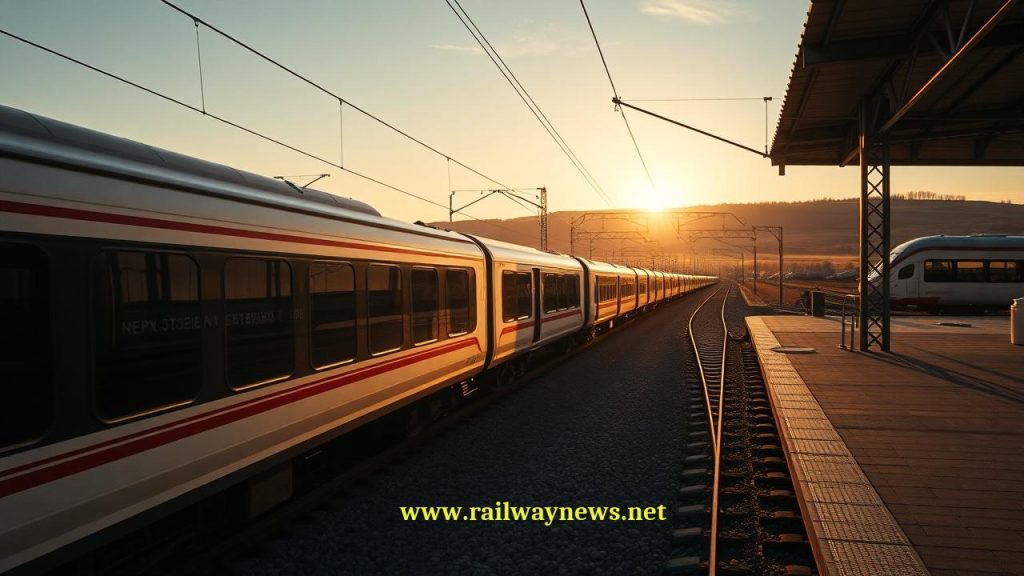
⚡ In Brief: Russia’s Federal Passenger Company has awarded a USD 5.1 billion (RUB 400 billion) contract to the Tver Carriage Works for the delivery of 2,700 single and double-deck passenger railcars between 2026 and 2030 to modernize its long-distance fleet.
MOSCOW, RUSSIA – The Federal Passenger Company (FPC), Russia’s national long-distance rail operator, has signed a USD 5.1 billion agreement with domestic manufacturer Tver Carriage Works (TVZ). The contract covers the supply of 2,700 new passenger coaches over the five-year period from 2026 to 2030. This deal continues a long-term strategic partnership focused on renewing FPC’s rolling stock fleet.
What Does This Contract Cover?
The agreement mandates the production and delivery of 2,700 locomotive-hauled passenger coaches, which includes a mix of single-deck and double-deck designs. Of the total order, 449 units are specified as single-deck coaches, with the remainder being a non-disclosed mix of coach types. The deal builds upon a previous seven-year contract signed in 2019, which saw TVZ deliver approximately 3,700 units, including sleeping, couchette, and restaurant cars, to FPC.
Key Contract Data
| Parameter | Value |
|---|---|
| Contract Name | FPC-TVZ Rolling Stock Agreement (2026-2030) |
| Total Value | USD 5.1 billion (RUB 400 billion) |
| Parties Involved | Federal Passenger Company (FPC), Tver Carriage Works (TVZ) |
| Timeline / Completion | 2026–2030 |
| Country / Corridor | Russian Federation |
How Does This Compare to Similar Contracts?
The USD 5.1 billion valuation places this rolling stock order among significant national-level industrial procurements, comparable in financial scale to major international defense deals like Germany’s anticipated ~$8 billion submarine cooperation agreement with India (Source: Global Banking and Finance). The contract’s average cost is approximately USD 1.89 million per railcar. A separate data point cited a contract value of USD 5 million, but the detailed scope of 2,700 units and extensive factory investment aligns with the larger USD 5.1 billion figure. The total value of the preceding 2019 contract for 3,700 units was not disclosed, preventing a direct value comparison.
Editor’s Analysis
This long-term agreement highlights a strategic focus on domestic manufacturing to support a large-scale, systematic fleet renewal for Russia’s national passenger operator. The five-year delivery timeline for 2,700 coaches contrasts with the multi-decade planning and construction horizons for major rail projects in North America, such as Canada’s high-speed rail line, which will not see its first segment open until around 2039 (Source: CleanTechnica). This signals a clear priority on upgrading existing service quality and capacity through rapid asset replacement rather than new network infrastructure expansion. The deal is critical for FPC’s stated goal of increasing annual ridership to 122 million by 2030.
FAQ
Q: What is the average cost per railcar in this deal?
A: Based on the total contract value of USD 5.1 billion for 2,700 units, the average cost per railcar is approximately USD 1.89 million. This figure accounts for a mix of both single-deck and more complex double-deck coaches.
Q: Is this part of a new partnership?
A: No, this is a continuation of an existing strategic partnership. It follows a seven-year agreement signed in 2019, under which Tver Carriage Works delivered approximately 3,700 railcars to the Federal Passenger Company.
Q: How will this contract impact passengers?
A: The new rolling stock will directly support FPC’s strategy to increase annual passenger numbers by 4 million by 2030. Passengers will experience more modern carriages with updated amenities, which is intended to improve service quality and capacity across the network.

Railway infrastructure, rolling stock and transport technologies specialist focused on global rail industry developments, high-speed rail systems, signaling technologies and freight transportation. Covering railway investments, public transport modernization, rail operations and international mobility projects across Europe, Asia and North America.
RELATED POSTS

October 8, 2026 1:15 pm
Alstom secured a €1bn contract to build 13 automated trains,...

October 1, 2026 7:09 am
United States regulators confirmed a September 30 deadline for the...

October 8, 2026 12:18 pm
Siemens Mobility signed an agreement with VinSpeed to supply 350...

October 4, 2026 5:14 pm
Alstom secured a CA$4.7 billion order from VIA Rail Canada...

October 5, 2026 6:12 pm
AECOM and Jacobs secured a contract in September 2026 to...

October 1, 2026 12:13 am
Illinois approved $1.5 billion annually for the Northern Illinois Transit...