
Kiewit Austin Secures Operations Facility Austin Light Rail
Kiewit Austin Partnership secured the design-build contract for the $7.1 billion Austin light rail system’s operations facility, opening in 2033.
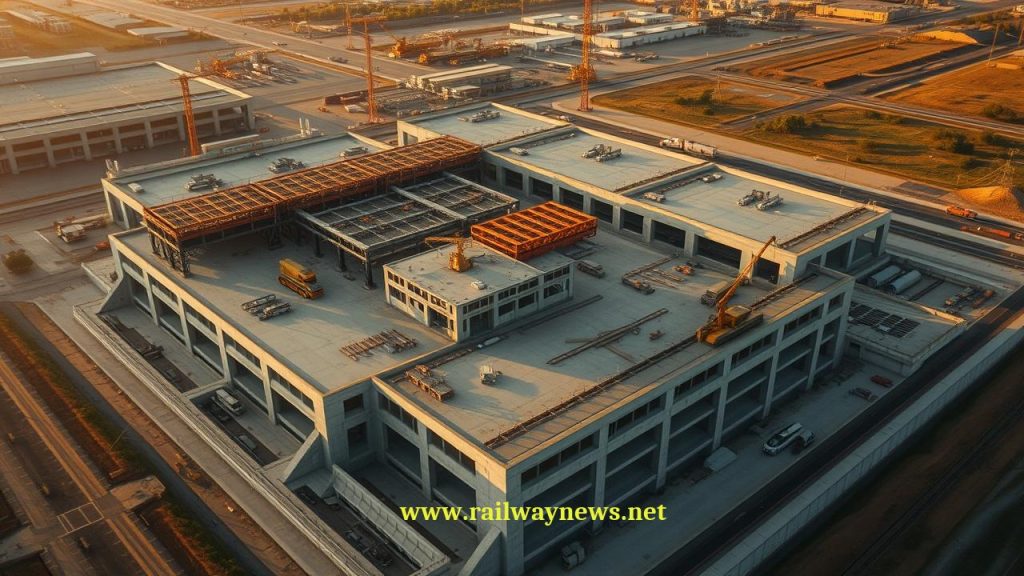
⚡ In Brief: Kiewit Austin Partnership has been selected to design and build the operations and maintenance facility for Austin, Texas’s new light-rail system, a project valued at up to $7.1 billion and slated for a 2033 opening.
AUSTIN, USA – The Austin Transit Partnership (ATP) has selected the Kiewit Austin Partnership (KAP) joint venture as the design-build contractor for its new light-rail system’s operations and maintenance facility. The overall project is valued between $6.8 billion and $7.1 billion and is scheduled to begin service in 2033. KAP will lead the design and construction of the facility that will store and service the system’s all-electric train fleet.
What Is the Full Scope of This Project?
The contract covers the design and construction of the primary operations and maintenance (O&M) facility for Austin’s new light-rail system. This facility will serve as the hub for vehicle storage, servicing, dispatch, and will house workspaces for operators and maintenance staff. The broader light-rail project encompasses a nearly 10-mile alignment with 15 planned stations, designed to operate with a fully electric fleet and accommodate future expansion.
Key Project Data
| Parameter | Value |
|---|---|
| Project / Contract Name | Austin Light Rail Operations & Maintenance Facility |
| Total Value | $6.8 billion – $7.1 billion (for entire system); O&M facility contract value not disclosed. |
| Parties Involved | Austin Transit Partnership (ATP), Kiewit Austin Partnership (Kiewit Building Group Inc., Austin Commercial) |
| Timeline / Completion | System opening slated for 2033 |
| Country / Corridor | Austin, Texas, USA |
How Does This Compare to Similar Projects?
The nine-year timeline to the 2033 opening for Austin’s new-build system is significantly longer than timelines for major component upgrades or fleet renewals in established networks. For example, Poland’s GSM-R system installation on its Central Railway Line is scheduled for testing in August 2026, a much shorter implementation cycle for a specific technology overlay (Source: Developing Telecoms, 2024). Similarly, the Gornergrat Bahn in Switzerland anticipates delivery and service entry of its new Stadler POLARIS trains in late 2028, highlighting a roughly four-year cycle for rolling stock procurement and commissioning (Source: Global Railway Review, 2024). The extended duration for the Austin project reflects the complexities of constructing an entirely new light-rail system, including land acquisition, civil engineering, and systems integration, compared to upgrading existing infrastructure.
Editor’s Analysis
The selection of KAP underscores a trend in U.S. transit projects utilizing design-build contracts to potentially accelerate delivery, as evidenced by the one-year contractor selection process. The commitment to an all-electric fleet aligns with global efforts to decarbonize urban transport. Development of this greenfield project will likely incorporate advanced digital systems, reflecting a broader market push towards 5G-powered operations for enhanced efficiency and passenger connectivity (Source: Developing Telecoms, 2024).
FAQ
Q: What is the total cost and length of the Austin light-rail project?
A: The total project is valued between $6.8 billion and $7.1 billion. It is planned to include a nearly 10-mile alignment with 15 stations.
Q: When will the new Austin light-rail system be open to the public?
A: The system is currently slated for a public opening in 2033. The specific construction timeline for the O&M facility has not been disclosed.
Q: Who are the main companies involved in building the O&M facility?
A: The Kiewit Austin Partnership (KAP) is the design-build contractor. KAP is a joint venture between Kiewit Building Group Inc. and Austin Commercial.

Railway infrastructure, rolling stock and transport technologies specialist focused on global rail industry developments, high-speed rail systems, signaling technologies and freight transportation. Covering railway investments, public transport modernization, rail operations and international mobility projects across Europe, Asia and North America.
RELATED POSTS

October 8, 2026 1:15 pm
Alstom secured a €1bn contract to build 13 automated trains,...

October 1, 2026 7:09 am
United States regulators confirmed a September 30 deadline for the...

October 8, 2026 12:18 pm
Siemens Mobility signed an agreement with VinSpeed to supply 350...

October 4, 2026 5:14 pm
Alstom secured a CA$4.7 billion order from VIA Rail Canada...

October 5, 2026 6:12 pm
AECOM and Jacobs secured a contract in September 2026 to...

October 1, 2026 12:13 am
Illinois approved $1.5 billion annually for the Northern Illinois Transit...