
Network Rail Secures 300 GWh Welsh Offshore Wind Power
Network Rail secured a five-year Corporate Power Purchase Agreement for 300 GWh annually from a Welsh offshore wind farm, covering 65% of non-traction needs from April 2027.
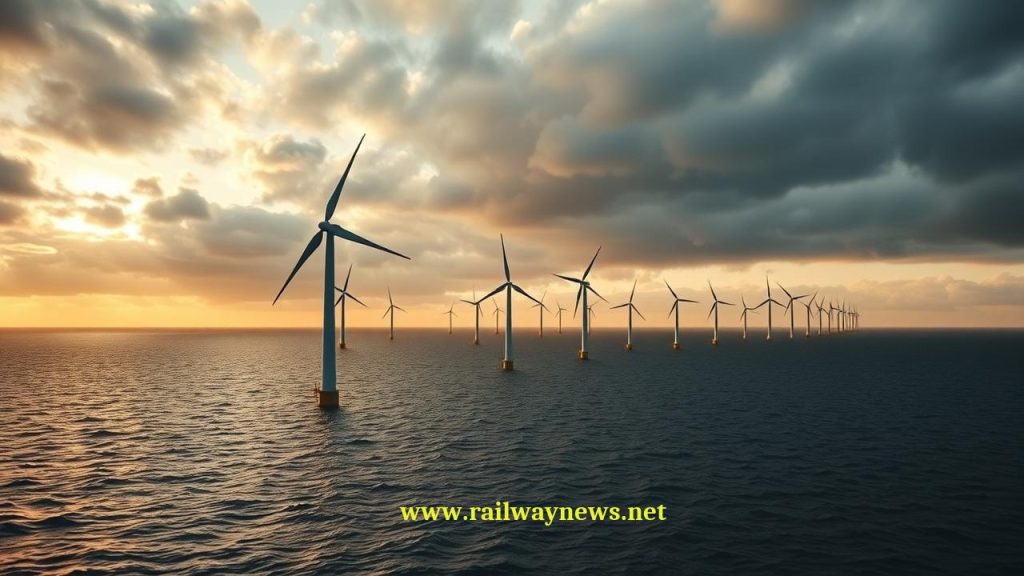
⚡ In Brief: Network Rail has signed a five-year Corporate Power Purchase Agreement to source 300 GWh of renewable electricity annually from a Welsh offshore wind farm, covering approximately 65% of its non-traction energy needs starting in April 2027.
LONDON, UK – Network Rail has secured a new renewable energy supply contract that will provide 300 GWh of electricity per year for five years. The agreement, which begins on April 1, 2027, sources power from an offshore wind farm located in the Irish Sea. This contract and a previous solar deal will collectively cover approximately 80% of the company’s non-traction electricity requirements.
What Does This Contract Cover?
The Corporate Power Purchase Agreement (CoPPA) covers the supply of electricity for Network Rail’s non-traction activities, including offices, depots, and the 20 stations it directly manages. The contract is projected to reduce carbon emissions by an estimated 168,000 metric tons of CO2 equivalent over its five-year term. This is the second CoPPA signed by the infrastructure manager, following a 2025 agreement for 64 GWh per year from a new solar farm, as part of its goal to use 100% renewable sources for non-traction power by 2030.
Key Contract Data
| Parameter | Value |
|---|---|
| Contract Name | Renewable Energy Corporate Power Purchase Agreement (CoPPA) |
| Total Value | Not disclosed |
| Parties Involved | Network Rail, Unnamed wind farm operator |
| Timeline / Completion | 5-year term starting April 1, 2027 |
| Country / Corridor | United Kingdom (non-traction network) |
How Does This Compare to Similar Contracts?
This procurement strategy contrasts with other energy initiatives pursued by the organization. The CoPPA secures energy from an established asset, as the wind farm was commissioned in 2015. This approach differs from a separate, more direct generation strategy announced in collaboration with Great British Energy, which aims to develop new solar and wind projects on railway and industrial land. That partnership seeks to unlock up to 10GW of new generation capacity, positioning Network Rail as a facilitator of new energy infrastructure rather than solely a consumer (Source: Great British Energy, 2024). Comparable PPA data for other UK transport operators was not publicly available at time of publication.
Editor’s Analysis
Network Rail is employing a dual strategy to meet its 2030 decarbonisation targets. This PPA provides a medium-term, high-volume energy supply from an existing asset, de-risking its immediate goals. In parallel, its partnership with Great British Energy represents a long-term vision to leverage its extensive land portfolio for new, onsite renewable generation. This positions the infrastructure manager not just as a consumer of green energy but as a key enabler of the UK’s grid expansion, a trend seen across public estate holders seeking to monetize land assets for the energy transition.
FAQ
Q: What is non-traction electricity?
A: Non-traction electricity is the power used for operational purposes other than moving trains. This includes powering stations, signals, maintenance depots, and corporate offices across the Network Rail estate.
Q: When will this new power supply start?
A: The electricity supply from the offshore wind farm is scheduled to begin on April 1, 2027. The agreement will run for a period of five years from this start date.
Q: Does this agreement cover the electricity used to power trains?
A: No, this contract specifically applies to non-traction electricity consumption. The power for electric trains is procured separately and represents a much larger volume of energy consumption for the network.

Railway infrastructure, rolling stock and transport technologies specialist focused on global rail industry developments, high-speed rail systems, signaling technologies and freight transportation. Covering railway investments, public transport modernization, rail operations and international mobility projects across Europe, Asia and North America.
RELATED POSTS

October 1, 2026 7:09 am
United States regulators confirmed a September 30 deadline for the...

October 8, 2026 1:15 pm
Alstom secured a €1bn contract to build 13 automated trains,...

October 4, 2026 5:14 pm
Alstom secured a CA$4.7 billion order from VIA Rail Canada...

October 1, 2026 12:13 am
Illinois approved $1.5 billion annually for the Northern Illinois Transit...

October 6, 2026 2:14 am
Union Pacific launched export rail shipments with Ferromex to deliver...

October 1, 2026 6:10 am
Amtrak approved a System Expansion Committee on July 30 to...