
Vingroup Launches €5.2 Billion Vietnam High-Speed Rail
Vingroup launched construction on Vietnam’s first 120 km high-speed rail line between Hanoi and Halong, a €5.2 billion project targeting end-2028 completion.
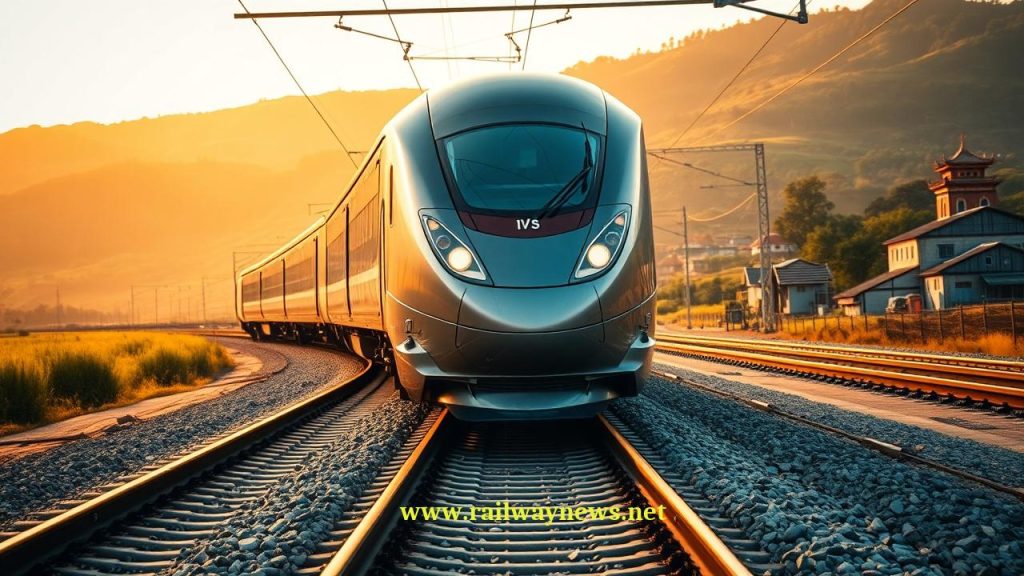
⚡ In Brief: Vingroup has launched construction on Vietnam’s first high-speed rail line, a 120 km, €5.2 billion project connecting Hanoi and Halong, with technology supplied by Siemens Mobility and a completion target of end-2028.
HANOI – Construction on Vietnam’s inaugural high-speed railway was launched on April 12, initiating a €5.2 billion project to connect the capital, Hanoi, with Halong. The 120.2 km line is being developed by Vingroup subsidiary VinSpeed, with Germany’s Siemens Mobility contracted as the core technology provider. The project aims for completion by the end of 2028, cutting travel time from over two hours to approximately 23 minutes.
What Is the Full Scope of This Project?
The project entails the construction of a fully electrified, double-track, standard gauge (1,435 mm) high-speed line designed for speeds up to 350 km/h. The total investment from Vingroup is over 147 trillion Vietnamese dong (€5.2 billion), with an additional 10.27 trillion dong (€365 million) allocated from the state budget for land expropriation and clearance. Siemens Mobility’s contract, signed in December 2025, includes the supply of Velaro Novo high-speed trains, ETCS Level 2 signalling, Automatic Train Operation (ATO) systems, and electrification infrastructure, with a provision for technology transfer to VinSpeed.
Key Project Data
| Parameter | Value |
|---|---|
| Project / Contract Name | Hanoi–Quảng Ninh High-Speed Railway |
| Total Value | €5.2 billion (Investment) + €365 million (State Land Fund) |
| Parties Involved | VinSpeed (Vingroup), Siemens Mobility, Government of Vietnam |
| Timeline / Completion | Launched April 12; Completion planned by end of 2028 |
| Country / Corridor | Vietnam / Hanoi–Halong (Quảng Ninh) |
How Does This Compare to Similar Projects?
The project’s cost of approximately €43.3 million per kilometre places it in the mid-to-high range for global high-speed rail construction. This figure is significantly higher than some European projects like the French LGV Sud Europe Atlantique (€25 million/km) but remains well below the cost of the UK’s HS2 project, which has exceeded £100 million/km in sections (Source: various government and operator reports). The choice of a German technology partner is notable given Vietnam’s geopolitical context. While Siemens secured this flagship deal, China has been simultaneously offering extensive loans and technology for other Vietnamese railway upgrades as part of its Belt and Road Initiative, creating a competitive environment for infrastructure partnerships in the country (Source: Reuters).
Editor’s Analysis
The selection of Siemens Mobility for Vietnam’s first high-speed line is a significant strategic decision, signalling a preference for European technology standards like ETCS Level 2 on this high-profile national project. This move diversifies Vietnam’s infrastructure partnerships and may set a technical precedent for the country’s future network expansion, running parallel to but distinct from Chinese-led regional initiatives. This project, combined with major maritime investments like the planned $4.9 billion Ho Chi Minh City transshipment port, highlights a coordinated national strategy to modernize logistics and assert greater control over its international trade corridors.
FAQ
Q: Why is the Hanoi-Halong route the first for high-speed rail in Vietnam?
A: The corridor connects the nation’s capital with Quảng Ninh province, a major economic and tourism hub home to Ha Long Bay. The route serves millions of travellers annually, and the new line aims to alleviate heavy road congestion while boosting economic development.
Q: What are the key technical specifications of the trains being used?
A: Siemens Mobility will supply its Velaro Novo trains, which are designed for speeds of 350 km/h. The company claims these units offer over 10% more capacity and consume 30% less energy compared to previous Velaro models.
Q: What is the financing structure for the project?
A: The primary investment of €5.2 billion is provided by private conglomerate Vingroup through its subsidiary VinSpeed. The Vietnamese state is contributing an additional €365 million for land acquisition, but further details on the debt or equity structure of Vingroup’s investment have not been disclosed.

Railway infrastructure, rolling stock and transport technologies specialist focused on global rail industry developments, high-speed rail systems, signaling technologies and freight transportation. Covering railway investments, public transport modernization, rail operations and international mobility projects across Europe, Asia and North America.
RELATED POSTS
September 6, 2026 5:19 am
Hitachi delivered Taiwan's first N700ST high-speed train from Japan in...

September 5, 2026 4:19 pm
CPK launched formal tender talks with four consortia to design...

September 5, 2026 7:14 pm
HS2 Ltd signed renegotiated civils contracts with EKFB and Align...
September 6, 2026 6:17 am
Hungary ordered a national ban on most freight trains from...
September 6, 2026 1:17 am
Hitachi Toshiba Supreme Consortium confirmed the first of 12 N700ST...
September 7, 2026 8:16 am
Midea, Gree and TCL shipped air conditioners via China Railway...