
Vienna Airport Reports €15.8M Annual Value From Rail Links
Vienna International Airport’s rail links generated €15.8 million annual economic value, achieving a 40% passenger modal share by 2025.
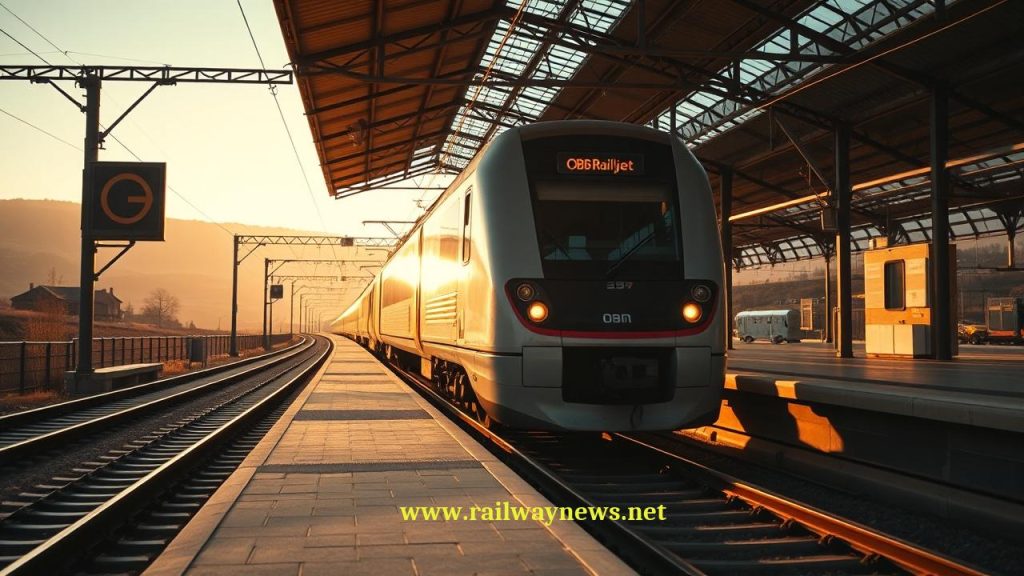
⚡ In Brief: A new study reveals Vienna International Airport’s rail links generated €15.8 million in annual economic value and achieved a 40% passenger modal share, with traffic growing 70% since 2014 as Austria expands its national high-speed network.
VIENNA, AUSTRIA – A study conducted with consulting firm Arthur D. Little has quantified the economic impact of rail services to Vienna International Airport (VIE), showing a €15.8 million annual contribution to the national economy. The analysis found that 10.5 million passengers used rail to access the airport in the past year, a 70% increase since 2014. Currently, 40% of all passengers at VIE arrive by train, a figure set to grow with ongoing network expansions.
What Is the Full Scope of This Project?
The analysis covers all primary rail and bus services connecting to Vienna International Airport, including long-distance ÖBB Railjet trains, the regional S-Bahn, the dedicated City Airport Train (CAT), and Vienna Airport Bus lines. The project’s success is demonstrated by attracting over 300,000 new passengers from the regions of Salzburg and Upper Austria since direct services were established. Future growth is anticipated from the southern corridor via the Koralmbahn project, which will improve connections for Carinthia and Styria.
Key Project Data
| Parameter | Value |
|---|---|
| Project / Contract Name | Vienna International Airport Rail Integration Analysis |
| Total Value | €15.8 million annual added value; 29,000 tons CO₂ reduction per year |
| Parties Involved | Vienna International Airport, ÖBB (Austrian Federal Railways), Arthur D. Little, City of Vienna |
| Timeline / Completion | Study released 2025 (analyzing 2014-2025 period); network expansion is ongoing |
| Country / Corridor | Austria / Vienna Airport (VIE) & national network connections |
How Does This Compare to Similar Projects?
Vienna’s 40% rail modal share for airport access is a strong performance among major European hubs, though it trails leaders like Zurich Airport (ZRH). At ZRH, the rail modal split for locally originating passengers often exceeds 50%, facilitated by its station’s direct integration into the Swiss national and S-Bahn networks (Source: Zurich Airport AG, 2023). The success at both airports underscores a wider European trend of leveraging integrated rail to boost hub competitiveness, a strategy supported by Austria’s significant national investment in high-speed rail modernization (Source: Austrian Government reports, 2025).
Editor’s Analysis
This study validates Austria’s long-term strategy of integrating aviation and rail infrastructure, treating the airport as a national rail destination rather than just a city-specific one. The upcoming Koralmbahn link is not merely an incremental improvement but a strategic move to lock in passenger catchments from southern Austria, directly competing with road transport and nearby airports. As new long-haul routes like China Eastern’s service from Xi’an increase international traffic, the efficiency of this ground access model becomes a critical competitive advantage (Source: Aviation Week, 2026).
FAQ
Q: What specific train services connect to Vienna Airport?
A: Vienna Airport is served by several operators, including ÖBB’s long-distance Railjet trains connecting major Austrian cities, the S7 line of the Vienna S-Bahn for local access, and the premium non-stop City Airport Train (CAT).
Q: What is the Koralmbahn project mentioned in the report?
A: The Koralmbahn is a new 130 km high-speed rail line in southern Austria between Graz and Klagenfurt. Its completion will significantly reduce travel times from the Carinthia and Styria regions to Vienna, including to the airport’s integrated station.
Q: Does the study provide a breakdown of the €15.8 million economic value?
A: The detailed methodology and specific components of the €15.8 million in added value were not disclosed in the summary report. The figure represents an aggregate of economic benefits, including job creation and regional spending.

Railway infrastructure, rolling stock and transport technologies specialist focused on global rail industry developments, high-speed rail systems, signaling technologies and freight transportation. Covering railway investments, public transport modernization, rail operations and international mobility projects across Europe, Asia and North America.
RELATED POSTS

October 8, 2026 1:15 pm
Alstom secured a €1bn contract to build 13 automated trains,...

October 1, 2026 7:09 am
United States regulators confirmed a September 30 deadline for the...

October 8, 2026 12:18 pm
Siemens Mobility signed an agreement with VinSpeed to supply 350...

October 4, 2026 5:14 pm
Alstom secured a CA$4.7 billion order from VIA Rail Canada...

October 1, 2026 12:13 am
Illinois approved $1.5 billion annually for the Northern Illinois Transit...

October 4, 2026 11:08 pm
Sound Transit confirmed the September 30 opening of Seattle Pinehurst...