
Scottish Leather Group Opens 75,000 Sq Ft BioPRO Plant Glasgow
Scottish Leather Group opened a 75,000 sq ft BioPRO plant in Glasgow, producing EN 45545-2 HL3 certified rail seating foam.
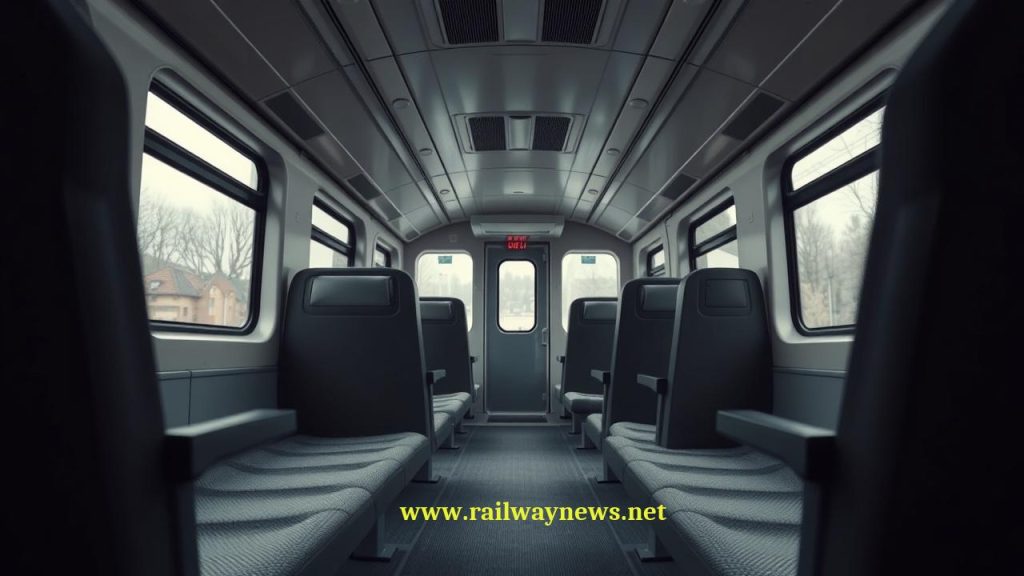
⚡ In Brief: Scottish Leather Group has opened a 75,000 sq. ft facility in Glasgow to scale up production of its BioPRO foam, a sustainable, protein-based seating material certified to the highest rail fire safety standard, EN 45545-2 HL3.
GLASGOW, UK – Scottish Leather Group (SLG) has launched a new 75,000 sq. ft production facility and engineering hub in Glasgow for its Muirhead brand. The site will manufacture BioPRO, a patented, protein-based foam for passenger seating in the rail, aviation, and bus sectors. The material has achieved the highest European rail fire safety certification, EN 45545-2 at Hazard Level 3 (HL3).
What Are the Technical Specifications?
The BioPRO foam is a lightweight, moulded seating cushion that incorporates hydrolysed collagen, a by-product from SLG’s leather manufacturing process. This composition, with a 20% functional protein content chemically bonded into the structure, makes the foam naturally fire-resistant without requiring chemical additives like Melamine, Bromine, or PFAS. For the rail industry, it is certified to EN 45545‑2:2020+A1:2023 for requirement R21 at all three Hazard Levels (HL1, HL2, and HL3).
Key Technical Data
| Parameter | Value |
|---|---|
| Technology / System Name | Muirhead BioPRO® Foam |
| Total Value | Not disclosed |
| Parties Involved | Scottish Leather Group (SLG), Muirhead, Aerotech Systems Limited |
| Timeline / Completion | Facility now operational |
| Country / Corridor | United Kingdom (manufacturing); Global (supply) |
Where Does This Technology Stand in the Market?
BioPRO foam enters the rail interior market as a sustainable alternative to conventional seating materials, primarily competing with polyurethane (PU) and melamine-based foams. Standard PU foams are petroleum-derived and require the addition of chemical fire retardants to meet stringent rail fire safety standards like EN 45545-2. In contrast, BioPRO’s inherent fire resistance from its protein structure eliminates the need for these additives. Melamine foams, such as BASF’s Basotect®, are also inherently flame-retardant and lightweight but are fully synthetic thermoset polymers. BioPRO differentiates itself by using a circular manufacturing model, upcycling a natural by-product to create a high-performance material. (Source: BASF, 2024; Industry knowledge).
Editor’s Analysis
The launch of this facility positions Muirhead to capitalize on the increasing regulatory and operator demand for sustainable and non-toxic materials in rolling stock interiors. This aligns with major UK rail investment programs like the £6.6bn East West Rail project, where new fleets will require materials that meet both stringent safety standards and enhanced environmental, social, and governance (ESG) criteria. The vertical integration with leather seat covers and in-house certification simplifies the supply chain for OEMs and refurbishment projects, offering a potential competitive advantage in future tenders. (Source: UK Government, 2026).
FAQ
Q: What is the key innovation in BioPRO foam?
A: The key innovation is using hydrolysed collagen, a natural by-product of leather production, to create a foam that is inherently fire-resistant. This eliminates the need for chemical fire retardant additives commonly used in transport seating.
Q: What specific rail fire safety standard has BioPRO met?
A: BioPRO is certified to EN 45545‑2:2020+A1:2023 (requirement R21) for all three Hazard Levels: HL1, HL2, and HL3. This makes it suitable for use in any type of rolling stock, from surface trains to underground metro cars.
Q: How does this new facility affect the supply chain for train builders?
A: The facility co-locates production and engineering, and combined with SLG’s acquisition of Aerotech Systems, it allows Muirhead to offer an integrated solution of seat covers and cushions from a single supplier. This can simplify procurement and ensure aesthetic consistency for original equipment manufacturers (OEMs) and rail operators.

Railway infrastructure, rolling stock and transport technologies specialist focused on global rail industry developments, high-speed rail systems, signaling technologies and freight transportation. Covering railway investments, public transport modernization, rail operations and international mobility projects across Europe, Asia and North America.
RELATED POSTS

October 1, 2026 7:09 am
United States regulators confirmed a September 30 deadline for the...

October 1, 2026 12:13 am
Illinois approved $1.5 billion annually for the Northern Illinois Transit...

October 4, 2026 5:14 pm
Alstom secured a CA$4.7 billion order from VIA Rail Canada...

October 1, 2026 6:10 am
Amtrak approved a System Expansion Committee on July 30 to...
October 1, 2026 3:12 am
Greenbrier confirmed Brian Comstock as new president and CEO effective...

October 6, 2026 2:14 am
Union Pacific launched export rail shipments with Ferromex to deliver...