
JR East Cuts 30% Incident Recovery Yamanote 2026
JR East deploys an AI and drone system to cut 30% incident recovery time on Tokyo’s Yamanote Line by 2026.
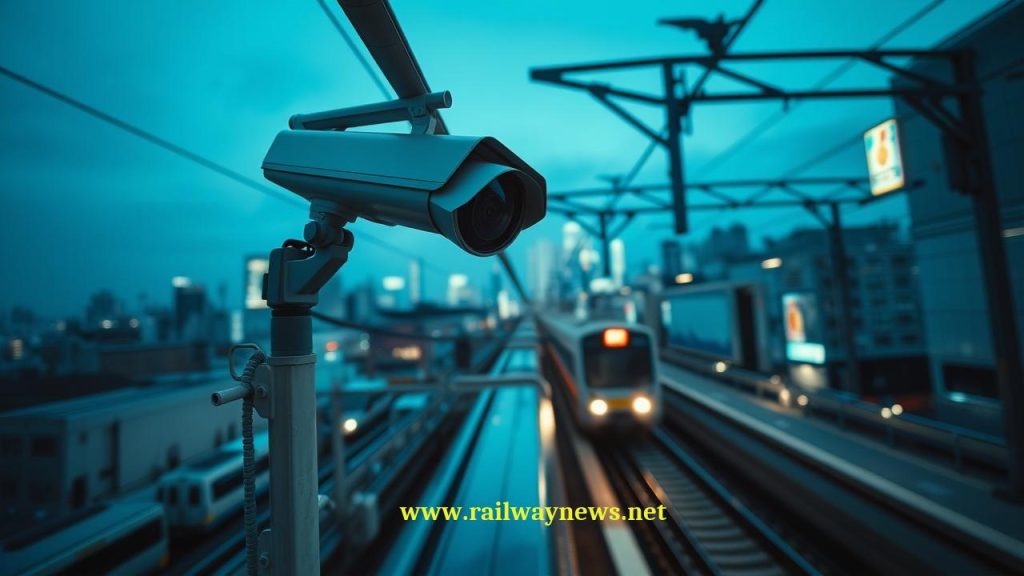
⚡ In Brief: Japanese operator JR East will deploy an AI-powered camera and drone inspection system on Tokyo’s Yamanote Line starting in fiscal year 2026, aiming to reduce incident recovery times by approximately 30% following major service disruptions.
TOKYO, JAPAN – JR East will introduce a new inspection system using artificial intelligence and drones on the heavily trafficked Yamanote Line to accelerate service restoration after technical failures. Testing is scheduled to begin in April 2026, with a full operational rollout planned for the 2026 fiscal year. The operator estimates the technology will cut service resumption time by approximately 30%.
What Are the Technical Specifications?
The system is composed of two primary components designed to rapidly diagnose infrastructure faults. The first is a network of trackside cameras near Shinbashi, Ebisu, Mejiro, and Uguisudani stations that will monitor train pantographs in real time, with an AI system automatically analysing images to detect damage and alert control centres. The second component involves remotely operated drones, launched from designated points, to provide immediate aerial video of overhead contact lines and other equipment after an incident, allowing for faster fault assessment. The specific AI software provider and drone manufacturer were not disclosed.
Key Technical Data
| Parameter | Value |
|---|---|
| Technology / System Name | AI & Drone Inspection System |
| Total Value | Not disclosed |
| Parties Involved | JR East |
| Timeline / Completion | Testing from April 2026; Operational in FY 2026 |
| Country / Corridor | Japan / Yamanote Line (Tokyo) |
Where Does This Technology Stand in the Market?
JR East’s integrated approach combines predictive monitoring with reactive inspection, differing from systems used by other major operators. In the UK, Network Rail primarily relies on its train-based New Measurement Train (NMT), which uses cameras and lasers to inspect hundreds of miles of track and overhead lines at speeds up to 125 mph during scheduled runs (Source: Network Rail). In contrast, Switzerland’s SBB uses drones for a range of planned inspections on assets like bridges and catenary systems rather than focusing purely on rapid incident response. JR East’s model of deploying static AI cameras for constant pantograph monitoring combined with on-demand drones for fault verification is specifically tailored to the unique demands of a high-frequency, closed-loop urban line where any delay has a significant passenger impact.
Editor’s Analysis
This initiative by JR East highlights a critical trend in mature rail markets: prioritizing technology-driven operational resilience over costly new infrastructure builds. While US agencies like Sound Transit and Metro Los Angeles are focused on managing the multi-billion-dollar costs of network expansion (Source: KUOW, Los Angeles Times), JR East is investing in maximizing the uptime of its existing, high-value assets. The move is a direct response to a May 2025 incident that impacted 250,000 passengers, underscoring that for a network like the Yamanote Line, the economic cost of a single major outage can justify significant investment in preventative and diagnostic technology.
FAQ
Q: What specific problem is this AI and drone system designed to solve?
A: The system aims to accelerate the diagnosis of damage to train pantographs and overhead power lines following a technical failure. By using AI for early detection and drones for rapid visual assessment, JR East intends to reduce the time needed for staff to locate and understand the fault before starting repairs.
Q: How much time is JR East expecting to save with this new system?
A: The company projects a reduction in service resumption time of approximately 30%. In a scenario where repairs previously took about seven hours, the new system could shorten the response time by approximately two hours.
Q: Will this technology be used on other lines besides the Yamanote Line?
A: Yes, JR East is already considering expanding the system to other critical routes. The planned expansion includes the Tokyo–Shinjuku section of the Chuo Line as well as its high-speed Shinkansen services.

Railway infrastructure, rolling stock and transport technologies specialist focused on global rail industry developments, high-speed rail systems, signaling technologies and freight transportation. Covering railway investments, public transport modernization, rail operations and international mobility projects across Europe, Asia and North America.
RELATED POSTS

October 1, 2026 7:09 am
United States regulators confirmed a September 30 deadline for the...

October 4, 2026 5:14 pm
Alstom secured a CA$4.7 billion order from VIA Rail Canada...

October 6, 2026 2:14 am
Union Pacific launched export rail shipments with Ferromex to deliver...

October 1, 2026 12:13 am
Illinois approved $1.5 billion annually for the Northern Illinois Transit...

October 1, 2026 6:10 am
Amtrak approved a System Expansion Committee on July 30 to...
October 1, 2026 3:12 am
Greenbrier confirmed Brian Comstock as new president and CEO effective...