
JR East Invests ¥10 Billion for Shinkansen Lateral Seismic Dampers
JR East invests ¥10 billion to install lateral seismic dampers on Shinkansen trains, reducing derailment risk 50% by 2032.
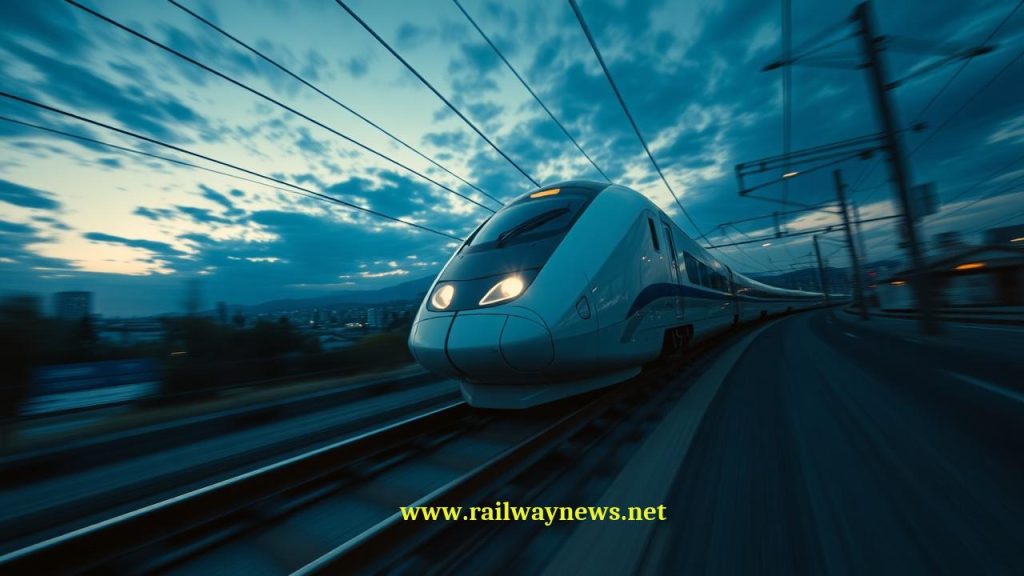
⚡ In Brief: East Japan Railway (JR East) will invest approximately 10 billion yen to install new lateral seismic dampers on its Shinkansen fleet between 2027 and 2032, a technology designed to reduce earthquake-induced derailment risk by around 50%.
TOKYO, JAPAN – East Japan Railway (JR East) has announced the development of a new shock absorber system designed to mitigate derailment risk for its Shinkansen high-speed trains during major earthquakes. The 10 billion yen (approx. EUR 55 million) program will see the gradual installation of these “lateral seismic dampers” starting in the fall of 2027. The technology was developed in collaboration with the Railway Technical Research Institute (RTRI) based on data from a 2004 earthquake.
What Are the Technical Specifications?
The new lateral seismic dampers are a reinforced version of a standard component mounted between the train car body and the bogies. Their primary function is to absorb and limit strong lateral oscillations caused by seismic events, reducing the risk of wheel flange climb derailment by an estimated 50% for earthquakes of similar intensity to the 2004 Niigata event. The system will be retrofitted onto the E5, E6, E7, and E8 series Shinkansen, though the total number of trainsets was not disclosed.
Key Technical Data
| Parameter | Value |
|---|---|
| Technology / System Name | Lateral Seismic Damper System |
| Total Value | Approx. 10 billion yen (EUR 55 million) |
| Parties Involved | East Japan Railway (JR East), Railway Technical Research Institute (RTRI) |
| Timeline / Completion | Fall 2027 – Fiscal Year 2032 |
| Country / Corridor | Japan / Shinkansen Network |
Where Does This Technology Stand in the Market?
This passive damping system represents one of several strategies used to enhance seismic resilience in high-speed rail. It complements Japan’s existing Urgent Earthquake Detection and Warning System (UrEDAS), which detects primary seismic waves (P-waves) to trigger emergency braking before the more destructive secondary waves (S-waves) arrive. While UrEDAS is a preventative system to stop the train, the new dampers are a mitigating system to manage oscillations if the train is still in motion. Other advanced rail systems globally use active damping, where computer-controlled actuators dynamically counteract vibrations, offering more precise control but with higher complexity and cost than JR East’s reinforced passive solution. The specific manufacturer of the new dampers has not been publicly disclosed.
Editor’s Analysis
JR East’s investment in a passive damping technology highlights a pragmatic, resilience-focused approach to safety, building directly on lessons from the 2004 Niigata derailment. This choice to reinforce an existing component, rather than adopt more complex active systems, balances cost-effectiveness with a significant, quantifiable reduction in risk. This continued focus on operational safety is crucial for maintaining passenger confidence and supporting Japan’s tourism-driven economic strategy, which relies heavily on the Shinkansen’s global reputation for safety and reliability. (Source: Travel Weekly, 2025).
FAQ
Q: Which Shinkansen trains will receive the new dampers?
A: The system will be installed on trains of the E5, E6, E7, and E8 series. These models operate on major lines including the Tohoku, Akita, Joetsu, and Hokuriku Shinkansen.
Q: How much will the entire upgrade program cost and how long will it take?
A: The total estimated cost of the program is approximately 10 billion yen (about EUR 55 million). The installation is scheduled to begin in the fall of 2027 and continue through fiscal year 2032.
Q: Is this the only earthquake safety system used on the Shinkansen?
A: No, this system is designed to work in conjunction with other critical safety measures. The primary network-wide system is the Urgent Earthquake Detection and Warning System (UrEDAS), which automatically applies emergency brakes upon detecting the initial tremors of an earthquake.

Railway infrastructure, rolling stock and transport technologies specialist focused on global rail industry developments, high-speed rail systems, signaling technologies and freight transportation. Covering railway investments, public transport modernization, rail operations and international mobility projects across Europe, Asia and North America.
RELATED POSTS
August 4, 2026 1:11 pm
Hitachi Rail Canada secured a $407.7M contract to install CBTC...
August 11, 2026 11:13 am
Hungary confirmed the €2.5B Hungarian rail upgrade will not see...

August 4, 2026 11:12 am
MBTA confirmed a $150.8 million overhaul of the 85-year-old Green...

August 1, 2026 7:14 pm
€205 billion funding shortfall threatens the TEN-T rail network's completion...
August 5, 2026 7:11 pm
JR Central secured Shizuoka governor approval July 7, 2026 for...
August 1, 2026 7:56 am
BMZ delivered two new TEM18DM diesel shunting locos to RZD...