
S&V Rail Dampers: Quiet Australia Rail Solutions, Cost Savings
German rail dampers are quietly revolutionizing Australia’s rail networks, reducing noise and maintenance costs. S&V’s innovative technology minimizes vibrations, extends rail life, and offers flexible solutions for urban and regional lines.
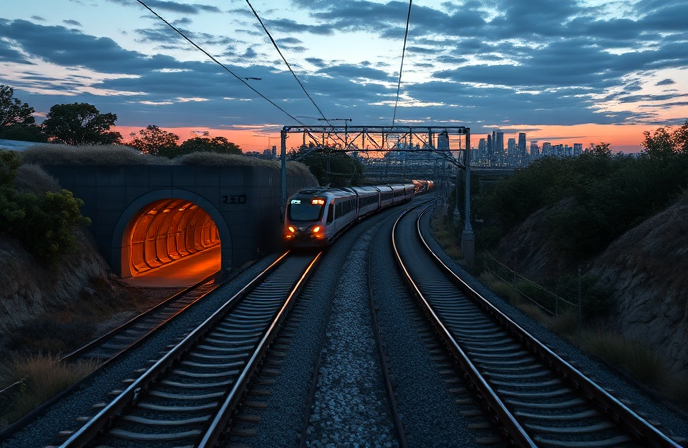
S&V Rail Dampers: Quietly Revolutionizing Australia’s Rail Networks
Australia’s expanding metropolitan areas are grappling with a persistent challenge: rail noise. Communities are protesting rising decibel levels, while councils grapple with ballooning costs. In this contested arena, where space, aesthetics, and budget often clash with the need for efficient and quiet rail systems, German firm Schrey & Veit (S&V), known for its innovative rail dampers, is making significant headway. This article explores how S&V’s technology is providing a discreet, effective, and increasingly attractive solution to noise pollution and maintenance headaches for railway operators across Australia. We will delve into the technology itself, its benefits, and its expanding footprint across the nation.
Innovations in Track Maintenance
At the heart of S&V’s success lies its unique rail damper technology. These devices, mounted at track level, utilize a mass spring system to combat the vibrations generated as trains traverse the rails. This approach has a dual benefit: significantly reducing noise pollution and extending the lifespan of the rails themselves. The reduction in vibration minimizes rail corrugation, a form of wear and tear that necessitates frequent and costly rail grinding. As S&V’s CEO Karl-Stephan Schneider points out, “The dampers mean less rail grinding is necessary – and each grind costs money, not just in equipment, but labour, and skilled maintenance crews are in short supply everywhere.” In some installations, the reduction in rail wear and tear has been dramatic, slashing the frequency of rail grinding from 20-30 times per year to just three or four. For operators in freight-heavy regions, particularly in states like Western Australia and Queensland, the reduced maintenance burden is a compelling advantage.
Unobtrusive Design and Flexibility
A key advantage of S&V’s system is its discreet design. Unlike traditional noise mitigation methods such as noise walls, which can be unsightly and impractical in certain environments, the rail dampers are installed at track level and remain virtually invisible. This is particularly advantageous in confined spaces like tunnels or heritage areas where noise walls are either impossible or prohibited. Additionally, the dampers are designed for operational flexibility. They do not impede maintenance procedures such as rail grinding or tamping, enabling operators to minimize downtime. This flexibility is crucial for optimizing inspection schedules and overall system efficiency.
Tailored Solutions and Durability
S&V’s approach isn’t a one-size-fits-all solution. Each damper is specifically tuned to address the unique noise profile of each installation. “For recent projects, the customer told us exactly which high frequencies they wanted to eliminate. We adjusted the tuning to match,” Schneider explains. This precision tuning is conducted in S&V’s own laboratory, where units are tested and calibrated based on specific project data, including in-situ sound measurements. Beyond tuning, the dampers are engineered for durability, with materials adapted to withstand Australia’s harsh climatic conditions, including high UV exposure and extreme temperatures. The dampers are also fire-resistant, suitable for use in tunnels and other high-risk zones. These features ensure the longevity and reliability of the systems.
Strategic Partnerships and Expanding Footprint
While S&V’s manufacturing remains in Germany, the company has established strategic local partnerships for distribution and support in Australia. GM Rail, based in Perth, handles customer support and logistics in Western Australia, with other partnerships in place on the east coast. These localized support structures offer quick responses, especially regarding technical challenges. “It’s always easier when someone local can pick up the phone,” says Schneider. This responsive approach is critical for providing efficient solutions for railway operators. Installations in Sydney and Perth have already proven successful, and tenders are underway in other parts of the country. S&V is demonstrating a strong commitment to the Australian market and plans to expand its presence.
Conclusion
S&V’s rail damper technology is revolutionizing how railway operators address noise pollution and maintenance costs. By offering a discreet, effective, and adaptable solution, the company has created a product well-suited for Australia’s unique infrastructure challenges. The dampers’ ability to reduce noise, extend rail life, and accommodate maintenance operations makes them a valuable asset for both urban and regional rail networks. The benefits extend beyond noise reduction. The reduced need for rail grinding and associated labor costs offers significant operational savings. Additionally, S&V’s commitment to tailoring its products to meet specific needs and its investment in local partnerships position the company for sustained growth in the Australian market. As S&V prepares to exhibit at AusRAIL PLUS in Melbourne this November, it is poised to further solidify its presence and impact on the Australian rail landscape. The company’s success, as Schneider notes, can be best demonstrated by the simple measure, “When the birds are louder than the train, people believe in the product.”

Railway infrastructure, rolling stock and transport technologies specialist focused on global rail industry developments, high-speed rail systems, signaling technologies and freight transportation. Covering railway investments, public transport modernization, rail operations and international mobility projects across Europe, Asia and North America.
RELATED POSTS

September 6, 2026 5:19 am
Hitachi delivered Taiwan's first N700ST high-speed train from Japan in...

September 5, 2026 4:19 pm
CPK launched formal tender talks with four consortia to design...

September 6, 2026 4:12 am
Alstom delivered the first of 100 new G Class trams...

September 6, 2026 1:17 am
Hitachi Toshiba Supreme Consortium confirmed the first of 12 N700ST...
September 6, 2026 6:17 am
Hungary ordered a national ban on most freight trains from...
September 6, 2026 8:17 am
DB InfraGO reopened the Nuremberg-Regensburg line in Bavaria on 31...