
DB Cargo Launches AI for 500-Day Oil Pump Forecasts Class 77 Fleet Germany
DB Cargo launched an AI system in Germany to forecast 500-day oil pump requirements for its Class 77 locomotive fleet.
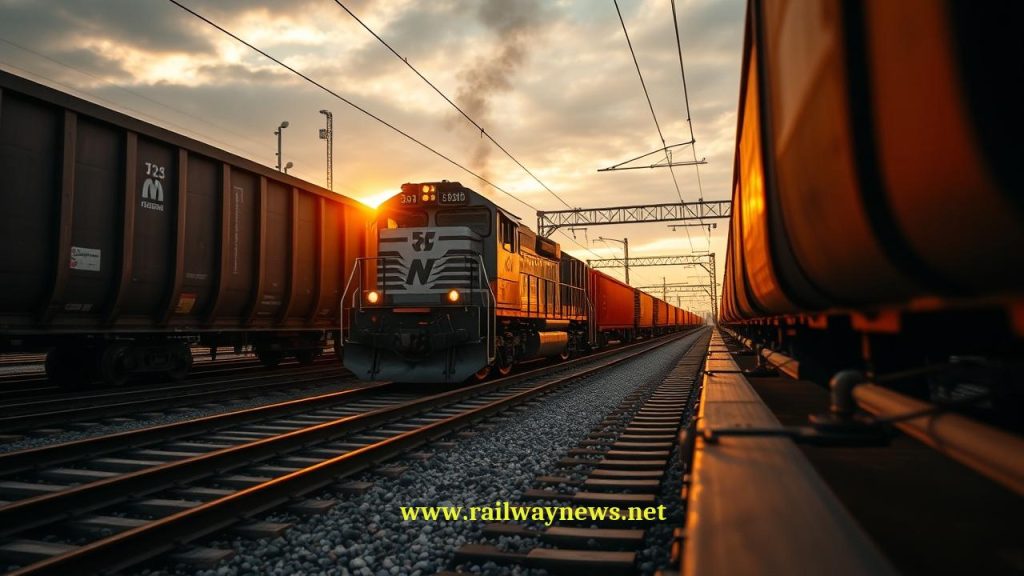
⚡ In Brief: German operator DB Cargo has deployed an artificial intelligence system for its fleet of 60 Class 77 locomotives to predict spare parts requirements, successfully forecasting a need for oil pumps with 500-day delivery times to reduce vehicle downtime.
DARMSTADT, GERMANY – DB Cargo has introduced an artificial intelligence-based system to plan and forecast spare parts needs for its fleet of approximately 60 Class 77 diesel locomotives. Developed at the DB Cargo Railport Darmstadt logistics center, the system uses data analysis to anticipate component requirements and increase vehicle availability on non-electrified lines.
What Are the Technical Specifications?
The system functions by combining historical parts consumption data with current information on the locomotive fleet’s operational status. This predictive model is designed to manage components with long lead times, which is critical as the Canadian-built Class 77 locomotives have spare parts with delivery schedules that can extend for months. This AI tool complements other technologies used on the fleet to maximize uptime, including automatic software updates and the use of specialized lubricants like Valvoline’s Premium Blue One Solution Gen 2 engine oil, which extends drain intervals. The system’s output allows planners to differentiate between high-value, long-lead-time parts that require stocking and lower-cost components that can be ordered on demand.
Key Technical Data
| Parameter | Value |
|---|---|
| Technology / System Name | AI-based Spare Parts Planning System |
| Total Value | Not disclosed |
| Parties Involved | DB Cargo (Railport Darmstadt) |
| Timeline / Completion | Implemented; specific date not disclosed |
| Country / Corridor | Germany |
Where Does This Technology Stand in the Market?
DB Cargo’s in-house development of a specialized AI tool reflects a broader industry shift towards predictive maintenance to enhance asset utilization. While DB Cargo’s system is tailored specifically to its Class 77 fleet and its unique supply chain challenges, it competes conceptually with detailed commercial platforms offered by major OEMs. For instance, Siemens Mobility’s Railigent X platform provides a suite of applications for monitoring and predictive analytics across entire fleets and infrastructure networks (Source: Siemens Mobility, 2024). Similarly, Alstom’s HealthHub™ solution uses real-time data to monitor the condition of train components, offering predictive maintenance alerts to operators globally (Source: Alstom, 2024). DB Cargo’s approach appears more targeted, focusing on a specific high-impact problem—long-lead-time parts for a particular locomotive class—rather than deploying a universal, fleet-wide monitoring platform.
Editor’s Analysis
This initiative by DB Cargo is a tactical response to persistent pressures on operational efficiency within the European rail freight sector. By focusing AI on a narrow but critical problem—parts availability for an imported locomotive fleet—the operator can achieve significant reductions in costly downtime with a targeted investment. This move aligns with market trends indicating potential challenges for shippers, as the Shipper Conditions Index is forecast to fall to its lowest levels since 2022, increasing the urgency for carriers to control costs and maximize asset availability (Source: ShipMatrix, 2024).
FAQ
Q: Why is this AI system particularly important for Class 77 locomotives?
A: The Class 77 locomotives were built in Canada, meaning some specialized spare parts have extremely long delivery times, cited by DB Cargo to be as long as 500 days. An accurate forecast is critical to prevent extended periods of a locomotive being out of service while waiting for a single component.
Q: How accurate has the system proven to be?
A: In an example provided by DB Cargo for oil pumps, the AI model predicted a requirement for five units. The actual consumption was six units, a forecast that was significantly closer than traditional methods which indicated no need for new parts.
Q: Does this reflect a wider trend in the rail maintenance industry?
A: Yes, the use of data analytics and AI for predictive maintenance is a major industry trend. Operators worldwide are adopting such technologies to move from fixed-schedule or reactive maintenance to condition-based strategies that reduce costs and improve fleet reliability.

Railway infrastructure, rolling stock and transport technologies specialist focused on global rail industry developments, high-speed rail systems, signaling technologies and freight transportation. Covering railway investments, public transport modernization, rail operations and international mobility projects across Europe, Asia and North America.
RELATED POSTS

October 8, 2026 1:15 pm
Alstom secured a €1bn contract to build 13 automated trains,...

October 1, 2026 7:09 am
United States regulators confirmed a September 30 deadline for the...

October 4, 2026 5:14 pm
Alstom secured a CA$4.7 billion order from VIA Rail Canada...

October 1, 2026 12:13 am
Illinois approved $1.5 billion annually for the Northern Illinois Transit...

October 5, 2026 1:13 pm
New York MTA confirmed a late 2026 DEIS release for...

October 6, 2026 9:17 am
Illinois approved $1.1M in state funds to upgrade two McHenry...