
CSX Cuts Locomotive Fuel With AESS Assist 2024
CSX deployed its AESS Assist system in 2024, improving locomotive shutdown reliability and cutting fuel consumption across its US fleet.
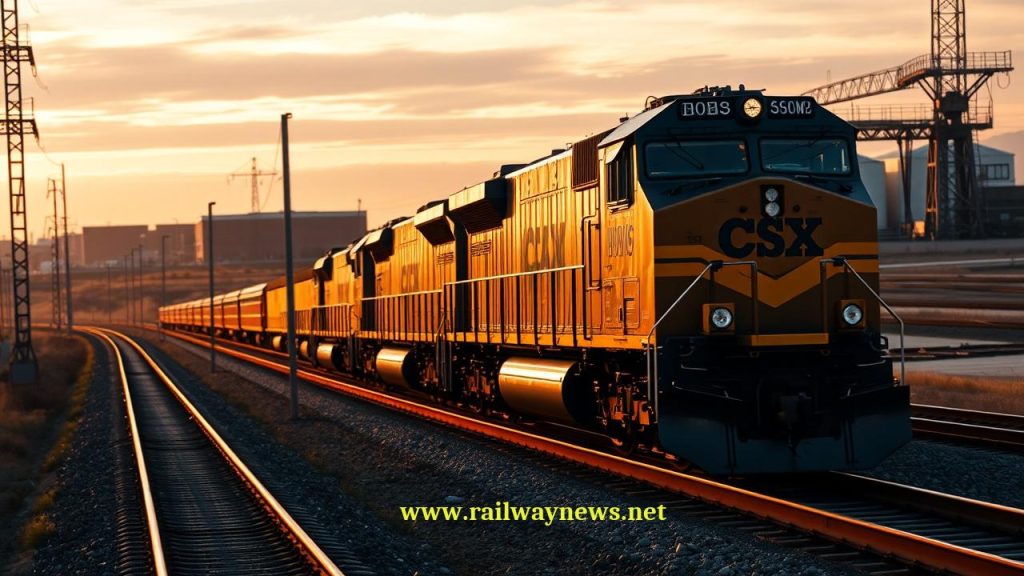
⚡ In Brief: In collaboration with Wabtec Corp., US-based Class I railroad CSX deployed its enhanced Automatic Engine Start-Stop (AESS) Assist system in 2024 to reduce fuel consumption and extend battery life across its existing locomotive fleet.
JACKSONVILLE, USA – CSX has deployed an upgraded Automatic Engine Start-Stop (AESS) system, developed with Wabtec Corp., across its North American locomotive fleet. The “AESS Assist” component, introduced in 2024, enhances shutdown performance and provides auxiliary battery support. This initiative targets immediate reductions in fuel consumption, emissions, and operating costs for its existing assets.
What Is the Full Scope of This Project?
The project consists of a software and hardware upgrade to CSX’s active diesel-electric locomotive fleet. The core technology is the AESS platform, which automatically shuts down engines during idle periods, with the 2024 “AESS Assist” add-on supplying auxiliary battery power for more reliable restarts and longer overall battery lifespan. The total number of locomotives upgraded and the total capital investment for the program were not disclosed.
Key Project Data
| Parameter | Value |
|---|---|
| Project / Contract Name | AESS & AESS Assist System Upgrade |
| Total Value | Not disclosed |
| Parties Involved | CSX, Wabtec Corp. |
| Timeline / Completion | AESS Assist introduced in 2024 |
| Country / Corridor | United States (CSX Network) |
How Does This Compare to Similar Projects?
CSX’s strategy of retrofitting an existing fleet for incremental efficiency gains contrasts with large-scale new-build procurements seen elsewhere. For example, Alstom’s October 2025 contract with Comboios de Portugal is for the supply of 153 entirely new trains and the construction of a manufacturing facility, a far larger capital undertaking aimed at full fleet modernization. (Source: Alstom S.A., 2025). The CSX initiative more closely mirrors efficiency upgrades in adjacent heavy industries, such as the mining sector, where operators are retrofitting large haul trucks with hybrid kits to reduce fuel burn and extend asset life. (Source: International Mining, 2026).
Editor’s Analysis
CSX’s AESS upgrade demonstrates a pragmatic focus on optimizing existing assets to achieve immediate cost and emissions reductions. This retrofit strategy aligns with a broader market trend of cautious capital investment, where operators prioritize operational efficiency over expensive fleet replacement programs amid economic uncertainty. (Source: UK Infrastructure Pipeline, 2025). By targeting fuel, the single largest operating cost for most freight railroads, CSX generates near-term returns with lower upfront financial risk.
FAQ
Q: What is the primary benefit of the AESS Assist system?
A: The primary benefit is improved engine shutdown reliability and extended locomotive battery life. By providing dedicated battery support for engine cranking, the system allows for longer, more frequent shutdown periods, which directly reduces fuel consumption from idling.
Q: How many locomotives has CSX upgraded with this technology?
A: The total number of locomotives retrofitted with the AESS and AESS Assist systems has not been publicly disclosed by CSX or its partner, Wabtec Corp. The deployment is described as being across the Class I’s fleet.
Q: Is this AESS technology new to the rail industry?
A: No, Automatic Engine Start-Stop systems are an established technology used for years to reduce locomotive idling. The 2024 “AESS Assist” component and associated software enhancements from Wabtec Corp. represent the latest evolution of this fuel-saving platform.

Railway infrastructure, rolling stock and transport technologies specialist focused on global rail industry developments, high-speed rail systems, signaling technologies and freight transportation. Covering railway investments, public transport modernization, rail operations and international mobility projects across Europe, Asia and North America.
RELATED POSTS

September 6, 2026 5:19 am
Hitachi delivered Taiwan's first N700ST high-speed train from Japan in...

September 5, 2026 4:19 pm
CPK launched formal tender talks with four consortia to design...

September 6, 2026 4:12 am
Alstom delivered the first of 100 new G Class trams...

September 6, 2026 1:17 am
Hitachi Toshiba Supreme Consortium confirmed the first of 12 N700ST...
September 6, 2026 8:17 am
DB InfraGO reopened the Nuremberg-Regensburg line in Bavaria on 31...
September 5, 2026 6:17 pm
Universal Signalling won a deal to install its U-Cross system...