
PESA Secures PLN 36 Million for Poland’s First HEMU Train
PESA Bydgoszcz secures over PLN 36 million in public funding for Poland’s first hydrogen-electric passenger train, targeting non-electrified rail lines and addressing a significant portion of the national network reliant on diesel power.
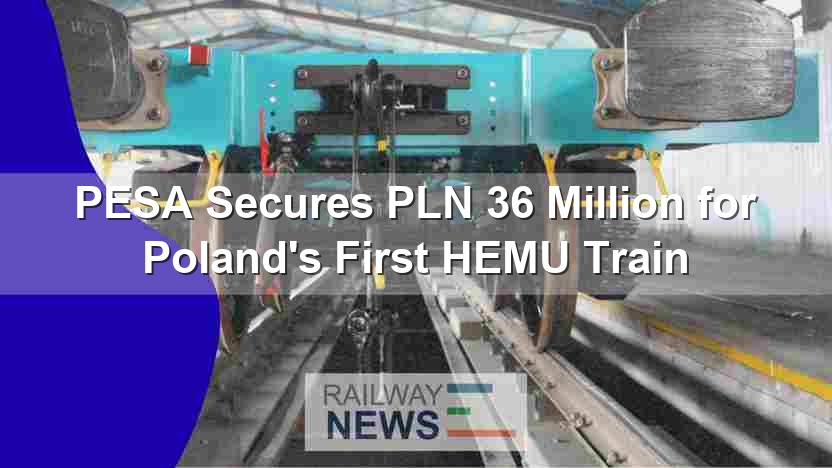
⚡ In Brief: Polish manufacturer PESA Bydgoszcz will develop Poland’s first hydrogen-electric passenger train with over PLN 36 million in public funding, targeting the 40% of the national rail network that remains unelectrified and reliant on diesel power.
WARSAW, POLAND – PESA Bydgoszcz has secured over PLN 36 million (approx. EUR 8.4 million) in public funding to develop Poland’s first hydrogen-electric multiple unit (HEMU) passenger train. The total project value exceeds PLN 108 million (EUR 25 million) and is financed through the country’s National Recovery and Resilience Plan (KPO). The tri-mode vehicle aims to operate on both electrified and non-electrified lines, addressing the portion of Poland’s rail network currently reliant on diesel traction.
What Is the Full Scope of This Project?
The project encompasses the design, technical documentation, and construction of a single demonstrator hydrogen-electric multiple unit (HEMU) train. PESA will develop a proprietary control system to manage three power sources—hydrogen fuel cells, overhead catenary, and battery storage—to optimize energy use across different line types. This passenger train initiative is separate from but complementary to PESA’s ongoing investment in a 15,000 m² production facility for hydrogen shunting locomotives, for which financing was secured in September 2025.
Our December analysis showed Denmark’s King inaugurated its first battery-powered train fleet! Seven hybrid trains replace diesel, offering emission-free travel and a boost to decarbonization efforts. Read more 📌
Key Project Data
| Parameter | Value |
|---|---|
| Project / Contract Name | Hydrogen Electric Multiple Unit (HEMU) Development |
| Total Value | Over PLN 108 million (approx. EUR 25 million) |
| Parties Involved | PESA Bydgoszcz, National Fund for Environmental Protection and Water Management (NFOŚiGW), Polish Development Fund (PFR) Group |
| Timeline / Completion | Not disclosed |
| Country / Corridor | Poland / National non-electrified lines |
How Does This Compare to Similar Projects?
The EUR 8.4 million public grant for PESA’s passenger train prototype is a significant national investment into a specific application of hydrogen rail technology. For context, the European Union recently granted a smaller sum, €2.06 million, to Mantle8 to scale up foundational natural hydrogen exploration technology, indicating the PESA award is focused on deployment rather than basic research (Source: The Next Web). However, the project faces risks common to early-stage hydrogen transport initiatives, such as potential cost overruns and supply chain immaturity, which have been significant challenges for Norway’s Lofoten Route hydrogen infrastructure project (Source: CleanTechnica).
Editor’s Analysis
This investment aligns with Poland’s national strategy to modernize its entire transport infrastructure, not just isolated components. While the new high-speed rail network planned as part of the Port Polska project will serve major corridors, PESA’s HEMU is strategically positioned to decarbonize the 40% of regional lines where full electrification is not economically viable. This two-pronged approach—high-speed electrification for trunk routes and hydrogen for regional lines—represents a pragmatic model for network-wide energy transition, addressing a critical gap left by major infrastructure projects (Source: FlightGlobal).
FAQ
Q: Why is this train a “tri-mode” vehicle?
A: The HEMU will have three power sources: hydrogen fuel cells, direct electric power from overhead lines, and a battery for energy storage and recovery. The onboard control system will automatically switch between them to maximize efficiency, for example, by using catenary power on electrified main lines and hydrogen on regional branches.
Q: What is the timeline for seeing this train in service?
A: The current funding covers the development of technical documentation and the construction of a single demonstrator vehicle. A specific timeline for the completion of this prototype or its entry into commercial service has not been disclosed by PESA or the funding authorities.
Q: How does this project fit into Poland’s broader railway plans?
A: This project targets the approximately 40% of Poland’s rail network that is not electrified, providing a zero-emission alternative to diesel trains. It complements large-scale electrification and high-speed rail projects, like the one associated with the new Port Polska airport, by offering a decarbonization solution for lower-density regional lines.

Railway infrastructure, rolling stock and transport technologies specialist focused on global rail industry developments, high-speed rail systems, signaling technologies and freight transportation. Covering railway investments, public transport modernization, rail operations and international mobility projects across Europe, Asia and North America.
RELATED POSTS

October 1, 2026 7:09 am
United States regulators confirmed a September 30 deadline for the...

October 4, 2026 5:14 pm
Alstom secured a CA$4.7 billion order from VIA Rail Canada...
October 1, 2026 10:14 am
HS2 installed a 55-metre steel span in Birmingham, completing phase...
October 1, 2026 11:13 am
Norfolk Southern expanded its 3B Corridor in Alabama in 2025,...

October 1, 2026 11:14 pm
CATS confirmed a six-mile streetcar route in Charlotte to add...
October 1, 2026 1:12 pm
CSX expanded Queensgate Yard in Cincinnati by installing 42 power...