
Singapore’s LTA Invests in Multi-System Rail Upgrades, 20% Staff Cert.
Singapore’s LTA mandates multi-system rail upgrades. 20% of operations and maintenance staff will achieve certified status, with North East Line power renewal starting 2026.
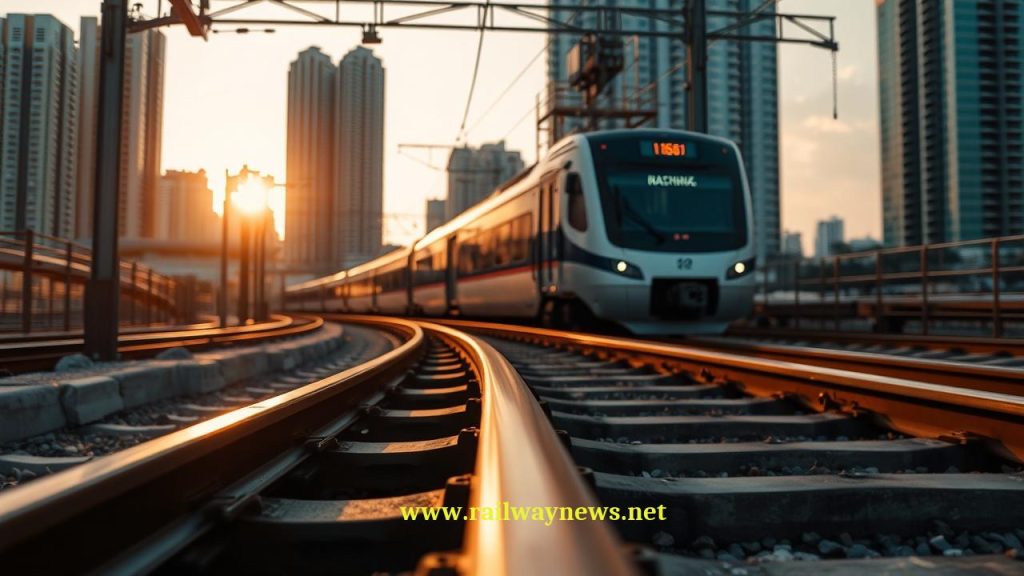
Singapore’s LTA Mandates Multi-System Rail Upgrades and Workforce Overhaul
On 13 February 2026, Singapore’s Land Transport Authority (LTA) announced a multi-year reform program to upgrade the MRT and LRT network’s infrastructure, operations, and workforce capabilities following a review of service disruptions. The program, based on recommendations from a Rail Reliability Taskforce convened on 19 September 2025, will see phased implementation of reforms across the network’s power, signalling, and rolling stock systems. A core workforce development target requires 20 percent of the operations and maintenance staff to achieve chartered or certified status.
Infrastructure and Systems Renewal
The reform program prioritizes the accelerated renewal of three core systems: power, signalling, and rolling stock. The LTA has scheduled the renewal of the North East Line’s power supply system to begin in 2026. To execute these multi-system upgrades, the authority will allocate additional engineering hours, which may include longer planned service closures. During such closures, alternative transport services will be provided.
Immediate technical measures will concentrate on power supply resilience. The LTA will upgrade the existing power intake at the Sengkang depot for the North East Line and increase traction power capacity with additional substations. For long-term resilience, the authority is assessing a higher capacity, dedicated backup power intake for the North East Line to ensure operational continuity during major faults.
“[VinSpeed partners with Siemens Mobility to launch Vietnam’s first high-speed rail, featuring 350 km/h Velaro Novo trains, transforming Southeast Asian mobility.” – Full article title (2025-12-21)
Signalling system enhancements are designed to accelerate operational recovery. New procedures will permit defective track points to be secured more quickly, allowing trains to pass at reduced speeds instead of halting service. The LTA is also evaluating a controlled bypass feature that would enable manual, low-speed train movements during certain signalling faults to mitigate network-wide delays. Rolling stock modifications include repositioning coupling levers and brake isolation valves for easier access by staff during recovery operations and strengthening train circuitry against onboard electrical faults.
Data systems and supply chain management are central to the asset renewal strategy. The LTA will implement a standardised, network-wide condition monitoring framework to harmonise asset health parameters across all rail lines, which currently use disparate systems. This will establish baseline standards for cross-line benchmarking and enable predictive maintenance through advanced analytics. An integrated data management framework is also in development to facilitate asset performance data sharing between operators. To support these initiatives, LTA will collaborate with overseas metro operators to build technical capability.
| Reform Area | Key Initiative |
|---|---|
| Power Systems | North East Line power supply renewal to commence in 2026. |
| Signalling | Feasibility study for controlled bypass feature. |
| Rolling Stock | Revised placement of coupling levers and brake isolation valves. |
| Data Framework | Standardised network-wide condition monitoring system. |
| Workforce | 20% of O&M staff to achieve chartered or certified status. |
| Passenger Information | Centralised real-time train status portal launched Dec 2025. |
Workforce and Operational Reforms
The workforce transformation pillar of the program aligns with broader national initiatives detailed in Singapore’s Budget 2026. The LTA will co-fund initiatives with operators to upskill staff in predictive maintenance and digital diagnostics. Training methods will incorporate technology such as simulators and scenario-based team exercises to improve incident response. These rail-specific efforts are part of a national strategy to equip workers with future-ready skills, including proficiency in AI, and will be supported by the new Workforce and Skills Singapore (WSSG) statutory board, set to be formed in Q3 2026.
The Singapore Rail Academy’s mandate will be expanded to standardise training policies and enhance professional certification frameworks for roles including junior engineers and technicians. Certification will be more directly linked to career progression and remuneration. Structured staff rotations between the LTA and public transport operators will be used to deepen technical knowledge and system integration.
To improve supply chain resilience, the LTA and operators will use data-driven forecasting to predict spare part needs and will stockpile critical components, particularly for systems where original equipment manufacturers (OEMs) have ceased production. The authority will also seek extended service support agreements with OEMs and pursue localisation of select production and repair capabilities.
Strategic Network Management
The reforms address the dual challenge of maintaining reliability on aging infrastructure, such as the North East Line which began operations in 2003, while simultaneously integrating new lines into an expanding network. The push for a standardized condition monitoring framework is strategically relevant as it creates a unified engineering standard across a multi-operator environment. This approach is intended to simplify long-term asset management, streamline procurement, and ensure consistent performance standards across a network that now exceeds 200 km in route length.
Passenger management during service disruptions is also being upgraded. A centralised real-time train status portal was launched in December 2025. Wayfinding trials at the Serangoon MRT Interchange are testing digital information screens and QR codes linked to live updates. The LTA is also working to integrate journey-specific information into third-party platforms, including Google Maps, and is adjusting operational protocols to speed up the deployment of bridging buses during service interruptions.
Next Steps
The renewal of the North East Line power supply system is scheduled to commence in 2026, requiring planned service closures managed with alternative transport arrangements. The integrated data management framework will be implemented in phases over several years as existing rail line systems are progressively aligned with the new, harmonised standards.

Railway infrastructure, rolling stock and transport technologies specialist focused on global rail industry developments, high-speed rail systems, signaling technologies and freight transportation. Covering railway investments, public transport modernization, rail operations and international mobility projects across Europe, Asia and North America.
RELATED POSTS

October 1, 2026 7:09 am
United States regulators confirmed a September 30 deadline for the...

October 1, 2026 12:13 am
Illinois approved $1.5 billion annually for the Northern Illinois Transit...

October 1, 2026 6:10 am
Amtrak approved a System Expansion Committee on July 30 to...

October 4, 2026 5:14 pm
Alstom secured a CA$4.7 billion order from VIA Rail Canada...
October 1, 2026 3:12 am
Greenbrier confirmed Brian Comstock as new president and CEO effective...
October 1, 2026 4:10 am
DART launched two public ridership dashboards in March 2026 to...