
Siemens Mobility Tests Regenerative Braking on Athens Line 1
Siemens Mobility began trial operation of a regenerative braking system for STASY on Athens Metro Line 1, recovering 4,500 MWh yearly at Neo Faliro substation.
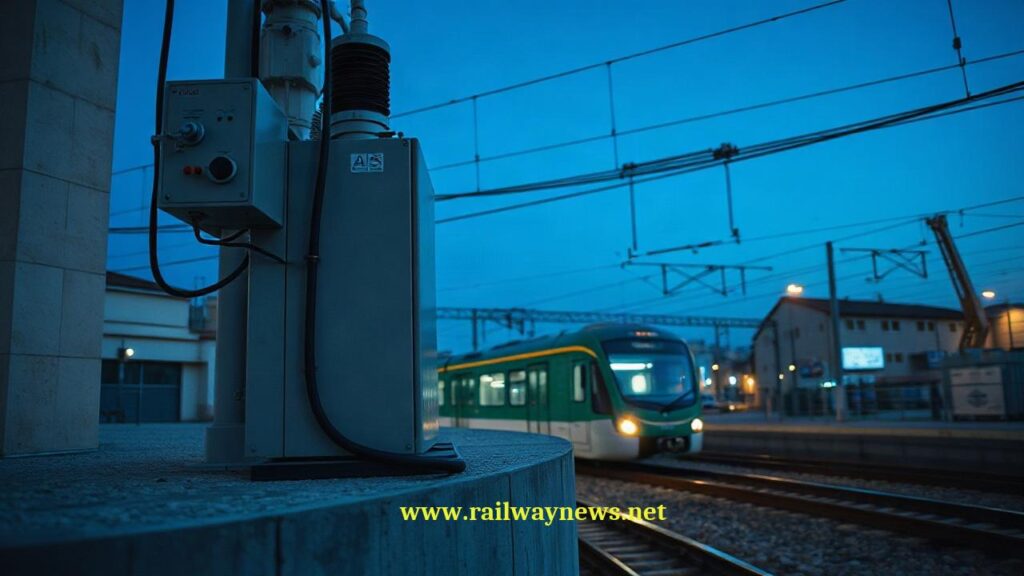
⚡ In Brief: STASY and Siemens Mobility are testing the first regenerative braking system on a Greek railway network on Athens Metro Line 1, with the Neo Faliro substation entering trial operation in mid-July and projected annual recovery of 4,500 MWh, or 12.5% of line electricity consumption.
ATHENS, GREECE – STASY, the operator of Athens’ metro and tram networks, and Siemens Mobility began trial operation of a regenerative braking energy recovery system on Metro Line 1 at the Neo Faliro traction substation in mid-July. The €4.1 million project is expected to recover 4,500 MWh annually, equivalent to 12.5% of the line’s electricity consumption. A second unit is due to be commissioned at the Iraklio traction substation before the contractual deadline in December 2026.
What Are the Technical Specifications?
The Athens Line 1 system captures kinetic energy from braking trains, converts it to electricity, and feeds it into the power grid for use by other trains or railway facilities. When a train brakes, its electric motors temporarily function as generators; instead of dissipating the energy as heat, the new equipment converts it and returns it to the network. The project also includes modernisation of both Neo Faliro and Iraklio traction substations, and is funded through the Greek development programme ESPA. STASY has not disclosed the system’s per-substation power rating or the expected annual euro savings from reduced electricity purchases.
Key Technical Data
| Parameter | Value |
|---|---|
| Technology / System Name | Regenerative braking energy recovery system (Siemens Mobility) |
| Total Value | EUR 4.1 million |
| Parties Involved | STASY (operator); Siemens Mobility (supplier) |
| Timeline / Completion | Trial operation mid-July at Neo Faliro; second unit at Iraklio; contractual completion before December 2026 |
| Country / Corridor | Greece – Athens Metro Line 1 (Green Line / ISAP electric railway) |
| Annual Energy Recovery | 4,500 MWh (12.5% of Line 1 electricity consumption) |
| Per-substation power rating | Not disclosed |
Where Does This Technology Stand in the Market?
The Athens pilot’s projected 4,500 MWh annual recovery is part of a broader Greek urban rail sustainability push in which Thessaloniki’s first driverless metro, delivered by Hitachi Rail, is expected to remove 56,000 commuter cars daily and save 77,000 tonnes of CO₂ annually (Source: Hitachi Rail / RailwayPRO, 2025).
Competing energy recovery systems are already established elsewhere: Alstom’s HESOP reversible substation has been deployed on metro systems including London Underground, while ABB’s Enviline ERS is used on DC rail networks in Europe, the Middle East and Latin America (Source: Alstom / ABB, 2023). Siemens Mobility’s Athens installation is smaller in scale — two substations and €4.1 million — but it is positioned as the first on a Greek railway network, giving STASY a local benchmark for future expansion.
Separately, Greece’s conventional rail network density was 14.0 m/km², the lowest in the EU, but the share of multiple-track lines rose from 9.9% in 1990 to 35.5% in 2024 (Source: Eurostat, 2024). This makes energy recovery on existing metro corridors such as Line 1 a critical part of the country’s rail efficiency strategy.
Editor’s Analysis
Regenerative braking is shifting from an optional efficiency add-on to a baseline requirement for EU-funded metro modernisation. STASY’s pilot is small — two substations and 12.5% of one line’s consumption — but it gives Athens a measurable case study for wider deployment across Lines 2 and 3 and the tram network. With the autonomous train market projected to grow at a 6.9% CAGR from 2025 to 2034 (Source: GM Insights), energy recovery and digital traction power management are likely to be packaged together in future Greek urban rail tenders.
FAQ
Q: How much energy will the Athens Metro Line 1 system recover annually?
A: STASY estimates 4,500 MWh per year, equal to 12.5% of Line 1’s annual electricity consumption.
Q: Who is installing the regenerative braking system and what does it cost?
A: Siemens Mobility is implementing the system for STASY under a EUR 4.1 million contract funded by the Greek ESPA development programme.
Q: Will the regenerative braking system affect passenger service or fares?
A: STASY has not officially confirmed any fare changes; the project is intended to reduce operating costs and improve power supply reliability at Neo Faliro and Iraklio substations.

Railway infrastructure, rolling stock and transport technologies specialist focused on global rail industry developments, high-speed rail systems, signaling technologies and freight transportation. Covering railway investments, public transport modernization, rail operations and international mobility projects across Europe, Asia and North America.
RELATED POSTS

October 8, 2026 1:15 pm
Alstom secured a €1bn contract to build 13 automated trains,...

October 8, 2026 12:18 pm
Siemens Mobility signed an agreement with VinSpeed to supply 350...

October 5, 2026 6:12 pm
AECOM and Jacobs secured a contract in September 2026 to...

October 1, 2026 12:13 am
Illinois approved $1.5 billion annually for the Northern Illinois Transit...

October 4, 2026 11:08 pm
Sound Transit confirmed the September 30 opening of Seattle Pinehurst...

October 5, 2026 1:13 pm
New York MTA confirmed a late 2026 DEIS release for...