
LIRR Completes Laurelton Station Upgrade: Accessibility Boosts
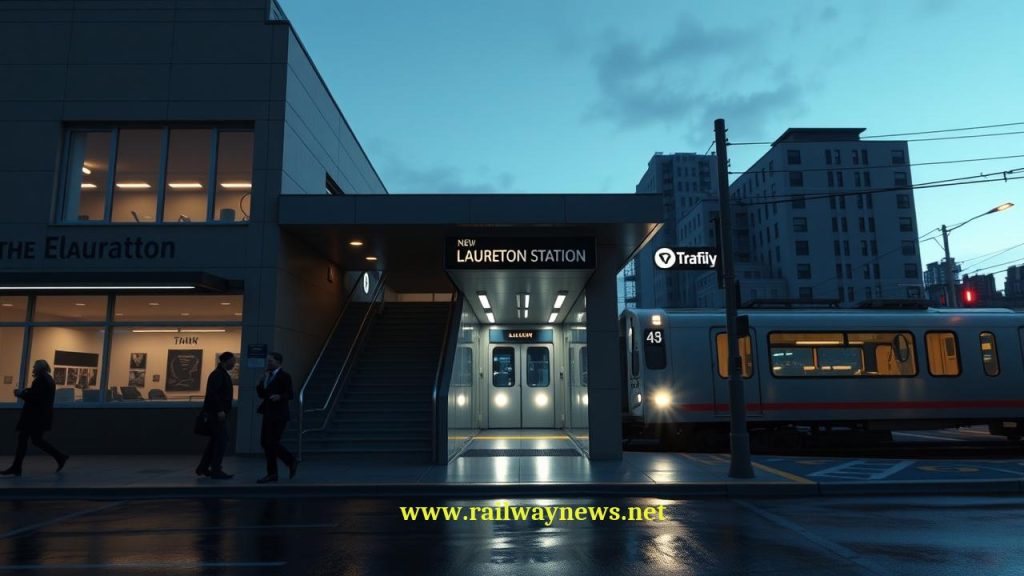
MTA LIRR completed Laurelton Station’s 119-year-old renovation, enhancing accessibility with new elevators and upgrades. This improves commuter experience and ADA compliance.
🛑 Key Takeaways:
- MTA Long Island Rail Road has completed accessibility and modernization upgrades at the 119-year-old Laurelton Station in Queens.
- The station serves over 80 daily trains on the Far Rockaway Branch; total project cost and timeline were not disclosed.
- The project addresses critical state-of-good-repair needs and enhances ADA compliance for a key commuter line.
QUEENS, NY – The MTA’s Long Island Rail Road (LIRR) last week announced the completion of extensive renovations at Laurelton Station, a 119-year-old facility on its Far Rockaway Branch. The project focused on bringing the station into a state of good repair and full accessibility, though the MTA did not release the project’s budget or specific construction timeline.
| Category | Specification / Detail |
|---|---|
| Project | Laurelton Station Modernization & Accessibility Upgrade |
| Location | Laurelton, Queens, NY (Far Rockaway Branch) |
| Key Stakeholder | MTA Long Island Rail Road |
| Value / Budget | Not disclosed by the MTA |
| Facility Age | 119 years |
| Daily Service Volume | Over 80 LIRR trains |
Operational & Technical Details
The core of the upgrade was the installation of a new elevator to improve accessibility. This required the construction of a new access tunnel from street level. Accessibility improvements were also made to the station’s parking lot, sidewalks, and curb ramps.
Passenger systems received significant upgrades. New informational kiosks, updated signage, and CCTV cameras were installed to enhance security and communication. The project also involved extensive relocation of utilities, including electrical, signal, communication, gas, water, and sewer systems to support the new infrastructure.
Market Impact Analysis
The Laurelton Station renovation is indicative of the MTA’s broader capital strategy focused on state-of-good-repair projects for its legacy assets. By prioritizing accessibility, the LIRR addresses deferred maintenance and improves compliance with the Americans with Disabilities Act (ADA), a critical requirement for public transit operators. While smaller in scale than system-wide expansion projects, these station-level investments are essential for maintaining operational reliability and improving the daily experience for thousands of commuters, thereby supporting ridership retention on established lines.
FAQ: Quick Facts
What was the cost of the Laurelton Station renovation?
The MTA did not disclose the financial details or total budget for the project.
When was the project completed?
The MTA announced the completion of renovations last week. A specific end date for construction was not provided.

Railway infrastructure, rolling stock and transport technologies specialist focused on global rail industry developments, high-speed rail systems, signaling technologies and freight transportation. Covering railway investments, public transport modernization, rail operations and international mobility projects across Europe, Asia and North America.
RELATED POSTS

September 6, 2026 5:19 am
Hitachi delivered Taiwan's first N700ST high-speed train from Japan in...

September 5, 2026 4:19 pm
CPK launched formal tender talks with four consortia to design...

September 6, 2026 4:12 am
Alstom delivered the first of 100 new G Class trams...

September 5, 2026 7:14 pm
HS2 Ltd signed renegotiated civils contracts with EKFB and Align...

September 6, 2026 6:17 am
Hungary ordered a national ban on most freight trains from...

September 6, 2026 1:17 am
Hitachi Toshiba Supreme Consortium confirmed the first of 12 N700ST...