
Network Rail Unveils Liverpool Street Upgrade: Doubling Capacity
London Liverpool Street station set for major redevelopment, doubling capacity and improving accessibility. A vital upgrade for Britain’s busiest station.
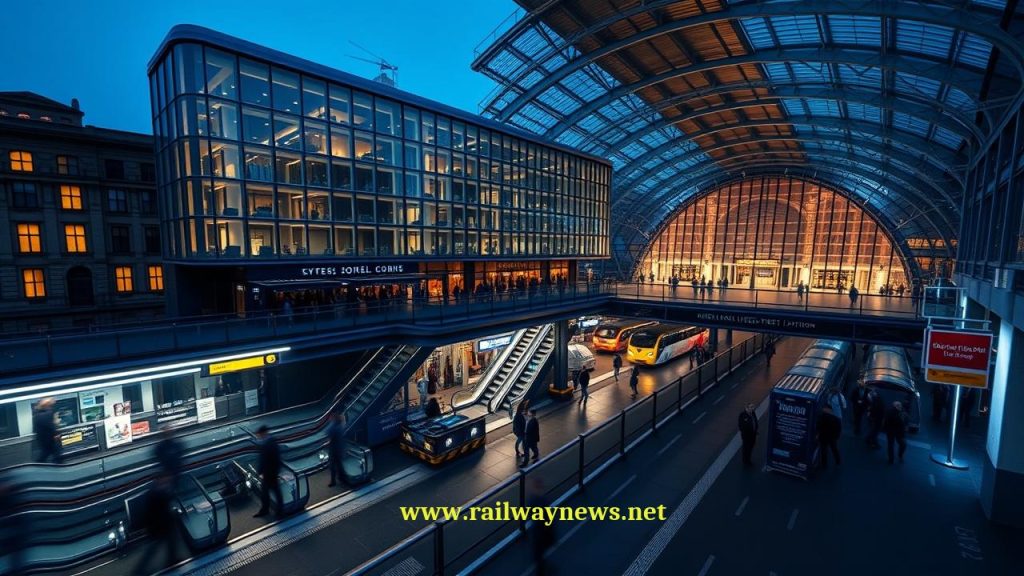
London, UK – Network Rail has unveiled ambitious redevelopment plans for London Liverpool Street, Britain’s busiest station, aiming to transform it into a future-proofed, highly accessible transport hub. The proposal, which has garnered significant public support, focuses on doubling passenger capacity and integrating modern facilities while preserving the station’s unique heritage.
| Category | Details |
|---|---|
| Project Name | London Liverpool Street Station Redevelopment |
| Lead Organisations | Network Rail & Platform4 (NR’s property business) |
| Current Passenger Volume | ~100 million rail entries/exits annually (2023) |
| Projected Passenger Volume | 158 million by 2041; design capacity for over 200 million |
| Key Accessibility Upgrades | 8 new lifts, 6 new escalators (10 total), step-free access |
Main Body:
Network Rail has released a new fly-through video showcasing its vision for a radically modernised London Liverpool Street station, designed to meet the capital’s transport needs for decades to come. The proposal, now submitted for planning approval, addresses critical capacity and accessibility issues at a station that has been the nation’s busiest for three consecutive years. Following extensive public consultation that drew nearly 2,000 comments and over 1,000 expressions of support, the plans have become one of the most endorsed applications in London, highlighting a strong public desire for the upgrade. The transport-led scheme is complemented by a new office building situated above the concourse, creating a mixed-use development.
The technical enhancements at the heart of the project are focused on passenger flow and inclusivity. The plans call for a significantly enlarged concourse to alleviate current congestion and accommodate future growth. Central to the accessibility improvements is the installation of eight new lifts and an increase in escalators from four to ten, providing comprehensive step-free access across the station. These upgrades will be supported by additional ticket barriers, modernised toilets with family facilities, and clearer, more intuitive wayfinding signage. The design aims to create seamless east-west and north-south connections, improving navigation not just within the station but across the wider City of London area.
This major redevelopment at Liverpool Street is indicative of a broader, multi-billion-pound investment strategy across the UK’s rail network. It mirrors the scale of other transformative projects, such as the £1.75 billion Midlands Rail Hub and the complex station works at London Euston for HS2. These initiatives signal a clear national priority to modernise key transport nodes, enhancing capacity and passenger experience to support economic growth. While preserving the heritage of landmarks like the Grade II* listed Andaz Hotel, the Liverpool Street scheme demonstrates a strategic approach to integrating state-of-the-art infrastructure within historically sensitive urban environments.
Key Takeaways
- Future-Proofing Capacity: The design is engineered to handle a projected 58% increase in passenger numbers by 2041 and has an ultimate capacity for over 200 million passengers.
- Accessibility at the Forefront: A core objective is to deliver comprehensive step-free access throughout the station with a significant increase in lifts and escalators.
- Heritage and Modernisation: The project carefully balances the introduction of modern infrastructure and a new commercial office space with the preservation of the station’s historic architecture.
Editor’s Analysis
The Liverpool Street station redevelopment is more than a simple capacity upgrade; it represents a critical case study in the global trend of evolving major railway stations into integrated urban destinations. By combining a transport-led infrastructure overhaul with high-value commercial real estate, Network Rail is pursuing a model that aims for financial sustainability while delivering vital public benefits. This project’s success in navigating heritage constraints, public consultation, and future passenger demand will be closely watched by city planners and rail operators worldwide as they seek to modernise their own legacy infrastructure for the 21st century.
Frequently Asked Questions
Why is Liverpool Street station being redeveloped?
Liverpool Street is Britain’s busiest station, and its current infrastructure is struggling to cope with nearly 100 million passengers a year. The redevelopment is necessary to increase capacity for projected growth to 158 million by 2041, improve accessibility, and modernise passenger facilities.
What are the main accessibility improvements planned?
The plans prioritise accessibility by introducing comprehensive step-free access. This includes the installation of eight new lifts and increasing the number of escalators from four to ten, making it easier for all passengers to navigate the station.
Will the station’s historic features be preserved?
Yes, the design has been developed in consultation with heritage groups. It carefully considers the Grade II* listed Andaz Hotel and surrounding conservation area, with plans to enhance major entrances to celebrate the station’s historic architecture.
RELATED POSTS
November 13, 2025 10:54 am
Nexrail orders up to 200 Stadler EURO9000 **hybrid locomotives**! These...

June 19, 2018 6:02 am
The NYCT Astoria Line's transformative station renovations demonstrate excellence in...
November 23, 2020 10:39 pm
The Rise of Bang Sue Grand Station: A New Hub...

July 5, 2015 1:57 pm
A new railway line which will be carve the difficult...
April 13, 2023 3:32 am
This article delves into the significant €600 million contract awarded...
September 5, 2020 5:03 am
The Alstom-Bombardier Merger: A Singaporean Perspective This article examines the...