
EN 16116-2: Europe’s New Standard For Freight Staff Safety
Discover EN 16116-2: the European standard defining critical design requirements for safe staff access on freight wagons. Protect railway personnel from slips and falls.
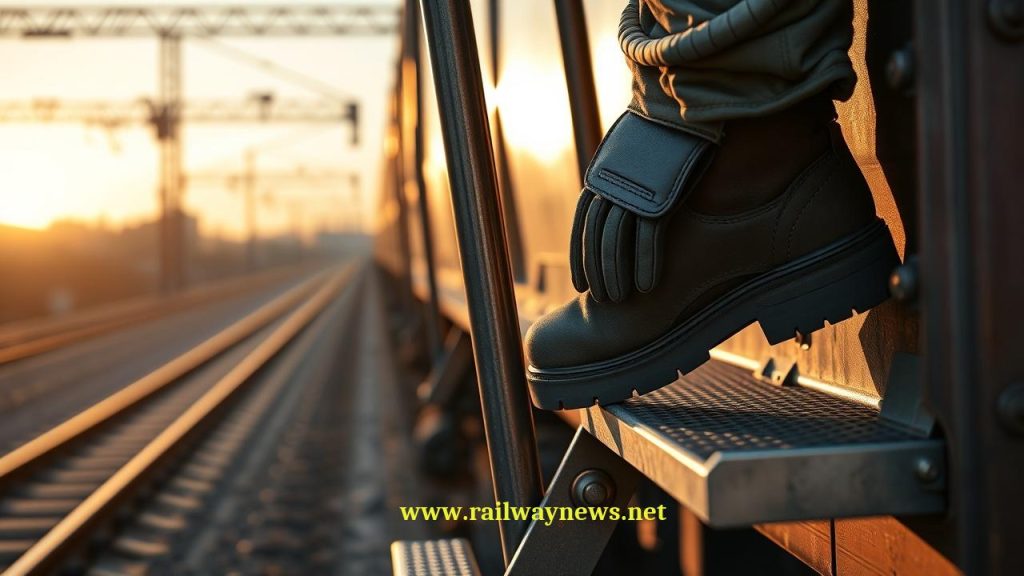
Understanding EN 16116-2: Design Requirements for Staff Access on Freight Wagons
EN 16116-2 is a European Standard that specifies the design requirements for steps, handrails, and associated access points used by staff on railway freight wagons. The primary objective of this standard is to ensure the safety of railway personnel, such as shunters, inspectors, and maintenance crews, who must regularly access wagons during shunting, coupling, inspection, and loading/unloading operations.
This standard provides a harmonized set of ergonomic and structural rules to minimize the risk of slips, trips, and falls. By defining precise requirements for dimensions, positioning, strength, and materials, EN 16116-2 ensures that access systems are safe, reliable, and fit for purpose across the European railway network.
Scope and Applicability of the Standard
EN 16116-2 applies specifically to new freight wagons used in the European railway system. It does not cover access for passengers or access to locomotives or special-purpose vehicles, which are addressed by other parts of the EN 16116 series or different standards. The focus is exclusively on the safety and ergonomic needs of staff performing operational duties.
Key Personnel Covered:
- Shunting Staff: Personnel responsible for coupling and uncoupling wagons, operating handbrakes, and marshalling trains in yards.
- Inspection and Maintenance Crews: Technicians who need to access various parts of a wagon for safety checks, diagnostics, and repairs.
- Loading and Unloading Staff: Operators who may need to climb onto wagons to secure or release cargo.
Core Technical Requirements of EN 16116-2
The standard is highly detailed, covering every aspect of access system design. The key technical requirements can be broken down into several critical areas.
H3: Design of Steps
Steps are one of the most critical components for safe access. The standard mandates specific design features to ensure stability and prevent slips.
- Dimensions: The standard defines minimum usable width and depth for step treads to ensure a secure foothold, even when wearing heavy work boots.
- Surface Properties: Step surfaces must be designed to be non-slip under various environmental conditions, including rain, ice, and snow. This is typically achieved through the use of perforated, ribbed, or embossed metal plates that allow for drainage and provide a high-friction surface.
- Positioning: The vertical and horizontal positioning of steps is strictly regulated. This includes the height of the first step from the track level and the uniform spacing between subsequent steps to create a predictable and safe climbing rhythm.
- Structural Integrity: Steps must be able to withstand specified vertical and horizontal static loads without permanent deformation, simulating the forces exerted by a person carrying equipment.
H3: Design of Handrails and Handholds
Handrails and handholds provide essential support and stability for staff, especially while the wagon is in motion or during adverse weather.
- Dimensions and Profile: Handrails must have a specific diameter or cross-section that allows for a firm, ergonomic grip with a gloved hand. Surfaces must be free from sharp edges or burrs.
- Clearance: A critical requirement is the minimum clearance between the handrail and any adjacent structure. This ensures that a user’s hand and forearm are not trapped or pinched during use.
- Positioning: Handrails must be positioned logically in relation to steps, providing continuous support as a person ascends or descends. The standard specifies their height and orientation to facilitate natural body movement.
- Strength: Like steps, handrails and handholds must withstand significant static loads applied in different directions to ensure they do not fail under foreseeable operational stresses.
H3: Materials, Durability, and Environmental Resistance
Given that freight wagons operate in harsh outdoor environments, the materials used for access systems are crucial for long-term safety and reliability.
- Corrosion Resistance: Materials must be inherently corrosion-resistant or be treated with protective coatings (e.g., galvanization, powder coating) to prevent degradation from exposure to moisture and atmospheric pollutants.
- Durability: The components must be robust enough to resist mechanical damage from impacts during shunting, loading, or from trackside debris.
- Performance in Extreme Temperatures: The materials and their structural integrity must not be compromised by extreme cold or heat, ensuring they remain safe to use year-round.
Comparison of Key Component Requirements in EN 16116-2
To provide a clear overview, the table below summarizes and compares the primary design considerations for the main access components as defined by the standard.
| Component | Key Design Parameter | EN 16116-2 Requirement / Consideration |
|---|---|---|
| Steps | Surface Design | Must be non-slip, allow for drainage of water and debris. Perforated or serrated surfaces are common. |
| Steps | Load Capacity | Must withstand a specified vertical static force to ensure structural integrity under heavy load. |
| Handrails | Grip Diameter | Prescribed range (e.g., 25-40 mm) to ensure a secure grip for a gloved hand. |
| Handrails | Spatial Clearance | Mandates minimum free space around the handrail to prevent hand/knuckle injuries. |
| All Components | Material Finish | Must be free of sharp edges, burrs, or snag points that could injure staff or catch on clothing. |
| Access Ways | Kinematic Envelope | All access components must be located within the wagon’s permitted gauging profile to avoid collision with infrastructure. |
Verification and Testing Procedures
Compliance with EN 16116-2 is not just a matter of design; it must be verified through rigorous testing and assessment. Manufacturers are required to demonstrate compliance through:
- Dimensional Checks: Verifying that all steps, handrails, and clearances meet the specific dimensions laid out in the standard.
- Static Load Tests: Applying prescribed forces to steps and handrails to confirm they can support the expected loads with a defined safety factor, without failure or permanent deformation.
- Design Review and Documentation: A thorough review of technical drawings and material specifications to ensure they align with the standard’s requirements.
Conclusion: The Importance of Standardization for Safety
EN 16116-2 plays a fundamental role in enhancing occupational safety within the railway freight sector. By creating a clear, enforceable set of technical rules, it ensures a consistent level of safety for staff across different manufacturers and operators in Europe. Adherence to this standard not only prevents accidents and injuries but also improves operational efficiency by providing staff with well-designed, reliable, and ergonomic access to freight wagons.

Railway infrastructure, rolling stock and transport technologies specialist focused on global rail industry developments, high-speed rail systems, signaling technologies and freight transportation. Covering railway investments, public transport modernization, rail operations and international mobility projects across Europe, Asia and North America.