
Port of Virginia: Deepest East Coast Channel Boosts Rail Capacity
Port of Virginia deepens channels by early 2026 with a $450M investment, boosting ULCV capacity and strengthening rail connections for efficient freight movement.
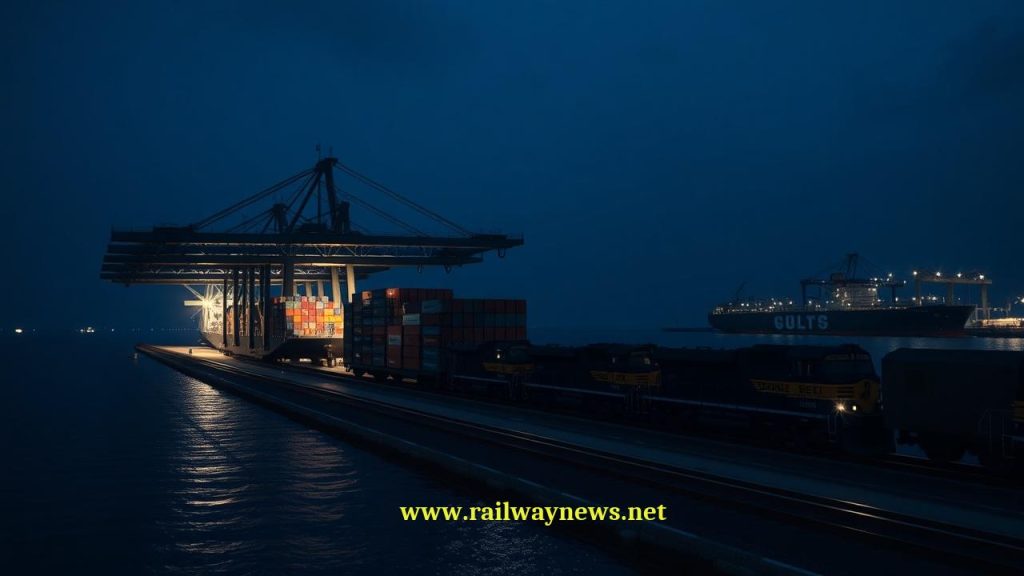
NORFOLK, VA – The Port of Virginia is on the cusp of operating the deepest shipping channels on the U.S. East Coast as its $450 million dredging project nears an early 2026 completion. This milestone coincides with the inauguration of a fourth berth capable of handling Ultra-Large Container Vessels (ULCVs), significantly enhancing its on-dock rail capabilities and solidifying its position as a critical gateway for North American freight.
| Category | Details |
|---|---|
| Core Project | Channel Deepening & Widening |
| Projected Completion | Early 2026 |
| Channel Depth | 55 Feet (Deepest on U.S. East Coast) |
| Total ULCV Berths by 2027 | Five (5) |
| New Terminal Equipment | Four Suez-class Cranes at NIT South |
| Key Rail Partners | Norfolk Southern (On-Dock), CSX (Intermodal) |
Port officials have announced that the ambitious channel deepening and widening initiative is set to conclude in early 2026. The $450 million project will deliver 55-foot-deep channels, engineered to be wide enough to support two-way traffic of the largest container ships transiting the Atlantic. This enhanced navigational capacity is a strategic move to eliminate vessel queuing and improve schedule reliability for global shipping lines, which in turn boosts the efficiency of the entire landside logistics chain, including critical rail connections.
In a parallel move to leverage the new channel depth, the port is commissioning its fourth ULCV-ready berth this month at the Norfolk International Terminals (NIT) South Berth. The upgrade includes the installation of four new, massive Suez-class cranes designed to service the world’s largest container vessels. This development brings the port’s total ULCV-capable berths to four, with two now operational at NIT South and two at the Virginia International Gateway (VIG). Crucially, NIT provides shippers with direct, on-dock rail access via Norfolk Southern Railway and efficient intermodal service from CSX, ensuring seamless cargo transfer from ship to rail.
Looking ahead, the Port of Virginia is already advancing plans for a fifth ULCV berth at NIT’s North Berth. This next phase is part of a detailed $650 million terminal reconfiguration and optimization project. The port anticipates the fifth berth will become operational in 2027, further cementing its capacity to handle the next generation of container ships and the corresponding surge in rail-bound cargo volume. These synchronized investments in maritime and landside infrastructure are designed to create a highly fluid and competitive East Coast trade gateway.
Key Takeaways
- Deepest East Coast Gateway: Upon completion in 2026, the Port of Virginia will feature the deepest and widest shipping channels on the U.S. Atlantic coast, enabling unrestricted, two-way ULCV traffic.
- Aggressive Capacity Expansion: The port is expanding to five ULCV-ready berths by 2027, supported by state-of-the-art Suez-class cranes to maximize vessel turnaround speed.
- Strengthened Rail Integration: Enhanced terminal capacity directly benefits the port’s on-dock rail services with Norfolk Southern and intermodal operations with CSX, positioning it as a premier rail gateway for the Midwest and beyond.
Editor’s Analysis
The Port of Virginia’s multi-pronged investment strategy is a masterclass in building a resilient and future-proofed supply chain node. By synchronizing channel dredging with terminal and rail infrastructure upgrades, Virginia is not merely accommodating larger ships; it is creating a high-velocity logistics ecosystem. For the global rail market, this is a significant development. The expansion of on-dock rail at a port capable of handling the largest vessels without tidal restriction means a more reliable and cost-effective alternative for routing discretionary cargo into the American heartland. This directly challenges other East Coast ports and strengthens the competitive position of its Class I rail partners, Norfolk Southern and CSX, by providing them with a more efficient spigot for international container volume.
Frequently Asked Questions
- When will the Port of Virginia’s channel deepening project be finished?
- The project is scheduled for completion in early 2026, at which point it will offer 55-foot-deep channels.
- What new equipment is being added to handle larger ships?
- The port is putting four new Suez-class cranes into service at the NIT South Berth, which is now the port’s fourth berth capable of handling ULCVs.
- How does this expansion benefit rail freight?
- The increased capacity to handle ULCVs, combined with direct on-dock rail access for Norfolk Southern and intermodal service for CSX at the Norfolk International Terminals, allows for faster and more efficient transfer of cargo from ship to rail, increasing freight velocity into inland markets.

Railway infrastructure, rolling stock and transport technologies specialist focused on global rail industry developments, high-speed rail systems, signaling technologies and freight transportation. Covering railway investments, public transport modernization, rail operations and international mobility projects across Europe, Asia and North America.
RELATED POSTS

September 5, 2026 4:19 pm
CPK launched formal tender talks with four consortia to design...

September 6, 2026 4:12 am
Alstom delivered the first of 100 new G Class trams...
September 6, 2026 6:17 am
Hungary ordered a national ban on most freight trains from...

September 6, 2026 8:17 am
DB InfraGO reopened the Nuremberg-Regensburg line in Bavaria on 31...
September 7, 2026 8:16 am
Midea, Gree and TCL shipped air conditioners via China Railway...

September 5, 2026 6:17 pm
Universal Signalling won a deal to install its U-Cross system...