
EU Standard EN 15723: Securing Rail Freight Payloads
Discover EN 15723: the essential standard for securing railway payloads. Learn how it ensures cargo protection, operational safety, and device durability in rail freight.
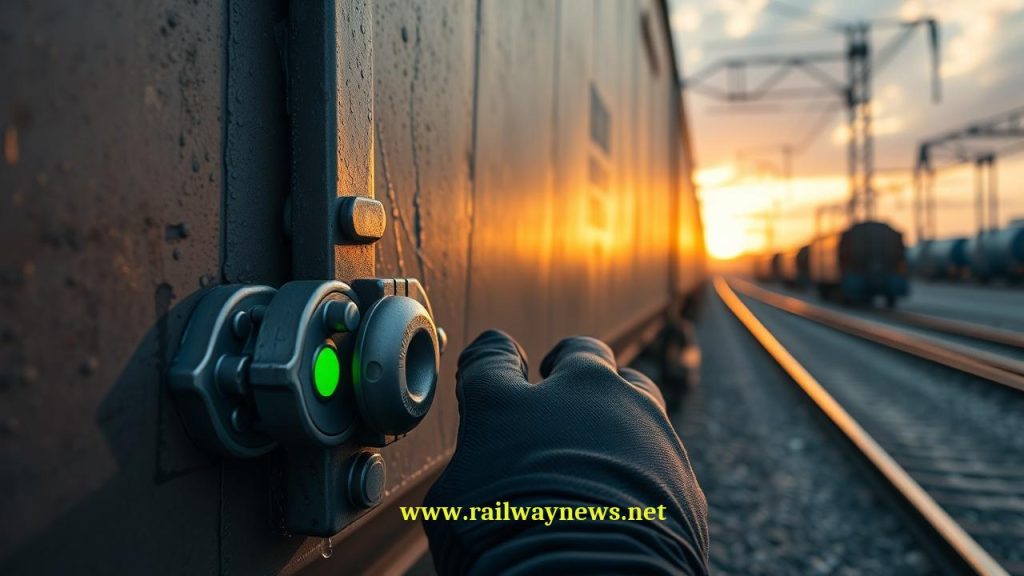
Understanding EN 15723: A Technical Standard for Railway Payload Protection
EN 15723 is a European Standard that specifies the technical requirements for the design, performance, and testing of closing and locking devices used on railway vehicles. Its primary purpose is to ensure that these devices effectively protect payloads from environmental influences while being durable, reliable, and safe to operate throughout their service life.
This standard is fundamental to the integrity of rail freight operations. It ensures that mechanisms responsible for securing everything from tarpaulin covers to container doors can withstand the harsh and dynamic conditions of the railway environment. It focuses on the complete lifecycle of the device, from its operational ergonomics to its eventual recycling.
Core Technical Requirements of EN 15723
The standard is structured around several key performance areas, each with detailed technical specifications that manufacturers and operators must adhere to. These requirements ensure a holistic approach to device quality and reliability.
Durability and Environmental Resistance
Railway components are subjected to constant vibration, mechanical shocks, extreme temperature fluctuations, and exposure to corrosive elements. EN 15723 mandates that closing and locking devices are designed and tested to survive these conditions.
- Mechanical Strength: Devices must withstand specified static and dynamic loads without permanent deformation or failure. This includes forces from cargo shifting, shunting impacts, and aerodynamic pressures.
- Vibration and Shock Resistance: The standard requires testing to ensure that the locking mechanism remains securely engaged and does not suffer from fatigue failure when subjected to the vibration profiles typical of rail transport (as defined in standards like EN 61373).
- Corrosion Resistance: Materials and coatings must resist corrosion from rain, humidity, industrial pollutants, and de-icing salts. This is often validated through neutral salt spray (NSS) tests.
- Thermal Range: The devices must operate reliably across a wide temperature range, typically from -40°C to +70°C, without seizing or malfunctioning.
- UV and Chemical Resistance: Components exposed to sunlight must be resistant to UV degradation. They must also withstand exposure to common cleaning agents and hydraulic fluids.
Operation and Ergonomics
The usability and safety of these devices for railway personnel are paramount. The standard sets clear criteria for how a device must be operated.
- Operating Forces: The force required to open, close, and lock the device must be within specified ergonomic limits, allowing personnel to operate it safely and efficiently, even in adverse weather conditions or while wearing gloves.
- Handling Safety: The design must be free of sharp edges or pinch points that could cause injury during operation.
- Fail-Safe Design: The locking mechanism must be designed to prevent accidental opening due to vibration or minor impacts. It should remain in its last position (locked or unlocked) unless intentionally operated.
Indication of State
A critical safety and security feature is the clear indication of whether the device is properly closed and locked. This is essential for yard inspections.
- Clarity and Visibility: The locked/unlocked status must be clearly and unambiguously visible to an inspector from a safe distance (typically a few meters). This is often achieved through the alignment of colored markers or the physical position of a handle.
- Reliability of Indication: The indication system itself must be as durable as the locking mechanism, ensuring it does not provide a false reading (e.g., indicating ‘locked’ when the mechanism is not fully engaged).
Maintenance and Recycling
EN 15723 addresses the full lifecycle of the component, promoting sustainability and reducing long-term operational costs.
- Maintenance Requirements: The standard requires manufacturers to provide clear instructions for inspection, lubrication, and scheduled maintenance to ensure the device’s longevity.
- Material Identification: To facilitate end-of-life recycling, plastic and metallic components should be marked according to relevant ISO standards, allowing for proper sorting and processing.
- Design for Disassembly: The design should consider ease of disassembly, enabling the replacement of worn parts and the separation of different materials for recycling.
Key Aspects of EN 15723 at a Glance
| Requirement Area | Key Focus and Technical Considerations |
|---|---|
| Durability | Resistance to vibration (EN 61373), mechanical shock, corrosion (salt spray testing), and a wide operational temperature range (-40°C to +70°C). |
| Operation | Ergonomic operating forces for manual handling, prevention of accidental opening, and absence of physical hazards like sharp edges. |
| Indication | Clear, reliable, and remotely visible indication of the locked/unlocked state to ensure cargo security and operational safety during train inspection. |
| Maintenance | Clear manufacturer guidelines for inspection intervals, lubrication, and part replacement to ensure long-term functional reliability. |
| Recycling | Material marking for end-of-life sorting and a design that facilitates disassembly, aligning with modern environmental standards. |
Scope and Application in the Rail Industry
EN 15723 is not a universal standard for all railway locks. Its scope is precisely defined for devices protecting payloads from the environment. It applies to a wide variety of freight wagons and intermodal units:
- Locking bars and handles for tarpaulin systems on sliding-wall or sliding-roof wagons.
- Latches and locking mechanisms for side doors and end doors on covered freight wagons.
- Securing devices for hatches on bulk material wagons (e.g., grain or cement hoppers).
- Fastening systems for removable superstructures or covers.
Compliance with EN 15723 is a mark of quality for component manufacturers and a critical requirement for rolling stock builders aiming to deliver reliable and safe vehicles for the European rail network. For freight operators, it provides assurance that their cargo is protected and their fleet meets established safety and operational benchmarks.
The Importance of EN 15723 in Rail Freight
To summarize, the EN 15723 standard plays a vital, if often unseen, role in the rail freight ecosystem. By standardizing the requirements for closing and locking devices, it directly contributes to cargo safety, preventing loss and damage from weather exposure. Additionally, it enhances operational efficiency by ensuring that devices are reliable and easy for personnel to inspect and use, ultimately contributing to a safer and more dependable railway system.

Railway infrastructure, rolling stock and transport technologies specialist focused on global rail industry developments, high-speed rail systems, signaling technologies and freight transportation. Covering railway investments, public transport modernization, rail operations and international mobility projects across Europe, Asia and North America.