
Europe’s EN 14535-3: Elevating Rail Brake Performance & Safety
EN 14535-3 defines railway brake disc and pad performance. Rigorous dynamometer testing ensures friction couple safety, reliability, and interoperability for all rolling stock.
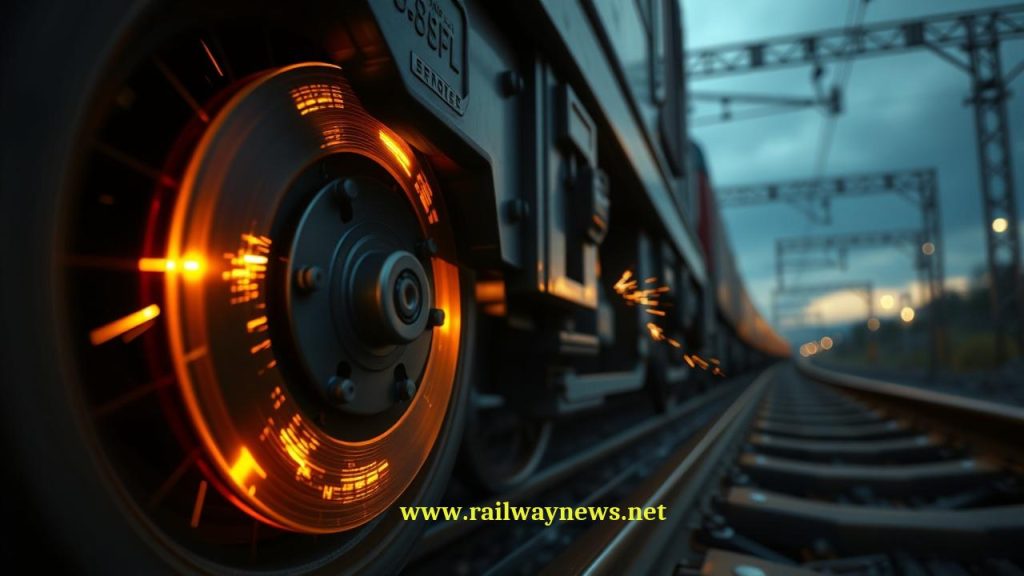
Understanding EN 14535-3: Performance and Classification of Railway Brake Discs
EN 14535-3 is a European standard that specifies the performance requirements and classification for the friction couple in railway braking systems. This friction couple consists of the brake disc and the friction material (brake pad). The standard outlines the procedures for performance testing on a dynamometer to ensure braking components meet stringent safety, reliability, and compatibility criteria for railway rolling stock.
Scope and Objectives of the Standard
The primary goal of EN 14535-3 is to establish a unified and repeatable method for evaluating and classifying the performance of a brake disc and pad combination. It is not about the disc’s structural integrity (covered in Part 1) or its material composition (covered in Part 2), but rather how the complete system behaves under operational stress. Key objectives include:
- Defining standardized test programs to be performed on an inertia dynamometer.
- Specifying the performance characteristics to be measured, such as friction coefficient, wear, and thermal behavior.
- Establishing a clear classification system based on test results to aid in procurement and system integration.
- Ensuring interoperability and substitutability of braking components across different European railway networks.
The Core Concept: The Friction Couple
A crucial aspect of EN 14535-3 is its focus on the “friction couple” rather than the brake disc in isolation. The braking performance is a result of the dynamic interaction between the surface of the brake disc and the brake pad material. Factors like material composition, surface finish, and operating temperature of both components determine the overall effectiveness and durability of the brake. This standard, therefore, tests the pair as a single functional unit to provide a realistic assessment of its real-world performance.
Performance Testing Methodology
The standard mandates detailed testing on a full-scale inertia dynamometer. This specialized equipment simulates the kinetic energy of a moving train, allowing for the precise and repeatable testing of braking components in a controlled laboratory environment without needing an actual train.
Dynamometer Test Programs
The test programs are designed to replicate a wide range of operational scenarios a brake disc would encounter during its service life. These simulations are critical for understanding the behavior of the friction couple under various thermal and mechanical loads. The tests typically include:
- Performance Tests: Evaluating the stability of the coefficient of friction across different speeds, brake pressures, and initial disc temperatures.
- Bedding-In Procedure: A pre-test sequence to ensure full surface contact and stable performance between the new disc and pads.
- High-Energy Braking: Simulating emergency stops from maximum speed to test the system’s fade resistance and integrity under extreme thermal stress.
- Drag Braking: Replicating the continuous, low-pressure braking required to maintain a constant speed on long downhill gradients, which tests the system’s thermal capacity and wear resistance.
- Wet Braking Tests: Assessing the degradation and recovery of friction performance when water is introduced to the disc-pad interface.
Key Parameters Measured
During these tests, several critical parameters are continuously monitored and recorded to build a complete performance profile of the friction couple. These include the coefficient of friction (µ), temperature at various points on the disc, wear rate of both the disc and the pad, and the occurrence of any noise, vibration, or surface damage like thermal cracking.
The Classification System
After the completion of the dynamometer tests, the collected data is analyzed to classify the performance of the friction couple. This classification provides a simple and standardized way for vehicle manufacturers and operators to select the appropriate braking components for a specific application (e.g., high-speed train, freight wagon, or metro). The classification is typically based on key performance indicators.
Comparison of Performance Classes
The standard defines different classes to categorize the performance. While the exact designations can vary, the table below illustrates the typical criteria used for classification.
| Performance Class | Friction Coefficient (µ) Stability | Wear Resistance | Thermal Capacity (Fade Resistance) | Typical Application |
|---|---|---|---|---|
| Class A (High Performance) | Very High & Stable (across wide speed/temp range) | Very Low (extended service life) | Excellent (minimal fade at high energy) | High-speed trains, demanding passenger services |
| Class B (Standard Performance) | High & Stable (across normal operating range) | Low (good service life) | Good (some fade at extreme energy levels) | Mainline passenger trains, regional trains |
| Class C (Moderate Performance) | Moderate & Stable | Moderate (standard service life) | Moderate (suitable for lower energy applications) | Metro, light rail, trams |
| Class F (Freight Application) | Stable, optimized for high axle loads | High (designed for long life under heavy loads) | Very High (excellent heat dissipation for drag braking) | Freight wagons |
Significance in the Railway Industry
EN 14535-3 is a cornerstone standard for the modern railway industry for several reasons:
- Safety: By mandating rigorous performance tests, it ensures that braking systems are reliable and behave predictably under all conditions, which is fundamental to railway safety.
- Interoperability: It provides a common benchmark, allowing components from different manufacturers to be assessed against the same criteria. This facilitates the use of parts across different rolling stock and networks.
- Procurement: The classification system simplifies the specification and procurement process. Buyers can request a friction couple that meets a specific class (e.g., “Class A”), ensuring they get the performance they need without ambiguity.
- Innovation and Development: The standard provides a baseline for manufacturers to test and validate new materials and designs for brake discs and pads, driving continuous improvement in braking technology.
Conclusion
In summary, EN 14535-3 plays a vital role in ensuring the performance, safety, and reliability of braking systems on railway rolling stock. By focusing on the combined performance of the “friction couple” and utilizing standardized dynamometer testing, it creates a robust framework for classifying brake components. This allows for informed decision-making in design, procurement, and maintenance, ultimately contributing to a safer and more efficient railway network.

Railway infrastructure, rolling stock and transport technologies specialist focused on global rail industry developments, high-speed rail systems, signaling technologies and freight transportation. Covering railway investments, public transport modernization, rail operations and international mobility projects across Europe, Asia and North America.